
Sri Lanka Tea Auctions and Estate Labour — 2026-09-02
Sri Lanka’s tea export earnings have declined by $67 million in the first seven months of 2026 due to Middle East shipping disruptions, with total exports dropping 4.9% to 143.51 million kg. Meanwhile, plantation workers are seeing wage adjustments, including new allowances for specific crop sectors, as the industry navigates rising costs and reduced demand from key markets like Iraq and Russia.
Sri Lanka Tea Auctions and Estate Labour — 2026-09-02
Top developments
Tea Export Earnings Drop $67 Million Amid Shipping Disruptions
Data released in late August 2026 indicates that Sri Lanka’s tea exports fell sharply by 4.9% to 143.51 million kg during January–July, resulting in a $67 million decline in export earnings compared to the previous year. The primary driver cited is Middle East shipping disruptions which have severely impacted shipments to key markets. This trend underscores the vulnerability of Ceylon tea to geopolitical logistics issues, directly affecting the weekly Colombo auction averages as unsold stock accumulates.

New Wage Allowances Announced for Cocoa, Cardamom, and Pepper Workers
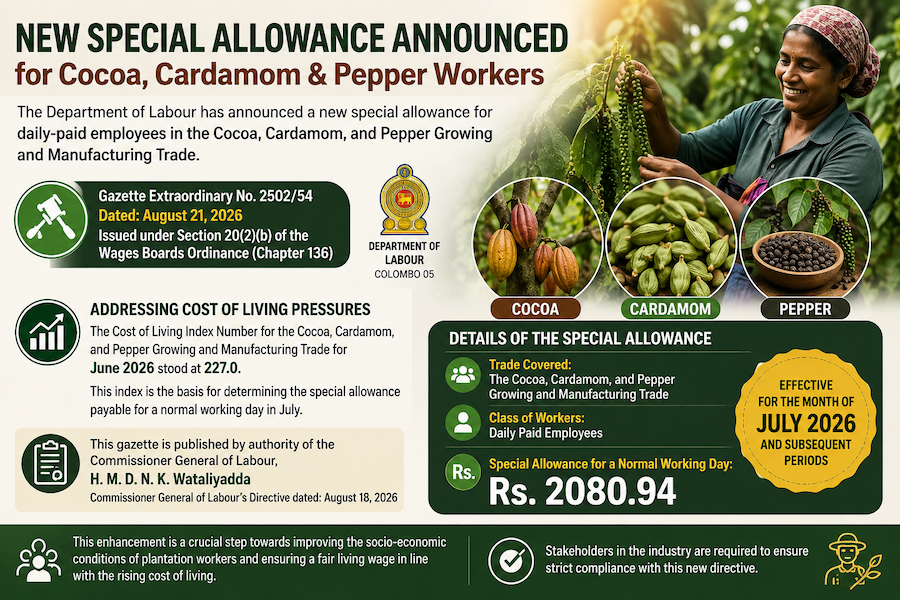
The Department of Labour officially announced a new special allowance for workers engaged in cocoa, cardamom, and pepper plantations in early September 2026. While this does not directly alter the base daily wage for tea estate workers (which was set at Rs. 1,750 in early 2026), it signals a broader push by the government to address labor cost pressures across the plantation sector. Stakeholders are watching closely to see if similar adjustments or enforcement mechanisms will be extended to the tea sector, where wage disputes remain a sensitive issue affecting productivity.
July Tea Export Volumes Decline
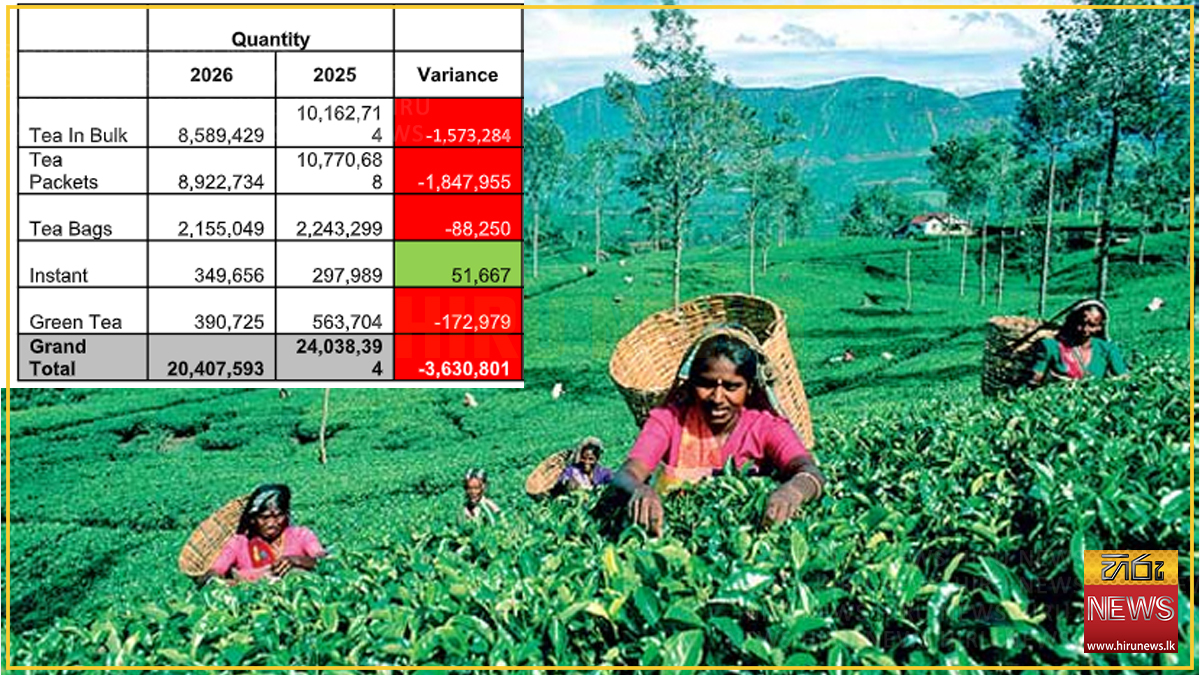
Reports from Hiru News confirm that Sri Lanka’s tea exports saw a distinct decline in July 2026. This monthly dip aligns with the broader seven-month trend of reduced volumes, attributed to both supply-side constraints and demand-side shocks in traditional markets. The reduction in volume at the Colombo auction puts downward pressure on prices, impacting the revenue available for estate maintenance and worker welfare funds.
Local view
Local media outlets, including Daily FT and Lanka Newspapers, have highlighted the "hidden human cost" of maintaining Ceylon Tea’s global brand amidst these economic headwinds. Reporting suggests that while the brand remains strong, the financial strain on estates is leading to tighter budgets for labor and infrastructure. Lanka Newspapers specifically notes that despite the global prestige of Ceylon Tea, local struggles regarding worker conditions persist, with recent articles emphasizing the gap between international price expectations and the actual earnings of estate communities.

Context & numbers
- Export Volume (Jan-Jul 2026): 143.51 million kg (down 4.9% YoY).
- Revenue Impact: $67 million decline in export earnings over the same period.
- Key Markets Affected: Iraq, Russia, and Turkey continue to be major buyers but face logistical hurdles; Turkey emerged as a key driver in May but faced disruptions later in the quarter.
- Base Wage: The daily wage for plantation workers stands at Rs. 1,750, effective from January 1, 2026, following a government-RPC agreement.
On the radar
- Q3 Data Release: Watch for the full Q3 export data from the Sri Lanka Tea Board in October to see if the July/August slump continued or if there was a partial recovery in September.
- Assam Competition: India’s Assam region is facing its own crisis with floods and pests, which could theoretically benefit Sri Lankan tea if buyers switch origins, though quality consistency remains a concern for Assam.
- Fertilizer Subsidies: Monitor any new circulars from the Ministry of Plantation Industries regarding fertilizer subsidies, as input costs remain a critical factor for estate profitability in the coming planting season.
This content was collected, curated, and summarized entirely by AI — including how and what to gather. It may contain inaccuracies. Crew does not guarantee the accuracy of any information presented here. Always verify facts on your own before acting on them. Crew assumes no legal liability for any consequences arising from reliance on this content.
Powered by
