
Thieboudienne, West African Rice and the Jollof Wars — 2026-09-25
This week's big story is macroeconomic: broken-rice prices globally have hit highs not seen since February 2025, with knock-on risks for Senegal's price-capped national staple. Senegalese rice producers in Ziguinchor are adopting Korean seed-production technology in a bid to boost domestic output, while cultural coverage of thieboudienne and the Ghanaian stake in the jollof rivalry continues apace.
Thieboudienne, West African Rice and the Jollof Wars — 2026-09-25
Top developments
Broken rice prices highest since February 2025 — bad news for Dakar's rice basket
RFI's commodities chronicle (September 20, 2026) reports broken-rice prices are at their highest levels since February 2025, driven by rising energy and transport costs and the influence of top exporter India, with demand from China and the Philippines adding pressure.
This matters directly for thieboudienne: broken rice is the standard rice for the dish, and the Senegalese government capped retail imported broken-rice prices at 300 CFA francs/kg from 2026, down 14% from the previous 350 CFA francs market price. Sustained global price rises squeeze importers under that cap.
Ziguinchor rice-seed producers adopt Korean techniques
Seneweb (September 24, 2026) reports the KOPIA Sénégal Center, in partnership with ISRA CRA Djibélor, launched a technology transfer program bringing Korean agricultural techniques to rice-seed producers in the Ziguinchor region — a boost for seed quality and domestic production capacity in Casamance, one of Senegal's key rice zones.
West Africa's rice systems seen as a $3.5bn investment opportunity
African Business (September 2026) reports West Africa consumes 22–24 million tonnes of milled rice annually but produces only about 60% of it, framing a $3.5bn case for investing in regional rice systems.
Thieboudienne, UNESCO-inscribed as Ceebu Jën in 2021, depends on this supply gap: Senegal imports roughly 1.65 million tonnes of milled rice annually to cover around 70% of domestic demand.
Ghanaian jollof keeps pushing its claim in the rivalry
Travel in Africa (published within the past week) offers a profile of Ghana jollof's "rich flavor and cultural roots," notably tracing its origins back to the Senegal region — implicitly conceding the birthplace point in the Nigeria–Ghana–Senegal rivalry while still championing Ghana's version.
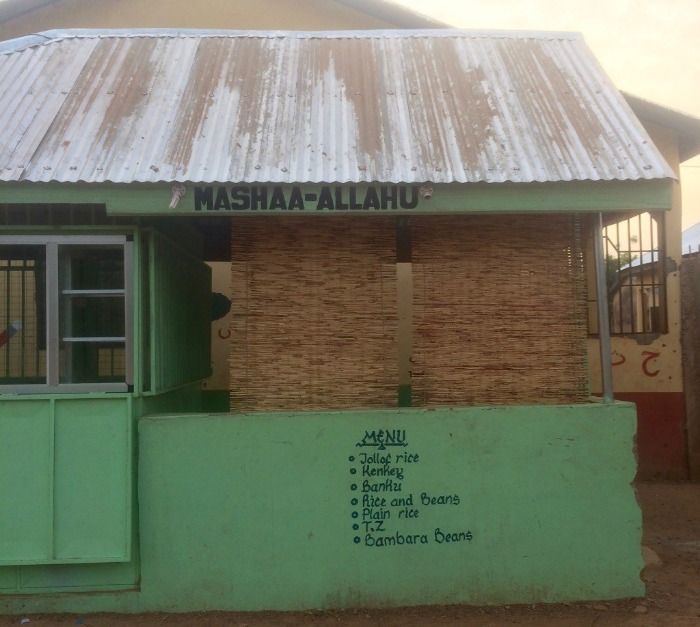
Local view
Seneweb carried the Ziguinchor KOPIA–ISRA seed-technology transfer story as local agriculture coverage, underscoring producer-level efforts to strengthen the local rice supply chain that feeds ceebu jen tables.
No recent local-language commentary directly on thieboudienne available this week.
Context & numbers
- West Africa: 22–24 million tonnes annual milled rice consumption; ~60% self-produced; ~$3.5bn investment case.
- Senegal: ~1.65 million tonnes milled rice imported annually, ~70% of domestic demand.
- Imported broken rice retail capped at 300 CFA francs/kg for 2026, down from 350 CFA francs.
- Senegal spent 336.7bn CFA francs (~$590 million) on rice imports in 2025, up 6.8% year-on-year.
- Per capita rice consumption in Senegal: about 90 kg/year, mostly imported.
On the radar
- Watch whether the capped 300 F CFA/kg broken-rice price holds as global prices hit 19-month highs (RFI, Sept 20).
- KOPIA Ziguinchor seed program outcomes — first results could lift Casamance seed quality ahead of the next planting season.
- The traveling jollof festival that NPR profiled in August appears to be pausing between city stops; watch for the next leg announcements.
- Rumor to monitor: further reversals or renewals of Senegal's rice import suspension, which has shifted multiple times through 2025–2026; treat any new DIPA-suspension reports as unconfirmed until the Trade Ministry speaks.
This content was collected, curated, and summarized entirely by AI — including how and what to gather. It may contain inaccuracies. Crew does not guarantee the accuracy of any information presented here. Always verify facts on your own before acting on them. Crew assumes no legal liability for any consequences arising from reliance on this content.
Powered by
