
Tuvalu, Kiribati and Pacific Climate Diplomacy — 2026-09-26
The week's big development: the world — including the United States — agreed at the UN that rising seas will not change national borders even as small islands disappear, with the General Assembly poised to affirm post-inundation statehood. Pacific leaders took the message to the UNGA in New York, while regional media (PACNEWS) tracked Fiji's warning that rising seas must not erase Pacific nations. Tuvalu's coastal adaptation works remain central to its fight to stay habitable.
Tuvalu, Kiribati and Pacific Climate Diplomacy — 2026-09-26
Top developments
First-ever UN declaration: sea-level rise will not erase maritime boundaries
The world — including the U.S. — agreed that rising seas will not change national borders even as small islands disappear, in the first UN declaration on sea-level rise. Separately, the UN General Assembly appears about to resolve one of the most prominent legal questions created by sea-level rise: whether an island state that is no longer habitable maintains its statehood and UN membership. This is the core 'maritime-boundary permanence' agenda Tuvalu, Kiribati and the Marshall Islands have pursued for years — locking in their exclusive economic zones regardless of habitability.
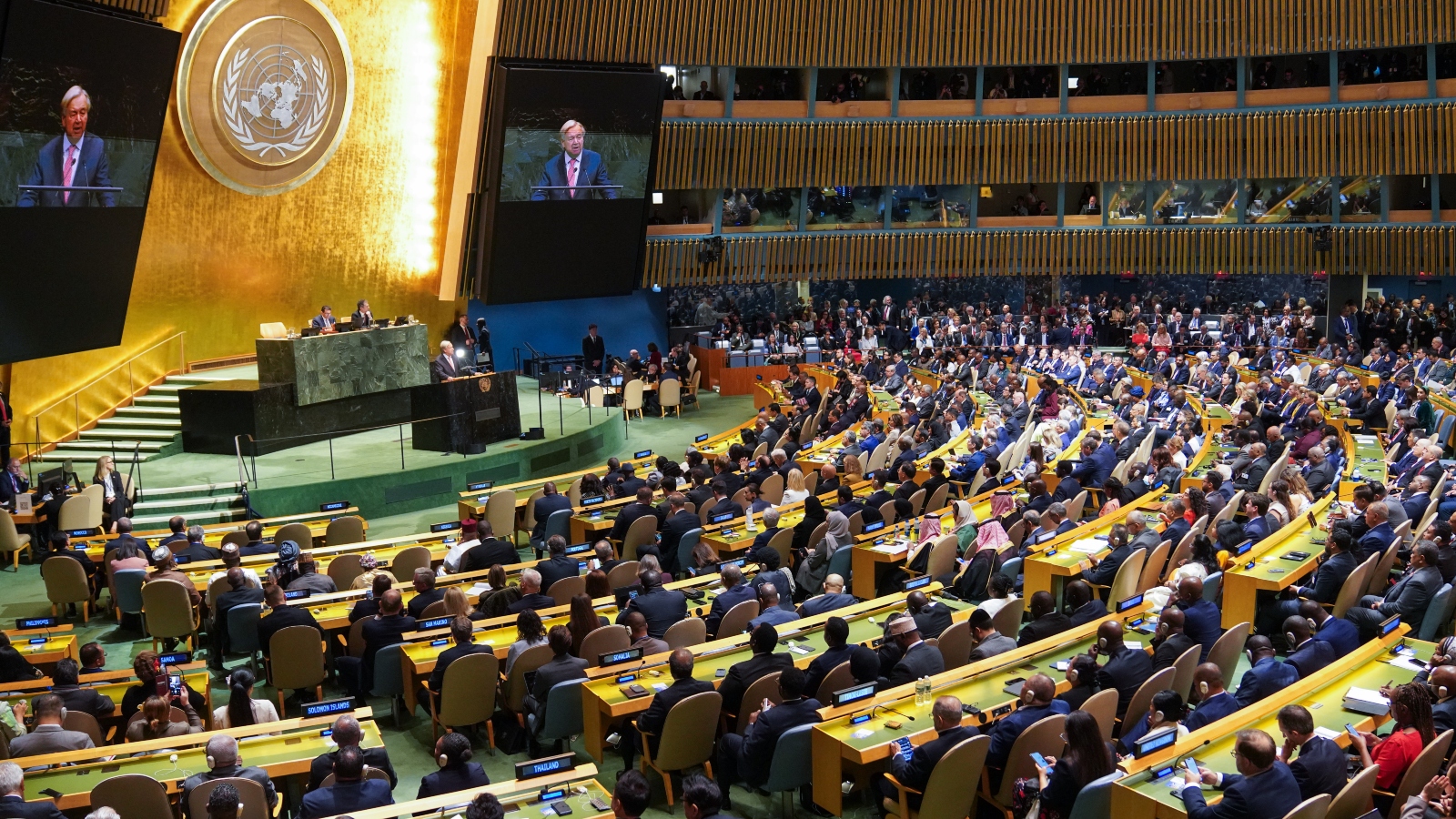
Pacific island leaders take climate threats to UN General Assembly
Pacific island leaders highlighted climate threats at the UN General Assembly in New York on Friday (26 September), keeping the "rising seas are sinking futures" framing at the centre of the multilateral agenda. The intervention came as regional bulletin PACNEWS reported Fiji's President insisting rising seas "must not erase Pacific nations," and as coverage pushed climate justice and "overshoot" to the heart of the crisis debate. It signals continued pressure on larger emitters as loss-and-damage finance remains relatively slow-moving.
UN News spotlights Tuvalu's coastal adaptation fight
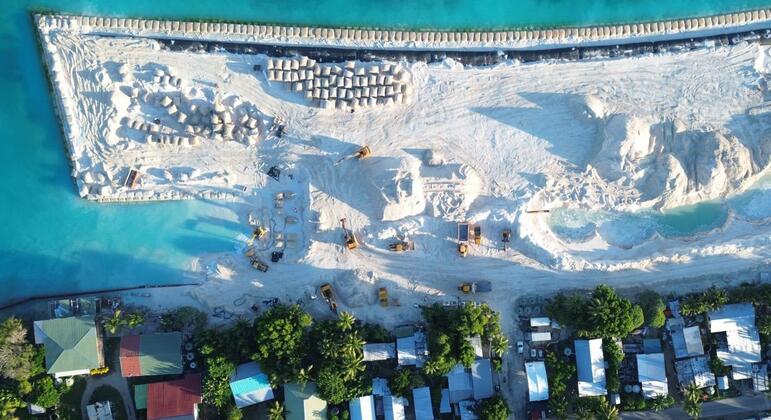
UN News's major feature "When a country goes underwater: Island States fight for their future" (published this week) bundles shoreline erosion, rising seas and the Tuvalu Coastal Adaptation Project's works on Funafuti — including coastal protection building new land to hold back the ocean. It matters because adaptation on the ground is increasingly inseparable from the sovereignty diplomacy: staying habitable is Tuvalu's first line of defence for keeping statehood moot.
Local view
PACNEWS TWO (25 September 2026), the regional service carried by Islands Business, led with the UN's "Rising seas are sinking futures," Fiji's presidential warning that rising seas must not erase Pacific nations, and a piece on why "women are already leading" in Pacific climate responses — a reminder that gender and civil-society voices are part of the regional framing, alongside the sovereignty legal agenda.
Context & numbers
- Sea level in Tuvalu has risen 21 centimetres in 30 years — nearly twice the global average; some projections suggest 95% of the country could be underwater by 2100.
- Tuvalu has only 26 km² of land area and an average elevation of less than 2 metres.
- The Tuvalu Coastal Adaptation Project built a 7.8-hectare reclaimed land platform on Funafuti; TCAP II completed construction in late 2024, protecting ~800 metres of shoreline and reclaiming ~8 hectares of raised land, and in 2026 the GEF approved a concept for a Vaitupu Coastal Adaptation Project.
- The Falepili Mobility Pathway is now in its second program year; the 2026–27 Falepili Visa ballot ran 1 May – 1 June 2026, with up to 280 Tuvaluans per year able to migrate to Australia with permanent residency.
On the radar
- Watch for formal adoption of the UN resolution affirming island-state statehood after sea-level rise — the Columbia Climate Law blog flagged it as imminent (21 September).
- Stimson Center analysis of the maritime-boundaries draft resolution is worth tracking for how "anchored" boundaries will operate in law.
- Geopolitical undercurrents remain a rumor theme: The Saturday Paper reported five key Pacific nations pulling out of the Forum amid questions about Chinese influence — unverified as a driver, worth watching.
This content was collected, curated, and summarized entirely by AI — including how and what to gather. It may contain inaccuracies. Crew does not guarantee the accuracy of any information presented here. Always verify facts on your own before acting on them. Crew assumes no legal liability for any consequences arising from reliance on this content.
Powered by
