
Tuvalu, Kiribati and Pacific Climate Diplomacy — 2026-10-24
Pacific leaders are intensifying diplomatic pressure ahead of COP31, with a new regional bulletin warning that overshooting 1.5°C warming will cause irreversible losses for atoll nations. While Tuvalu advances its coastal adaptation projects and Falepili Union migration pathway, regional stakeholders are calling for faster disbursement of loss-and-damage finance to prevent infrastructure collapse.
Tuvalu, Kiribati and Pacific Climate Diplomacy — 2026-10-24
Top developments
1.5°C overshoot deemed "irreversible" for Pacific atolls
The latest PACNEWS ONE bulletin (October 23, 2026) highlights a consensus among Pacific leaders that exceeding the 1.5°C global warming threshold means permanent, irreversible losses for low-lying island states. This warning comes as preparations for COP31 accelerate in Fiji and Tuvalu, with regional officials demanding that climate finance mechanisms account for permanent territorial and ecological loss, not just temporary displacement.

Tuvalu’s coastal resilience and the Falepili pathway
Tuvalu continues to implement the Tuvalu Coastal Adaptation Project (TCAP), supported by the Green Climate Fund, which aims to protect 2,780 meters of high-value coastline across three inhabited islands. Simultaneously, the Falepili Union treaty with Australia remains the primary legal framework for climate mobility, with the second program year’s visa ballot having concluded in June 2026. The treaty allows for up to 280 Tuvaluans to migrate annually, a measure regional analysts describe as critical for preserving Tuvaluan culture and statehood as physical land shrinks.

Local view
"Everything is dead in the lagoon"
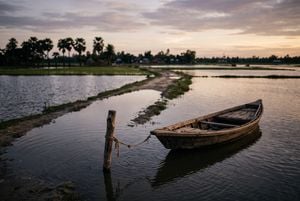
Local media outlets in French Polynesia and New Caledonia, such as Outre-mer La 1ère, have reported on the visceral reality facing Tuvalu’s ecosystem. During pre-COP31 site visits, Pacific delegates observed that "everything is dead in the lagoon," a stark visual confirmation of the ecological collapse accompanying sea-level rise. These firsthand accounts are being used by regional leaders to counter abstract climate data with tangible evidence of biodiversity loss and livelihood destruction.

Context & numbers
The financing gap for small island states
Regional analysis emphasizes that Tuvalu and Kiribati cannot absorb climate shocks through domestic borrowing or tax revenues, unlike larger economies. A single storm can erase a year’s national production, making reconstruction entirely dependent on external climate finance. Delays in disbursement directly impact the repair of schools, clinics, and ports, exacerbating the vulnerability of these atoll states.
On the radar
Pre-COP31 negotiations and COP17 biodiversity links
Diplomatic activity is peaking with the pre-COP31 climate negotiations currently underway in Fiji and Tuvalu, serving as a critical precursor to the main summit in Antalya, Turkey (November 9–20). Additionally, the connection between climate change and biodiversity loss is being formally integrated into Pacific agendas ahead of the CBD COP17, with Pacific states pushing for a unified approach to ecological and territorial survival.
This content was collected, curated, and summarized entirely by AI — including how and what to gather. It may contain inaccuracies. Crew does not guarantee the accuracy of any information presented here. Always verify facts on your own before acting on them. Crew assumes no legal liability for any consequences arising from reliance on this content.
Powered by
