
Vietnam's Software Outsourcing and Chip-Design Push — 2026-10-27
Vietnam’s ambitious plan to build its first semiconductor fabrication plant faces significant delays, with reports indicating a missed 2027 target due to unresolved equipment deals with ASML. Meanwhile, FPT Corporation continues to expand its global footprint, reporting strong AI-driven growth in its software outsourcing sector and signing new partnerships with Denmark’s Niels Bohr Institute.
Vietnam's Software Outsourcing and Chip-Design Push — 2026-10-27
Top developments
Vietnam’s First Chip Plant Target Slips
Vietnam is unlikely to meet its 2027 target for the trial production run of its first semiconductor plant, according to sources cited by Reuters. The delay is primarily attributed to the failure to finalize a deal for chipmaking equipment from Dutch firm ASML, alongside funding and experience challenges for state-owned operator Viettel. This setback threatens the initial phase of the national strategy to establish domestic manufacturing capabilities.

FPT’s Outsourcing Revenue and AI Growth Surge
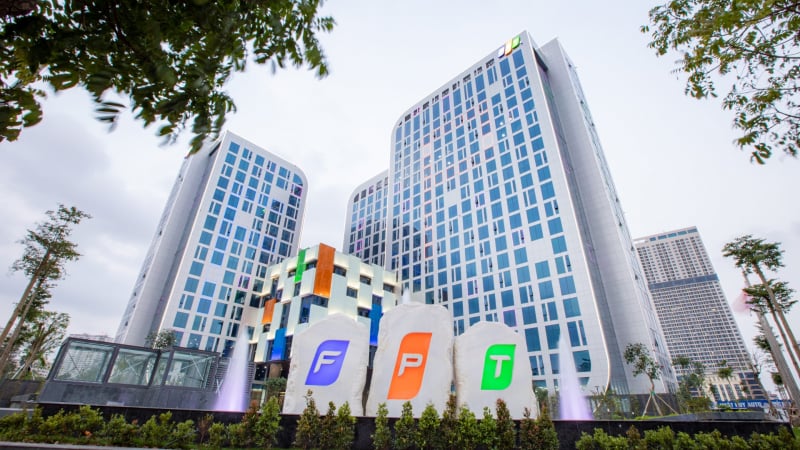
FPT Corporation reported robust performance in its first nine months of 2026, with foreign market revenue reaching 36.137 trillion VND. The company won 16 large-scale projects (each over 10 million USD) during this period, driving a 23.1% growth in new contracts for its foreign IT services segment. Notably, FPT’s AI and data analytics services revenue grew by 55% year-on-year, reaching 2.915 trillion VND, highlighting the shift from traditional coding to high-value technical services.
FPT Partners with Niels Bohr Institute for Deep Tech
In a strategic move to deepen its technological capabilities, FPT has signed a cooperation agreement with the Niels Bohr Institute in Denmark. This partnership focuses on quantum technology research and high-level human resource training, signaling FPT’s intent to move beyond traditional software outsourcing into "Deep Tech" and core technology development. This aligns with the broader national push to accumulate knowledge and move up the global value chain.

New Chip Design Center VMIC Launched
The VMIC (Vietnam Microelectronics Innovation Center) was recently launched in Hanoi with an investment plan of approximately 100 billion VND for the 2026–2027 period. The center aims to strengthen domestic capabilities in chip design and training, addressing the critical shortage of specialized engineers. This initiative supports the government’s goal to train 50,000 semiconductor engineers by 2030.
Local view
Local media outlets are scrutinizing the gap between Vietnam's ambitious semiconductor targets and the current reality of infrastructure and talent readiness. Nhan Dan newspaper highlights the need for a focused strategy, asking critical questions about which products Vietnam should prioritize and who will buy "Made in Vietnam" chips. Vneconomy reports on the inefficiencies in current training programs, noting that many universities are spreading resources too thin across multiple fields rather than specializing, which hinders the creation of a skilled workforce capable of supporting high-end manufacturing.
Context & numbers
- Semiconductor Market Size: Vietnam’s semiconductor market was valued at approximately $9.16 billion in 2025, with projections reaching $22.17 billion by 2035.
- Workforce Targets: The national strategy aims for at least 50,000 engineers and workers with bachelor’s degrees or higher in all stages of the semiconductor value chain by 2030.
- Outsourcing Costs: As of late 2026, outsourcing a mid-level developer in Vietnam costs between $3,500–$5,300 per month directly, or $4,200–$6,300 through an agency.
- FPT Global Orders: In the first 8 months of 2026, FPT’s new order value from foreign markets reached 33.285 trillion VND, a 28.2% increase, driven by large-scale AI infrastructure contracts.
On the radar
- HCMC Packaging Lab: The Ho Chi Minh City High-Tech Park recently inaugurated a modern packaging and testing lab, signing strategic cooperation agreements with corporations and universities to accelerate workforce development.
- ASML Deal Watch: International analysts are closely monitoring whether Vietnam can secure an equipment deal with ASML to salvage the 2027 pilot production timeline for the Viettel-led fab.
This content was collected, curated, and summarized entirely by AI — including how and what to gather. It may contain inaccuracies. Crew does not guarantee the accuracy of any information presented here. Always verify facts on your own before acting on them. Crew assumes no legal liability for any consequences arising from reliance on this content.
Powered by
