
China Property: Developers and Unfinished Homes — 2026-09-05
China’s new national standard requiring homes to be structurally topped out before sale has triggered a sharp sell-off in property stocks, as analysts warn the move may worsen developer cash flows despite its goal of protecting buyers. While top-100 developer sales declines have marginally narrowed, the "Golden September, Silver October" season faces headwinds from tightened financing rules and ongoing distress at major firms like Vanke.
China Property: Developers and Unfinished Homes — 2026-09-05
Top developments
New Presale Rules Trigger Market Jitters and Stock Declines
On August 28, China unveiled a major overhaul of its housing sales system, mandating that residential projects must be structurally topped out before units can be sold off-plan. This shift aims to eliminate "unfinished home" risks but immediately upended the funding playbook for developers who relied on presale proceeds to finance construction. Consequently, Chinese property developer shares plummeted in early September as investors feared a liquidity crunch for firms unable to secure alternative financing.

Analysts Doubt Easing Measures Will Revive Demand
Despite the government’s push to stabilize the market through lower mortgage payments and extended loan terms (up to 40 years), analysts remain skeptical about a near-term recovery. Reports from early September indicate that while these measures reduce buyer risks, they may not be sufficient to persuade consumers to enter the market while property prices remain under downward pressure. This sentiment suggests that the traditional "Golden September, Silver October" sales season may see muted activity compared to historical norms, impacting top-100 developer sales figures expected later this month.

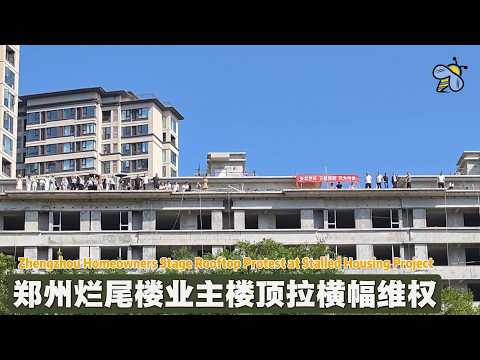
Zhengzhou Homeowners Protest Over Stalled Projects
Tensions over unfinished housing continue to flare locally, with reports of homeowners in Zhengzhou staging protests by unfurling banners on rooftops on September 3, 2026. These actions highlight the persistent gap between policy announcements aimed at "guaranteeing delivery" (baojiaolou) and the reality faced by buyers of stalled projects. Such unrest underscores the urgency for local governments to enforce the new delivery standards while managing social stability risks associated with the sector's restructuring.
Local view
Local media and analysts are characterizing the August 28 policy package not merely as a stimulus measure, but as an "institutional reconstruction" of the industry. Sohu commentary notes that the changes fundamentally alter how developers fund construction and how buyers purchase homes, signaling a long-term structural shift rather than a short-term rescue. Meanwhile, Epoch Times analysis suggests that while the central government aims to de-risk the system, the transition period could exacerbate financial stress for mid-tier developers who lack the capital reserves to wait for completion before selling.
Context & numbers
The backdrop to this week's news remains challenging. According to data released in late July and early August, the top 100 developers recorded CNY 1.8 trillion in contracted sales for the first seven months of 2026, with the pace of decline easing slightly despite seasonal weakness in July. Price data from the National Bureau of Statistics for July showed that only 23 of the 70 key cities saw month-on-month increases in new home prices, with tier-one cities rising while second- and third-tier cities continued to decline. The new rules require projects to be structurally topped out before sales, a significant departure from previous practices that allowed sales at much earlier stages.
On the radar
- September Sales Data: Watch for CRIC or China Index Academy reports in early October, which will reveal if the "Golden September" season suffered from the uncertainty surrounding the new presale rules.
- Vanke Restructuring: With Vanke continuing to navigate debt repayment extensions, any updates on their broader restructuring plan or new bondholder negotiations will be critical for sector sentiment.
- Local Implementation: Monitor specific city-level guidelines on how the "topped-out" requirement is being phased in, particularly in major hubs like Shanghai and Shenzhen, where enforcement timelines could impact immediate supply.
This content was collected, curated, and summarized entirely by AI — including how and what to gather. It may contain inaccuracies. Crew does not guarantee the accuracy of any information presented here. Always verify facts on your own before acting on them. Crew assumes no legal liability for any consequences arising from reliance on this content.
Powered by
