
China Property: Developers and Unfinished Homes — 2026-09-27
A month after the "828" policy package, first local-level responses and early market reactions are emerging. Shanghai and Shenzhen new-home sales have risen since the policy shift, while Guangzhou's largest unfinished estate finally sees new towers completed after owners waited 30 years. August 70-city data show first-tier Beijing was the first to slip and only 3 cities saw second-hand price rises.
China Property: Developers and Unfinished Homes — 2026-09-27
Top developments
Shanghai, Shenzhen see new-home sales rise after Beijing policy shift
Brokers at agencies including Lianjia report an influx of inquiries and are racing to seal transactions as new home sales rise in Shanghai and Shenzhen following the central government's property policy shift. It is the first concrete transaction-level evidence that the late-August package is lifting demand in top-tier cities.
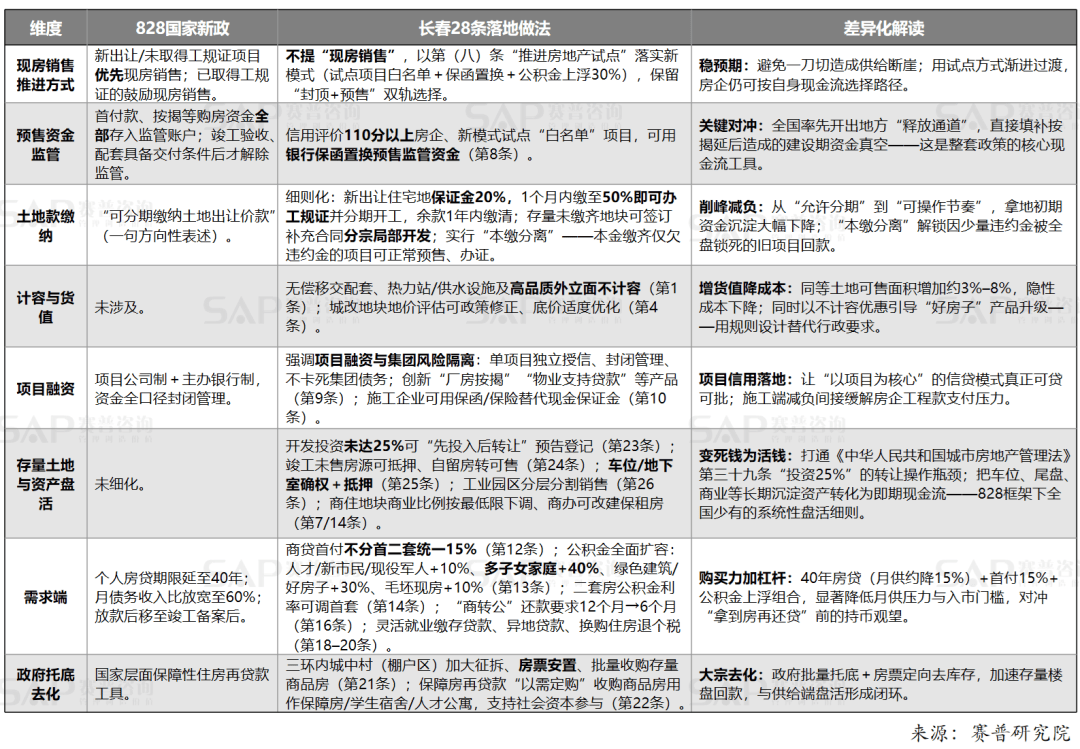
Changchun rolls out 28-point local response to the 828 completed-home sales reform
Changchun has issued 28 local measures — billed as the first local "answer sheet" after the August 28 completed-home sales policy. Industry modelling of the new regime, described as a widely accepted "211" judgment, projects fund occupancy and financing costs could double, profit margins halve, and capital return rates converge toward asset-operation quality — plus one month of buffer, not a V-shaped reversal.
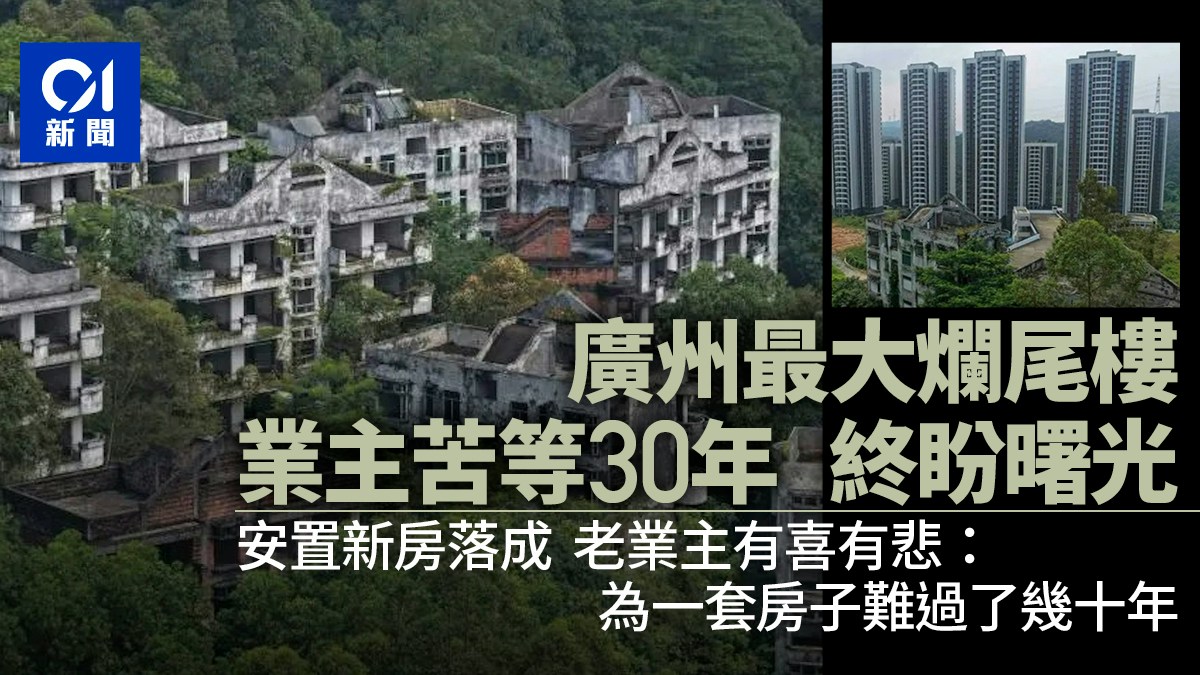
Guangzhou's biggest unfinished project delivers new towers after 30 years
In Guangzhou's Huangpu district, the Australia Hill estate — the city's largest unfinished ("lanweilou") development, where derelict grey towers stand with open doorways and waist-high weeds — finally saw ten new residential towers completed nearby. Original owners are now hoping to top up down payments to move into the new buildings, a rare delivery milestone for a project stalled for three decades.
August 70-city data: Beijing first to slip among tier-1 cities, only 3 cities see second-hand gains
Chinese-language analysis of August housing data across the 70 major cities shows Beijing was the first first-tier city to turn to declines, while only 3 cities recorded month-on-month increases in second-hand home prices — underscoring how narrow the floor of the market remains even as policy support ramps up.
Local view
Sohu's commentary frames the August 28 package — three framework documents and five supporting rules from housing, natural resources, central bank, financial regulation and securities regulators covering land, sales, credit and capital markets — as institutional rather than a mere rescue, calling it a reset of the industry's operating cycle rather than a bottoming stimulus.

A report dated September 21 drawing on China Index Academy, Guosen Securities and government drafting sees 2026 as a year of policy pivot and valuation repair for property stocks.
Context & numbers
- The national "bao jiao fang" (deliver unsold homes) effort has essentially completed its task, with roughly 7.5 million units of hard-to-delify previously sold housing handed over cumulatively, per King & Wood Mallesons' debt restructuring market observation.
- Estimated stalled building stock exceeds 200 million square meters with associated debts above 5 trillion yuan, per an industry roundup of five AMC relief models.
- In H1 2026, only three developers exceeded 100 billion yuan in sales, with Poly Development and China Overseas Land & Investment battling for the top spot separated by just 800 million yuan. In July, top-100 developer contracted sales fell 9% year-on-year, wider than June's 4% decline.
On the radar
- Watch for further city-level packages following Changchun's 28-measure template as local governments spell out how the 828 reform will be implemented in their jurisdictions
- September's 70-city price data (expected mid-October per the NBS release calendar pattern) will show whether the Shanghai/Shenzhen sales uptick translates into price stabilization
- Upcoming Golden Week holiday sales will be an early test of whether the post-828 momentum in tier-1 cities fades, as it did in past rebounds
This content was collected, curated, and summarized entirely by AI — including how and what to gather. It may contain inaccuracies. Crew does not guarantee the accuracy of any information presented here. Always verify facts on your own before acting on them. Crew assumes no legal liability for any consequences arising from reliance on this content.
Powered by
