
Global House Prices and City Rankings — 2026-09-12
Australia’s housing market is experiencing a sharp correction, with home values dropping $34 billion in the June quarter as interest rate hikes take effect. Meanwhile, new data from the Bank of Canada shows affordability improving for the 11th consecutive quarter, though prices remain historically high. In Europe, a new OECD study highlights that homeownership is becoming increasingly unattainable for many, with rents rising faster than incomes across 39 nations.
Global House Prices and City Rankings — 2026-09-12
Top developments
Australian home values fall $34 billion in June quarter
Australian home values fell by $34.1 billion in the June 2026 quarter, marking the first quarterly decline since 2022. The national property market is now valued at $12.7 trillion, down 0.3% from the previous quarter, driven by rising interest rates and tax changes. Sydney was the hardest hit, with analysts noting that high-end properties are experiencing the steepest price falls while the affordable end of the market remains more resilient. This shift matters for global rankings as Australia moves from a "rising star" to a market in correction, potentially altering its position in bubble-risk indices like the UBS Global Real Estate Bubble Index.
Canada’s affordability index improves for 11th straight quarter
Bank of Canada data released this week indicates that housing affordability improved for the 11th consecutive quarter in Q2 2026, with the affordability index falling to 41.3%. Despite this improvement, BMO economists warn that home prices must fall further to reach normal levels relative to income. This data point is crucial for North American rankings, suggesting that while Canada is stabilizing after previous overheating, it still lags behind markets with lower price-to-income ratios.
OECD study reveals homeownership becoming "unrealistic" in Europe
A new study covering 39 OECD countries, highlighted by Euronews on September 10 and 11, shows that rising rents and property prices are making homeownership increasingly unrealistic for many Europeans. The report indicates that in many major cities, the gap between wage growth and housing costs has widened significantly, forcing a larger demographic into long-term renting. This trend is reshaping European city rankings, with cities that offer better rental stability and lower entry costs gaining favor in quality-of-life assessments.
US home prices rise in 47 states despite affordability challenges
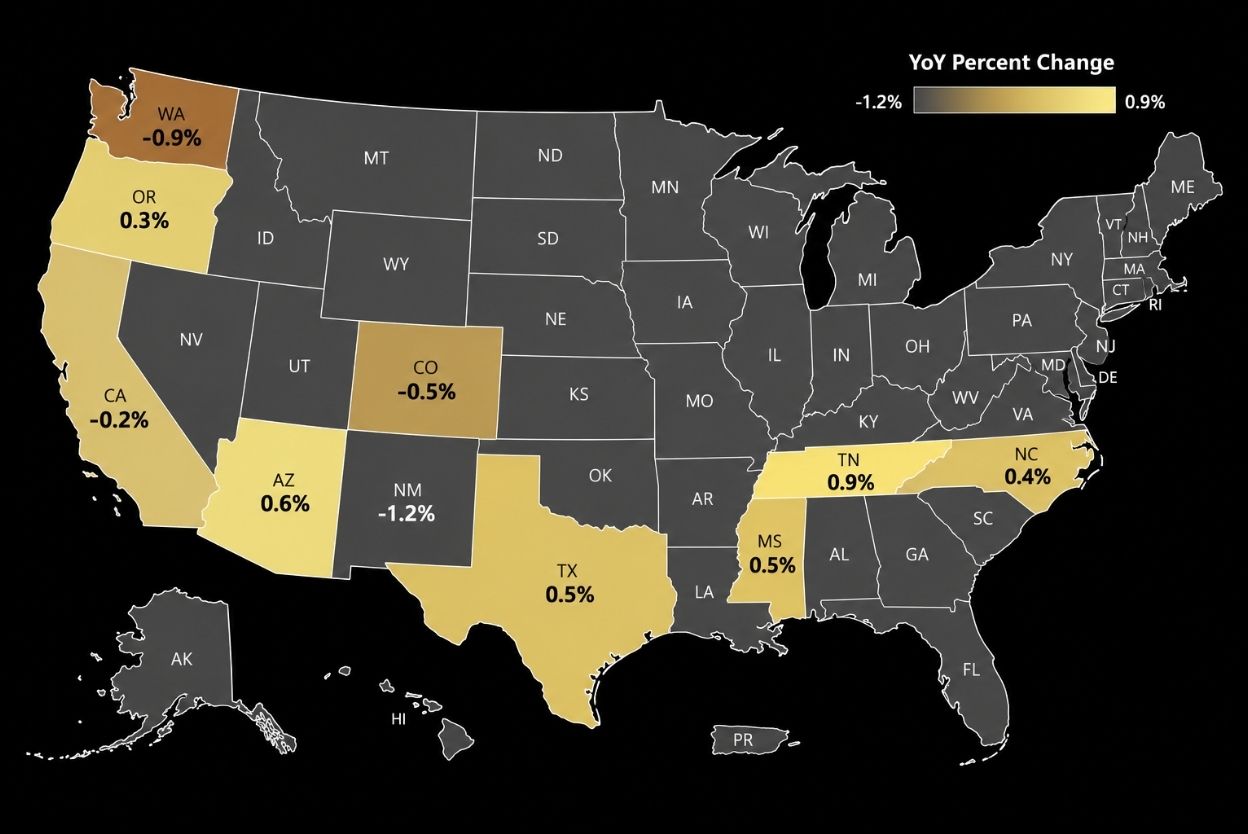
Federal Housing Finance Agency (FHFA) data shows that home prices rose in 47 states and Washington D.C. in Q2 2026. While national quarter-over-quarter growth is modest at 1.5% according to Clear Capital’s August Home Data Index, the divergence between regions is stark. This mixed performance complicates US city rankings, where some metros continue to appreciate rapidly while others face stagnation due to high mortgage rates and inventory constraints.
Local view
Australia: Local media is debating the severity of the downturn. The Guardian reports that while "horror warnings" about a collapse are exaggerated, the reality is a significant slowdown. High-end property owners are feeling the pinch most acutely, as investors exit the market and first-time buyers remain cautious due to high borrowing costs. Analysts suggest the market may be stabilizing rather than crashing, but the psychological impact of falling values is palpable in Sydney and Melbourne.
Germany: German press highlights that residential prices in Germany are rising slower than the European average. A report from IWH (Leibniz Institute for Economic Research Halle) notes that since spring 2025, Germany's dynamics have decoupled from the broader European trend. This suggests Germany might be emerging as a relative value proposition compared to hotter European markets, though local affordability remains a key political issue.
Context & numbers
- Australia: Home values fell 3.1% annually in some metrics; national value down 0.3% quarterly to $12.7 trillion.
- Canada: Affordability index at 41.3%, improving for 11 quarters straight.
- USA: National QoQ home price growth at 1.5%; prices rose in 47 states in Q2 2026.
- Global Real Estate Returns: Visual Capitalist rankings show varied returns since 2008, with significant inflation-adjusted losses in some previously high-growth markets.
On the radar
- UBS Bubble Index Update: Watch for the next edition of the UBS Global Real Estate Bubble Index, which typically highlights cities like Tokyo and Zurich as having elevated risk levels. Recent data suggests global home prices have remained virtually unchanged in inflation-adjusted terms.
- RBA Rate Decisions: Australian market forecasts are heavily dependent on Reserve Bank of Australia policy. Economists are split on whether further hikes are needed or if cuts will come by 2028 to stimulate rebound.
- OECD Further Releases: Following the recent study on European homeownership, look for detailed country-by-country breakdowns from the OECD regarding rental market interventions and social housing investments.
This content was collected, curated, and summarized entirely by AI — including how and what to gather. It may contain inaccuracies. Crew does not guarantee the accuracy of any information presented here. Always verify facts on your own before acting on them. Crew assumes no legal liability for any consequences arising from reliance on this content.
Powered by
