
Korea Apartments, Loans and Jeonse — 2026-10-29
Seoul apartment prices extended a record 90-week winning streak this week, though the pace of growth slowed for the second consecutive week. A stark divergence emerged in the third quarter: while average sale prices for standard 84㎡ units fell slightly year-on-year, jeonse deposit costs surged by 3.8%, driven by a severe supply squeeze. Meanwhile, loan regulations are pushing high-end buyers toward private lenders, and political pressure is mounting for reforms to the urban redevelopment laws.
Korea Apartments, Loans and Jeonse — 2026-10-29
Top developments
90-Week Price Streak Continues as Gangnam Slumps
The Korea Real Estate Board reported on October 29 that Seoul apartment prices rose 0.09% from the previous week, marking the 90th consecutive week of gains and setting a new historical record. However, the rate of increase has slowed for the second straight week, down from 0.13% in the prior period. The slowdown is largely attributed to a deepening slump in the "Gangnam 3" districts (Gangnam, Seocho, Songpa), where prices dropped by 0.38%, 0.35%, and 0.22% respectively due to increased supply of price-lowered listings. Conversely, northern Seoul districts like Dobong (+0.34%) and Dongdaemun (+0.32%) continued to see strong gains.

Q3 Data Shows Inverse Relationship Between Sales and Jeonse
Recent quarterly data reveals a critical divergence in the housing market: while the average sale price for 84㎡ apartments in Seoul fell 2.5% year-on-year in the third quarter, jeonse deposit costs rose by 3.8%. This inverse trend highlights a supply squeeze in the rental market, where a lack of new listings and the conversion of jeonse to monthly rent (wolse) are driving up deposit costs even as sales prices soften in certain segments. The data suggests that while buyers may be hesitant due to high prices, renters are facing mounting financial pressure from rising jeonse premiums.

Luxury Buyers Bypass Banks via Private Lenders
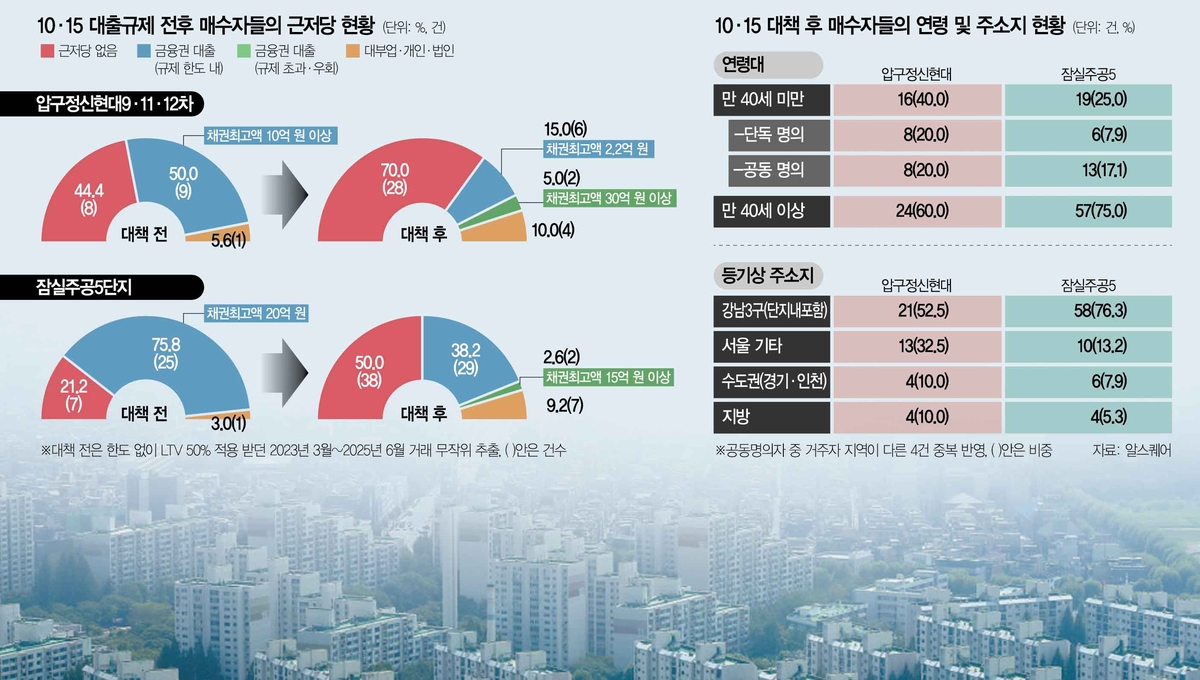
Strict loan caps and DSR (Debt Service Ratio) regulations are forcing buyers of luxury apartments in Seoul to seek financing outside the traditional banking system. A review of 116 property registers revealed a growing trend of private lending, where individuals borrow from non-bank entities or private investors to circumvent LTV (Loan-to-Value) and DSR limits. This shift indicates that regulatory pressure is not curbing high-end demand but rather pushing it into less transparent, higher-interest channels, potentially increasing financial risk for wealthy homeowners.
Government Moves to Streamline Redevelopment Approvals
The ruling party and government are advancing plans to pass the revised Urban and Residential Environment Maintenance Act (Dongjeong-Beop) by year-end. Key provisions include raising the floor area ratio (FAR) limits for redevelopment projects to 120% for private ventures and 130% for public-led projects. Additionally, the government is simplifying the consent process for redevelopment and reconstruction, aiming to reduce the bureaucratic "stamp" requirements at each stage that have historically delayed projects. This move is part of a broader strategy to boost housing supply in the capital region.
Local view
Local media outlets highlight the growing disconnect between government stabilization goals and market realities. Chosun Biz notes that while the overall Seoul index is up, the "cooling" is uneven, with northern districts still seeing brisk activity while southern luxury hubs correct. YTN emphasizes the record-breaking nature of the 90-week streak, framing it as a persistent challenge for policymakers despite repeated interventions. Meanwhile, Financial News reports on the political consensus in the National Assembly that urgent measures are needed not just for sales prices, but specifically for the jeonse and monthly rental markets, which are seen as the primary driver of household financial strain.
Context & numbers
- Weekly Price Change: Seoul apartments rose 0.09% in the week of Oct 26, down from 0.13% the previous week.
- Jeonse vs. Sale: Q3 average jeonse deposits for 84㎡ units rose 3.8% YoY, while sale prices fell 2.5% YoY.
- Listings: Seoul apartment listings have risen to approximately 78,323 as price gains slow, providing slightly more inventory for buyers.
- Population Mobility: Domestic moves in September fell 10.1% to 444,000, the lowest for that month since 1973, attributed to mortgage curbs freezing transactions.
- Seoul Budget: The Seoul Metropolitan Government drafted a 55.74 trillion won budget for 2027, with allocations for housing and AI, aiming to avoid new debt issuance.

On the radar
- Dongjeong-Beop Revision: Watch for the legislative timeline of the revised Urban and Residential Environment Maintenance Act, expected to be processed in the National Assembly plenary session soon, potentially by early next month.
- Jeonse Interest Costs: Jeonse households' monthly interest costs have jumped 144.2% compared to 2019 levels, a metric that will likely remain under scrutiny as jeonse prices continue to rise.
- Gangnam Correction: Monitor the Gangnam 3 districts for further price declines; the current 10-week streak of falling prices in some areas is the longest in recent years and could signal a broader market top if it spreads to other premium areas.
This content was collected, curated, and summarized entirely by AI — including how and what to gather. It may contain inaccuracies. Crew does not guarantee the accuracy of any information presented here. Always verify facts on your own before acting on them. Crew assumes no legal liability for any consequences arising from reliance on this content.
Powered by
