
Offices and Commercial Property Distress — 2026-10-17
Office distress is shifting from high vacancy rates to realized lender losses as CMBS delinquency spikes to 12.2%, surpassing financial crisis peaks. While adaptive reuse projects in Washington D.C. and Chicago show early signs of stabilizing suburban vacancies, San Francisco remains stalled with zero completed conversions. Meanwhile, office occupancy has hit post-pandemic highs on core weekdays, creating a bifurcated market where trophy assets thrive while older towers face liquidation.
Offices and Commercial Property Distress — 2026-10-17
Top developments
CMBS delinquencies surpass 2008 crisis levels
The delinquency rate for office loans in commercial mortgage-backed securities (CMBS) re-spiked to 12.2% in early October 2026, a figure far exceeding the 10.7% peak seen during the 2008 financial crisis. This surge indicates that the "extend-and-pretend" strategy used by lenders during the pandemic is finally collapsing as interest rates remain elevated and loans mature. For investors, this signals that building values have dropped sharply enough that borrowers can no longer refinance, forcing lenders to recognize losses and potentially take ownership of distressed assets.
D.C. and Chicago see stabilization through conversions
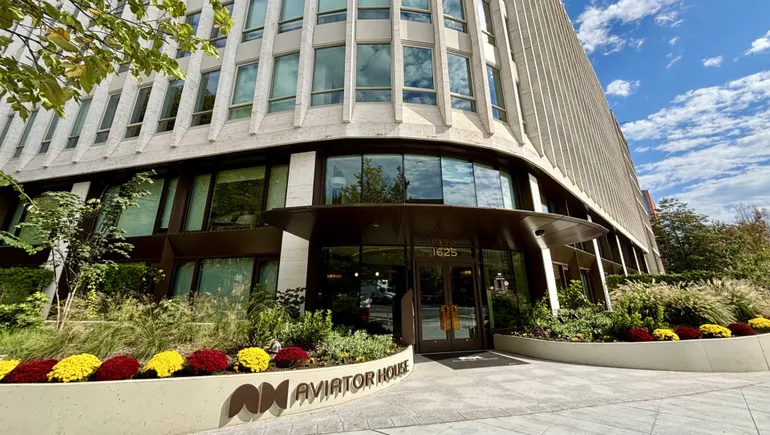
Washington D.C. is experiencing a boom in office-to-residential conversions, with three notable recent projects highlighting the city's adaptive reuse momentum. Similarly, in suburban Chicago, vacancy rates have stabilized at 33.1% for two consecutive quarters, a significant improvement from the pandemic peak, driven by the demolition and redevelopment of obsolete office stock. These developments suggest that while vacancy rates remain historically high, the market is beginning to digest excess supply through conversion and demolition, particularly in secondary markets where redevelopment incentives are strong.
JLL reports recovery but warns on inventory
JLL’s latest outlook indicates that many U.S. markets have surpassed pre-pandemic leasing volumes, yet the disposal and repurposing of non-performing buildings may slow due to high interest rates. The firm notes that while demand is rebounding toward pre-pandemic peaks, the "flight to quality" is sending top-tier rents skyward, leaving older, lower-tier assets struggling to find tenants. This bifurcation means that while trophy towers are leasing well, the broader market remains weighed down by a glut of obsolete inventory that is difficult to finance for conversion.
San Francisco conversions stall despite policy push
Despite aggressive policy incentives and a severe housing shortage, San Francisco has not completed a single office-to-housing conversion as of October 2026. The city’s attempt to inject life into empty downtowns by meeting housing demand has been hampered by regulatory hurdles, high construction costs, and the technical challenges of converting deep-floor plates into residential units. This failure contrasts sharply with D.C. and Boston, where streamlined processes have accelerated approvals, highlighting that policy alone is insufficient without favorable economic fundamentals and building suitability.
Local view
The German press is focusing on the structural crisis in Frankfurt’s office market, where vacancy levels are at their highest since 2007. Media outlets like FAZ report that the Rhein-Main region is actively marketing the city at the Expo Real in Munich to attract investors, acknowledging that the "golden years" of easy capital are over. WELT notes that rising interest rates and new yield alternatives are fundamentally altering investor calculations, forcing a repricing of assets that owners and tenants must now confront.
Context & numbers
- CMBS Delinquency: Office CMBS delinquency hit 12.2% in October 2026, up from 11.8% in September and exceeding the 2008 crisis peak of 10.7%.
- Occupancy: Kastle Systems badge data shows office occupancy has reached post-pandemic highs, but this is concentrated on Tuesday through Thursday, with lower traffic on Mondays and Fridays.
- Vacancy: Suburban Chicago office vacancy stood at 33.1% in Q3 2026, stabilizing after years of decline.
- Leasing: Q2 2026 leasing activity rose 16% year-over-year to 62.4 million sq. ft., with net absorption totaling 38.9 million sq. ft. over the past four quarters.
On the radar
- CMBS Originations: Recent data suggests credit metrics for 2026 CMBS loan originations are improving, potentially indicating a more conservative lending environment for new deals.
- Surveillance Expansion: KBRA has expanded its CMBS surveillance coverage for U.S. commercial real estate, enhancing loan-level monitoring which may lead to earlier detection of distressed assets.
- Mall Debt: A borrower in California is shrinking debt on a mall asset, a signal that other distressed retail and mixed-use owners may be seeking to deleverage or hand back keys as refinancing becomes untenable.
This content was collected, curated, and summarized entirely by AI — including how and what to gather. It may contain inaccuracies. Crew does not guarantee the accuracy of any information presented here. Always verify facts on your own before acting on them. Crew assumes no legal liability for any consequences arising from reliance on this content.
Powered by
