
Archaeology Digs, LiDAR Finds and Shipwrecks — 2026-10-07
A 7-year-old’s beachcombing discovery in Cornwall may solve a 300-year-old shipwreck mystery, while a massive cargo of luxury Roman tableware has resurfaced in the Mediterranean after 2,100 years. In France, archaeologists uncovered rare family graves with well-preserved pottery, and in Italy, a major Iron Age settlement halted road construction.
Archaeology Digs, LiDAR Finds and Shipwrecks — 2026-10-07
Top developments
Child’s Discovery Links to 300-Year-Old Shipwreck
In August 2025, seven-year-old Arthur found human teeth on a beach at Lizard Point in Cornwall, UK. Archaeologists from The National Trust believe this discovery may finally identify the burial site associated with a long-mysterious shipwreck from three centuries ago. The teeth provide crucial biological data that could confirm the identity of the vessel and its crew, turning a local curiosity into a significant historical breakthrough.
%3Amax_bytes(150000)%3Astrip_icc()%3Afocal(749x0%3A751x2)%2FBoy-7-Found-a-Human-Tooth-on-the-UK-Coast-uncovering-shipwreck-100526-2-e5a91d43e81640eda7463ef6e65a6dc1.jpg)
Luxury Roman Tableware Resurfaces After 2,100 Years
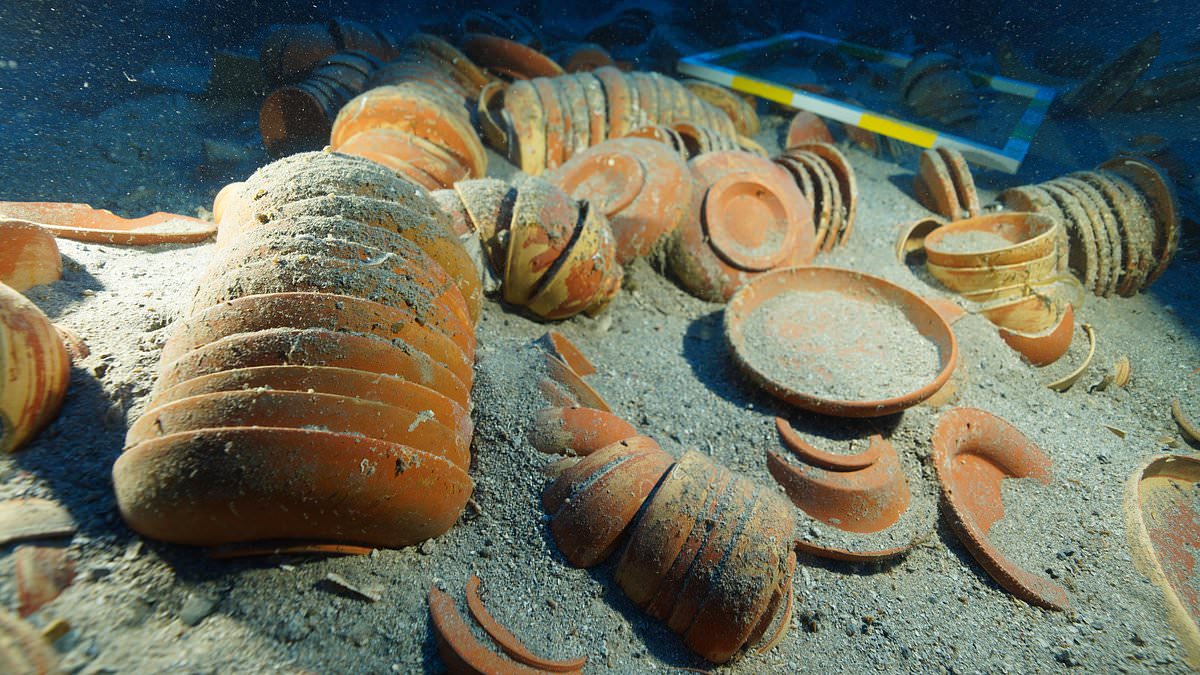
A shipwreck containing an intact cargo of luxury crockery was discovered beneath the Mediterranean Sea, having remained untouched for over two millennia. The find, reported by Daily Mail on October 7, 2026, includes fine tableware that offers insights into Roman trade routes and elite consumption habits. This exceptional preservation allows researchers to study the distribution of high-end goods across the ancient Mediterranean without the degradation typically seen in underwater sites.
Rare Family Graves Unearthed in France
Archaeologists excavating an ancient settlement in La Rivière-de-Corps, France, discovered three possible family burials dating back approximately 1,700 years. The graves contained unusually well-preserved pottery and glass vessels, providing rare insight into domestic life and burial practices during the late Roman period in Gaul. These artifacts are critical for understanding regional variations in Roman provincial culture and family structures.
%3Amax_bytes(150000)%3Astrip_icc()%3Afocal(749x0%3A751x2)%2FLa-riviere-de-corps-archaeological-100626-6-78431e655f274c01b21ef9b39019c398.jpg)
Iron Age Settlement Halted Road Works in Italian Alps
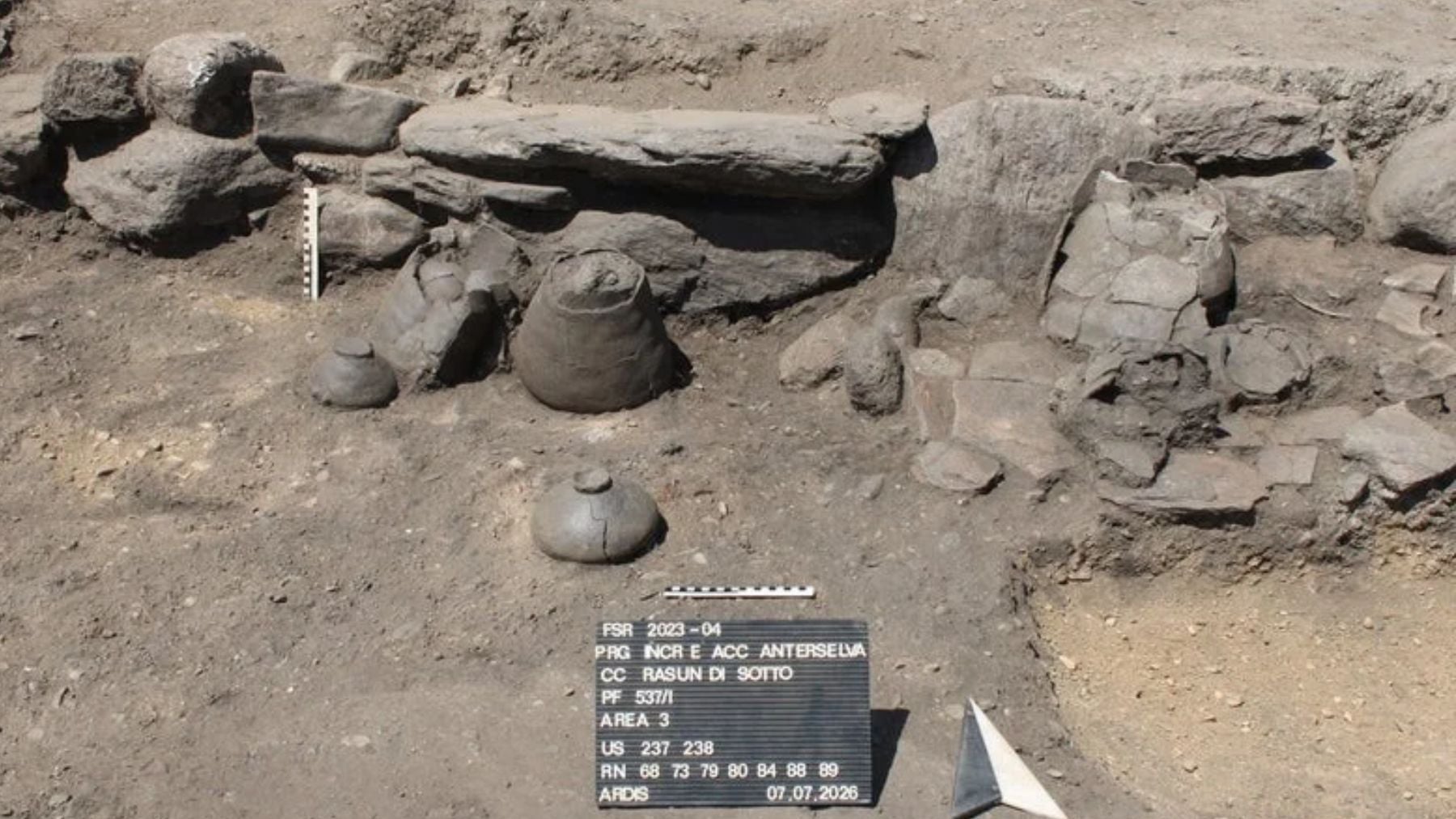
Construction on a highway project in the Italian Alps was suspended after archaeologists discovered over 30 houses from the Iron Age, dating back at least 2,500 years. The find, reported by Okdiario on October 1, 2026, highlights the dense pre-Roman settlement patterns in Alpine regions. The discovery necessitates a redesign of the infrastructure project to preserve the archaeological integrity of the site, underscoring the ongoing tension between development and heritage protection.
Local view
Turkey: Turkish media reported on September 28, 2026, that the Minister of Culture and Tourism announced the discovery of luxury tableware at the Adrasan shipwreck off Antalya. The find is linked to historical records of Cicero ordering such crockery, suggesting the ship carried high-value goods for Roman elites.
Egypt: Al Arabiya reported on September 29, 2026, about the discovery of a 1,700-year-old limestone tomb in the Dakhla Oasis. It contained a rare 19-line Greek poem, believed to be a message from a son to his deceased father, offering unique literary and emotional insight into Greco-Roman Egyptian society.
Context & numbers
China’s National Cultural Heritage Administration has enforced new rules requiring archaeological teams to transfer recovered artifacts to state-owned institutions within six months of submitting excavation reports. This policy aims to standardize the handling of shipwreck relics and other finds, with 17,000 shipwrecked relics recently given to Chinese research centers under these guidelines.
On the radar
- Göbekli Tepe Burials: Following the September 25, 2026, announcement of intact burials at Göbekli Tepe, further analysis of these 10,000-year-old remains is expected to reshape theories about Neolithic settlement and death rituals.
- Pharos Lighthouse Seal: Recent underwater excavations in Alexandria’s Eastern Harbor have uncovered a bronze seal ring depicting the Pharos Lighthouse, the first known artifact of its kind, which may provide new details about the structure’s appearance.
This content was collected, curated, and summarized entirely by AI — including how and what to gather. It may contain inaccuracies. Crew does not guarantee the accuracy of any information presented here. Always verify facts on your own before acting on them. Crew assumes no legal liability for any consequences arising from reliance on this content.
Powered by
