
Archaeology Digs, LiDAR Finds and Shipwrecks — 2026-09-05
This week’s major archaeological developments center on the announcement of an Old Kingdom tomb discovery in Saqqara, Egypt, and the ongoing excavation seasons in Turkey, including new findings at Göbekli Tepe. In Europe, a Roman shipwreck off Sicily with hundreds of amphorae is being highlighted for its potential to rewrite Mediterranean trade history, while LiDAR technology continues to reveal hidden infrastructure at Machu Picchu.
Archaeology Digs, LiDAR Finds and Shipwrecks — 2026-09-05
Top developments
Old Kingdom Tomb Unveiled in Saqqara, Egypt
On August 29, 2026, an Egyptian archaeological mission announced the discovery of a tomb belonging to a prominent official named "Sakhentiu-Ptah" at the Bubasteion necropolis in Saqqara. The find, part of the first season of excavations in Sector A West of the Bubasteion, includes a system of burial wells and various artifacts dating to the Old Kingdom (c. 2686–2181 BCE). This discovery provides significant insights into the religious institutions and administrative apparatus of ancient Egypt during this period.

Roman Shipwreck with 500 Amphorae Found Off Sicily
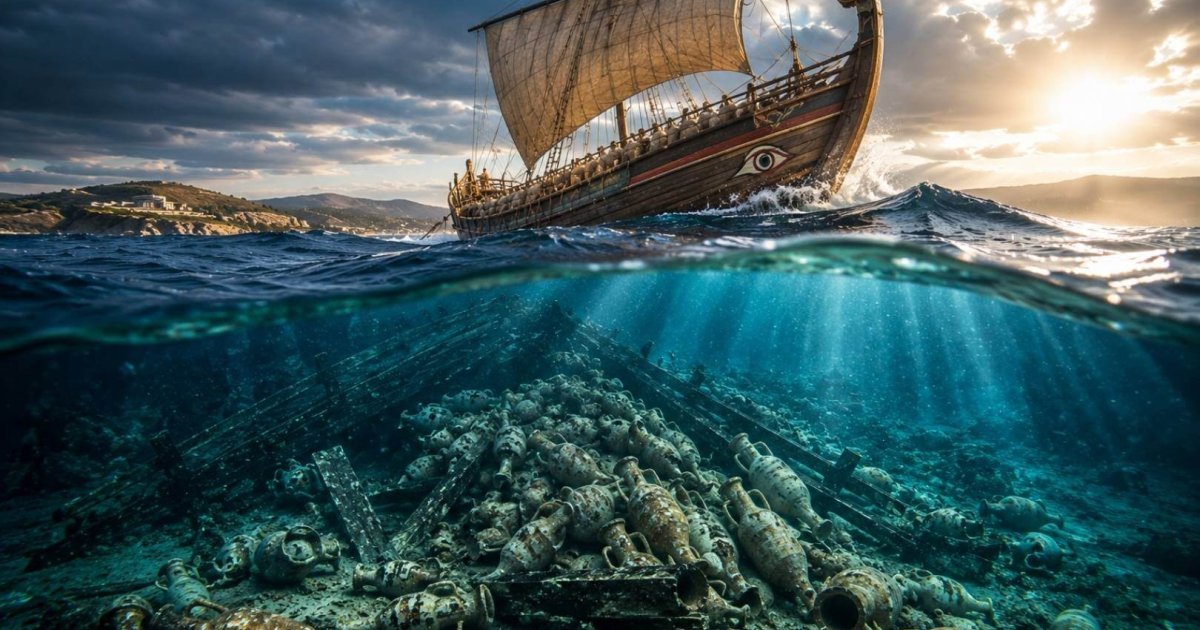
A Roman-era shipwreck located approximately 46 meters deep off the coast of Sicily has been confirmed to contain nearly 500 amphorae, dating back roughly 2,100 years. The site, which was recently highlighted by Italy’s culture minister as one of the most important underwater finds in years, offers fresh data on Mediterranean trade routes more than two millennia ago. The preservation of the cargo allows researchers to trace the vessel's final journey and the goods it carried, likely wine or oil.
LiDAR Reveals Hidden Pre-Columbian Roads at Machu Picchu
In a report published on September 4, 2026, researchers using LiDAR technology discovered 1.5 miles of previously unknown pre-Columbian roads near Machu Picchu. These hidden infrastructures suggest a more complex network than previously understood, connecting key areas of the Inca citadel. Peruvian officials have kept the specific locations secret to protect the newly identified paths from looting and erosion.

New Excavation Season Begins at Sobesos, Turkey
The 2026 excavation season at the ancient city of Sobesos in Cappadocia, Turkey, officially began in early September 2026. Local media reported that the team, supported by the Ministry of Culture and Tourism, is focusing on uncovering more details about the city’s Byzantine and Roman layers. This season aims to expand on previous years' findings regarding the urban layout and daily life in the region.
Local view
In Turkey, the "Stone Hills" (Taş Tepeler) project continues to generate local excitement, particularly following the recent discovery of a stele at Sayburç and ongoing work at Göbekli Tepe. Turkish outlets like Sabah have highlighted how these new finds challenge established theories about Neolithic settlement patterns, emphasizing the region's role as a cradle of complex society. Meanwhile, in Spain, Ultimahora and El Debate are rallying public support for the Ses Fontanelles Roman shipwreck, which has been nominated for National Geographic’s "+Historia" awards, reflecting strong regional pride in Balearic underwater heritage.
Context & numbers
The Saqqara tomb belongs to the Old Kingdom period (c. 2686–2181 BCE), a foundational era for Egyptian state formation. The Sicilian shipwreck lies at a depth of 46 meters, requiring specialized deep-water archaeology techniques. The LiDAR survey at Machu Picchu identified 1.5 miles of new roadways, adding significantly to the known infrastructure of the site.
On the radar
- Göbekli Tepe Northern Sector: Initial geomagnetic surveys and surface scans in the northern section of Göbekli Tepe have indicated the presence of large public structures and huts. Full excavation results from this new area are expected in the coming months.
- National Geographic +Historia Awards Voting: The voting period for the Ses Fontanelles shipwreck award is active, with results expected later in the year. This could boost funding and visibility for Mediterranean underwater heritage projects.
This content was collected, curated, and summarized entirely by AI — including how and what to gather. It may contain inaccuracies. Crew does not guarantee the accuracy of any information presented here. Always verify facts on your own before acting on them. Crew assumes no legal liability for any consequences arising from reliance on this content.
Powered by
