
Archaeology Digs, LiDAR Finds and Shipwrecks — 2026-09-14
A joint Egyptian-Spanish mission has unveiled a remarkably preserved Fifth Dynasty tomb in Saqqara, featuring original polychrome reliefs. In Turkey, new excavation zones at Göbekli Tepe are challenging established theories on the origins of settlement, while drone technology is being deployed to update the archaeological record of Copán in Honduras.
Archaeology Digs, LiDAR Finds and Shipwrecks — 2026-09-14
Top developments
Polychrome Tomb Discovered in Saqqara
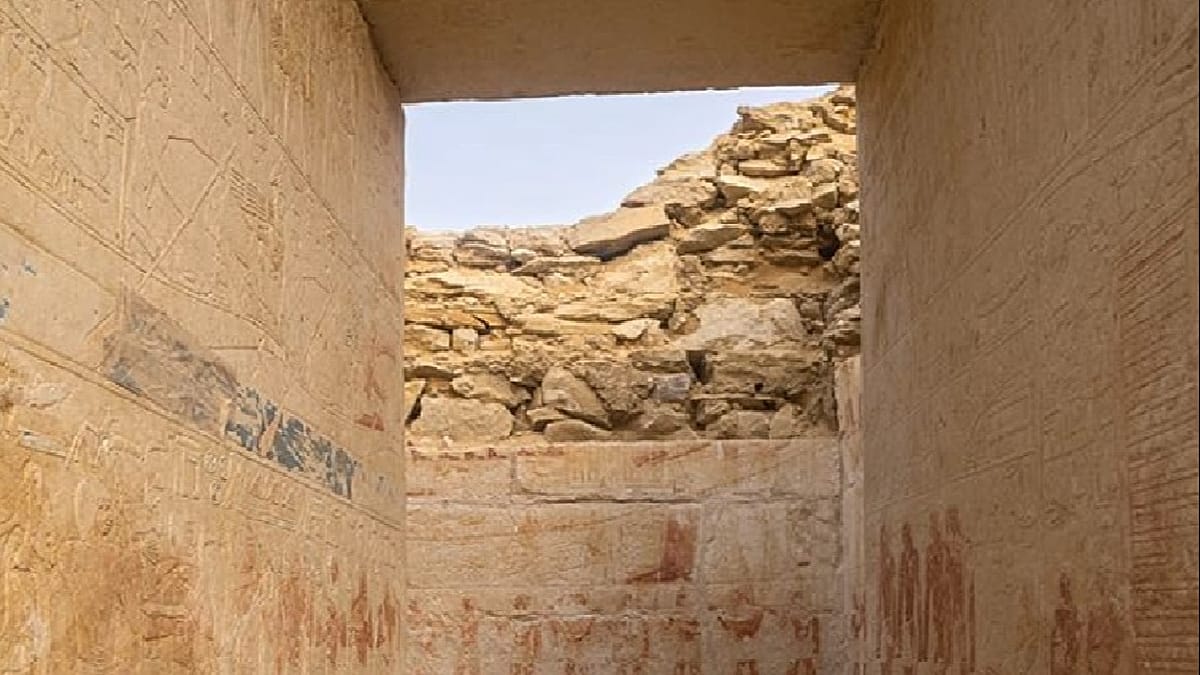
On September 7, the Egyptian Ministry of Tourism and Antiquities announced the discovery of a tomb from the late Fifth Dynasty (reign of King Djedkare Isesi) in Saqqara. The joint Egyptian-Spanish mission uncovered two funerary chapels belonging to high-ranking state officials, including a judge named Yunmin and his father Iti. The find is significant for its exceptionally preserved agricultural scenes and offering rituals, which retain their original colors after more than 4,400 years.
New Excavation Zones at Göbekli Tepe
As of September 12, archaeologists have opened a new excavation area north of the main site at Göbekli Tepe in Şanlıurfa, Turkey. Recent findings from the ongoing season suggest that agriculture and animal husbandry were consequences, not causes, of permanent settlement. The new zone aims to further investigate the social structures of these 12,000-year-old communities, which displayed advanced architectural and artistic capabilities prior to the Neolithic agricultural revolution.

Drone LiDAR Survey Planned for Copán
Marking the 50th anniversary of major discoveries at the Maya site of Copán, Honduras, authorities have announced plans to use drones and aerial scanning technology to update the historical record. This initiative aims to map hidden structures and features within the dense jungle canopy that were missed during previous decades of ground-based excavation. The project represents a shift toward non-invasive LiDAR-style remote sensing to expand the known extent of the ancient city.

Roman Road Segment Found in Córdoba
Researchers have confirmed the discovery of a segment of one of the most significant Roman roads in Hispania in Fuente Obejuna, Córdoba, Spain. The find, reported on September 11, provides physical evidence of the imperial infrastructure network that connected key regions of the province. This discovery helps reconstruct the logistics and movement of troops and goods across the Iberian Peninsula during the Roman Empire.
Local view
In Spain, El Mundo highlights a prehistoric site near Madrid that has been active for 25 years, noting its potential to rival Atapuerca in rewriting our understanding of recent prehistory due to its unique, less-known context. Meanwhile, La Vanguardia reports on urban archaeology in Barcelona, where construction work for a new school uncovered remains of the 19th-century "Canal de la Infanta," demonstrating how modern development continues to reveal layers of industrial heritage.
Context & numbers
The discovery in Saqqara involves tombs dating back approximately 4,400 years to the reign of King Djedkare Isesi. In Turkey, Göbekli Tepe’s monumental structures reach heights of up to 5.5 meters, and the site is currently undergoing expansion of its excavation zones. In Peru, recent genomic studies published earlier this year (Nature Communications, May 2026) have traced long-distance migration on the Pacific coast to at least the 13th century AD, providing a baseline for current Andean archaeological interpretations.
On the radar
- Copán Drone Survey: Keep an eye out for preliminary data releases from the aerial scanning of Copán in Honduras, expected to update the map of the Maya city.
- Göbekli Tepe Expansion: Monitoring reports from the newly opened northern sector at Göbekli Tepe may yield new insights into Neolithic domestic life.
- Spanish Prehistoric Sites: The site mentioned by El Mundo near Madrid is gaining attention as a potential major contributor to European prehistoric studies; follow-up excavations are likely to be announced soon.
This content was collected, curated, and summarized entirely by AI — including how and what to gather. It may contain inaccuracies. Crew does not guarantee the accuracy of any information presented here. Always verify facts on your own before acting on them. Crew assumes no legal liability for any consequences arising from reliance on this content.
Powered by
