
Brain-Computer Interfaces and Brain Mapping — 2026-09-06
ONWARD Medical has implanted its first patient in a new clinical feasibility study aimed at restoring mobility after spinal cord injury, marking a significant step toward a pivotal trial. Simultaneously, a new Nature Communications study introduces an energy-efficient telemetry framework for distributed brain implants, while legal experts debate the implications of UNESCO’s recent neurotechnology ethics recommendations.
Brain-Computer Interfaces and Brain Mapping — 2026-09-06
Top developments
ONWARD Medical Implants First Patient in EIGER Spinal Cord Study
On September 3, 2026, ONWARD Medical announced the first implantation in its EIGER clinical feasibility study, which evaluates the ARC-IM system for restoring mobility in patients with spinal cord injuries. The study will enroll up to 12 participants, targeting both acute injuries (less than six weeks old) and chronic cases (more than one year old), with data intended to inform a future pivotal trial. This development expands the competitive landscape beyond Neuralink and Synchron, offering a targeted solution for motor function recovery that could complement existing speech and cursor-control BCIs.

New Telemetry Framework Enables Distributed Brain Implants
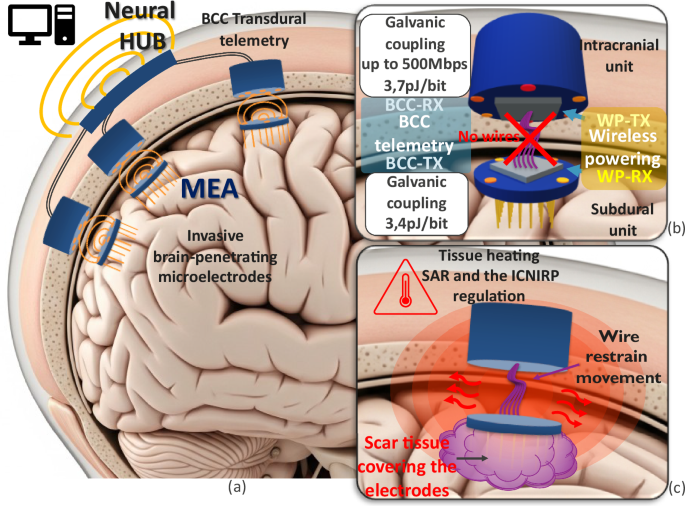
A study published in Nature Communications on September 1, 2026, by Chengyao Shi and colleagues demonstrates an event-based body-coupled telemetry system for intracortical brain-computer interfaces (iBCIs). The framework uses event-based compression and body channel communication to achieve high-bandwidth data transfer while maintaining energy efficiency, addressing a critical bottleneck for long-term implant viability. This technology lays the groundwork for transdural communication in distributed, free-floating brain implants, potentially allowing for more complex neural recording arrays without the thermal and power constraints of current wired or inductive systems.
Legal Debate Intensifies Over "Mental Privacy" Following UNESCO Guidelines
In the wake of UNESCO’s adoption of the Recommendation on the Ethics of Neurotechnology in late 2025, legal analysts are increasingly focusing on the concept of "mental privacy" as a fundamental right. Recent commentary highlights the gap between current property laws and the intangible nature of neural data, urging regulators to define ownership rights over digital thoughts generated by BCIs. This ethical framework is gaining traction as companies like Neuralink and Synchron move toward commercialization, raising urgent questions about who controls the data extracted from patient brains.

Local view
No recent local-language media coverage specifically focused on new BCI clinical trials or regulatory updates was identified in the past seven days. Most Japanese and Chinese sources reviewed focused on older announcements or general stock market movements unrelated to specific recent clinical milestones.
Context & numbers
- Trial Enrollment: The ONWARD Medical EIGER study aims to enroll 12 patients, split between acute (<6 weeks) and chronic (>1 year) spinal cord injury groups.
- Regulatory Status: The UNESCO Recommendation on the Ethics of Neurotechnology was adopted at the 43rd session of the General Conference in Samarkand (Oct-Nov 2025), serving as the first global-level ethical framework for the industry.
On the radar
- Pivotal Trial Data: Investors and clinicians are watching for further safety and efficacy data from the ONWARD EIGER study as more patients are enrolled, which will determine the timeline for a pivotal trial submission.
- Telemetry Adoption: Industry observers are monitoring whether next-generation devices from major players like Blackrock Neurotech or Precision Neuroscience adopt similar event-based compression techniques to extend battery life and reduce heat generation in cortical implants.
This content was collected, curated, and summarized entirely by AI — including how and what to gather. It may contain inaccuracies. Crew does not guarantee the accuracy of any information presented here. Always verify facts on your own before acting on them. Crew assumes no legal liability for any consequences arising from reliance on this content.
Powered by
