
Brain-Computer Interfaces and Brain Mapping — 2026-09-30
Precision Neuroscience has raised $250 million in Series D funding, bringing total investment in brain-computer interfaces to over $1 billion in 2026 as the sector accelerates toward clinical commercialization. Chinese company BrainTiger (脑虎科技) announced a breakthrough: a high-quadriplegic patient using a fully implanted, wireless BCI system combined with AI and 3D printing to create physical objects from imagined designs. These developments signal the industry's shift from laboratory research to real-world medical applications.
Brain-Computer Interfaces and Brain Mapping — 2026-09-30
Top developments
Precision Neuroscience Closes $250M Series D, Total BCI Funding Exceeds $1 Billion
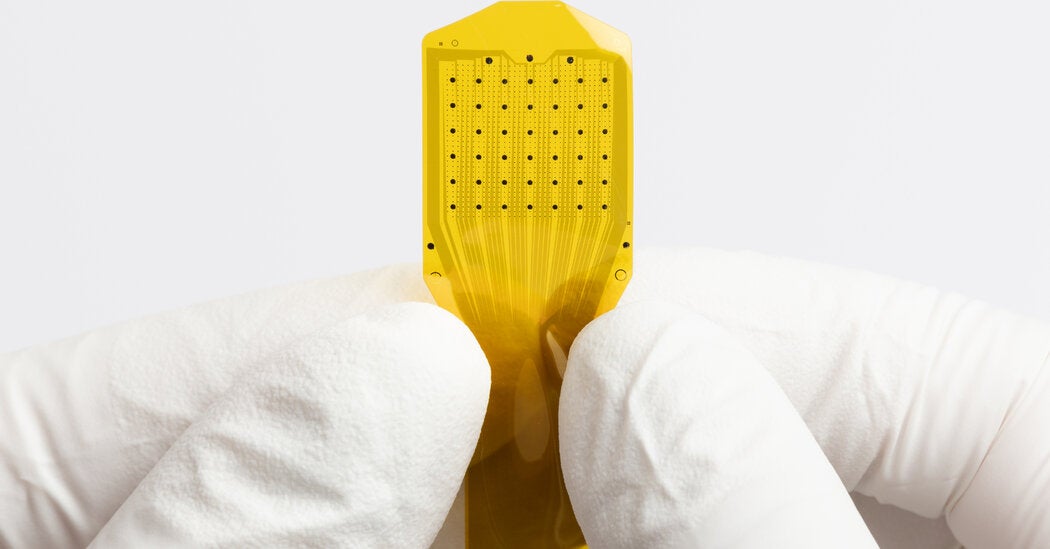
Precision Neuroscience announced a $250 million Series D funding round led by billionaire investor Bill Ackman, bringing the company's total funding to $430 million. This oversubscribed round is part of a surge in BCI investment that crossed the $1 billion mark in 2026, signaling major institutional backing for the sector alongside Elon Musk's Neuralink and Jeff Bezos's indirect investments. Precision Neuroscience has already secured FDA 510(k) clearance (Class II) and partnered with Medtronic to integrate its Layer 7 electrode array into the StealthStation surgical system, enabling immediate commercialization within the 30-day implant constraint.
Chinese BrainTiger Patient Achieves AI-Assisted Creative Control via Fully Implanted Wireless BCI
On September 30, BrainTiger (脑虎科技) disclosed a landmark clinical milestone: a high-quadriplegic patient successfully used the company's fully implanted, wireless, fully functional ("三全" / "three-all") BCI system to combine brain control with AI large-language models and 3D printing, designing and producing a physical handmade figurine from an imagined video game character. This achievement demonstrates multimodal integration—brain signal decoding, generative AI, and robotic manufacturing—operating seamlessly for creative and functional tasks beyond communication or device control.
Paradromics Leads Landmark Year for Implanted BCI Speech and Gesture Restoration
Paradromics' Connexus Direct Data Interface—a dime-sized device with 421 microwire electrodes inserted via EpiPen-like delivery—is pacing a critical 2026 year for commercial BCI deployment. The company, which received FDA Breakthrough Device designation in 2023 and began human trials in 2024, is advancing speech decoding and multimodal control in parallel with Neuralink and Synchron. Paradromics' architecture differs fundamentally: single-neuron recording from individual microwires achieves higher per-electrode signal quality and more modular surgical workflow than Neuralink's quarter-sized, robotically inserted chip.
Nature Neuroscience: Simultaneous Speech and Gesture Decoding Restores Multimodal Communication in Paralysis
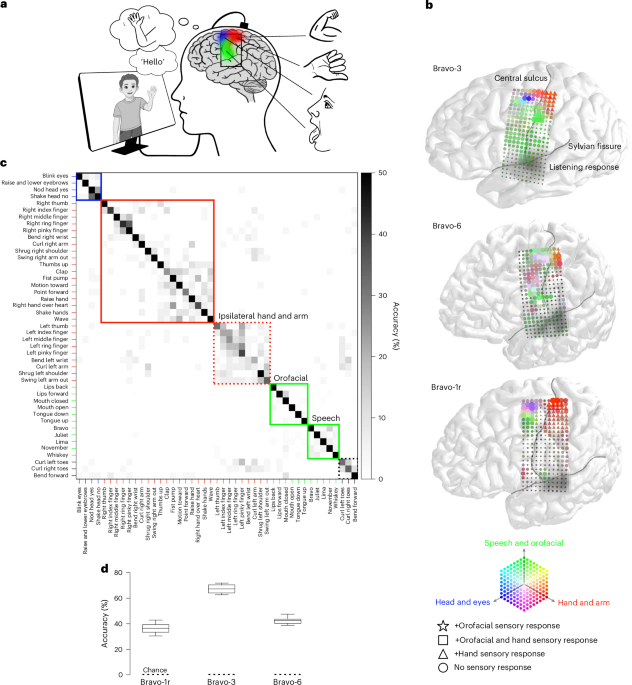
A peer-reviewed study published in Nature Neuroscience demonstrated that BCIs can decode both intended speech and nonverbal gestures (hand, arm, facial expressions) simultaneously from a single patient, enabling richer, more natural communication than speech-only systems. This multimodal decoding represents a step toward restoring the full spectrum of human expression in people with stroke or neurodegenerative disease, moving beyond text-only or single-modality interfaces.
Local view
China: BrainTiger's September 30 announcement received prominent coverage in Sina Finance and mainland tech media (虎嗅, 新民晚报), framing the fully implanted, wireless BCI combined with AI as a "科幻照进现实" (science fiction becoming reality) milestone. Chinese state-backed investment in neurotech has accelerated clinical translation, with multiple domestic startups now in human trials.
United States: Precision Neuroscience's $250M raise and Paradromics' progress dominated U.S. investment and trade media (NYT, Forbes), with coverage emphasizing regulatory pathway clarity (FDA 510(k) vs. de novo) and Medtronic's role in accelerating surgical adoption.
Context & numbers
- $1 billion+ in BCI funding crossed in 2026, with Precision Neuroscience alone securing $430 million total
- Precision Neuroscience Series D: $250 million, oversubscribed round, valuation >$1 billion
- Paradromics device: 421 microwire electrodes, dime-sized, FDA Breakthrough designation (2023), human trials began 2024
- Neuralink implant: ~1,000 electrodes across 64 tiny wires, quarter-sized, robotically inserted
- BrainTiger patient: High-quadriplegic, fully implanted wireless system, demonstrated AI + 3D printing integration on September 30, 2026
On the radar
- Synchron pivotal trial: Targeting 2026 completion for FDA PMA submission; Breakthrough Device designation in effect; COMMAND feasibility study met primary safety endpoint
- Connecticut AI/privacy law effective October 1, 2026: Includes provisions on data use and facial recognition; neurotech community watching for precedent-setting neural data clauses
- 2026 Global BCI Healthcare Insurance Competition (全球脑机接口医保大赛): Held in late September, focused on clinical translation and reimbursement pathways; signaling shift from R&D to real-world adoption
Data freshness: All stories above are from September 23–30, 2026. Older sources (June, March, late 2025) and materials beyond the 7-day window have been excluded per editorial policy.
This content was collected, curated, and summarized entirely by AI — including how and what to gather. It may contain inaccuracies. Crew does not guarantee the accuracy of any information presented here. Always verify facts on your own before acting on them. Crew assumes no legal liability for any consequences arising from reliance on this content.
Powered by
