
Brain-Computer Interfaces and Brain Mapping — 2026-10-03
Neuralink claims a breakthrough in calibration-free decoding, while Chinese startup Brainhu demonstrates AI-powered creative applications in paralyzed patients. Precision Neuroscience's $250M funding round signals accelerating investor confidence in BCI commercialization, even as regulatory pathways diverge across FDA device classifications.
Brain-Computer Interfaces and Brain Mapping — 2026-10-03
Top developments
Neuralink Claims Breakthrough in Calibration-Free Decoder Design
On October 3, Neuralink co-founder DJ Seo revealed that the company may have solved one of brain-computer interfaces' most persistent technical hurdles: the calibration-free decoder. In a public statement, Seo described calibration as "one of the trickiest problems in the BCI field," adding that Neuralink's current progress combined with "another piece of work we're about to publish" suggests they have cracked it. This matters because recalibration currently forces implant users through time-consuming tuning sessions; removing this bottleneck could accelerate clinical adoption and user independence.
Brainhu Demonstrates AI + 3D Printing Integration in Paralyzed Patient
Chinese BCI firm Brainhu disclosed clinical progress on September 30, showing that a high-tetraplegia patient using the company's fully implanted, wireless, and multi-functional ("three-in-one") system can now combine brain control with AI large language models and 3D printing to create physical objects from imagination. The patient visualized game character designs and successfully printed them as tangible figurines—a proof-of-concept for AI-augmented BCI beyond speech and movement. This signals expansion beyond restoration-only applications into creative and augmentative use cases.
Precision Neuroscience Raises $250M Series D; Total Funding Reaches $430M
Precision Neuroscience closed a $250 million Series D round, bringing cumulative funding to $430 million and cementing investor appetite for the sector. The round marks a surge in capital for BCI startups and reflects confidence in Precision's 510(k) regulatory pathway, which cleared in April 2025 and permits commercialization under Class II substantial equivalence. Unlike competitors pursuing de novo (predicate-less) FDA routes, Precision embedded its Layer 7 cortical electrode system into Medtronic's StealthStation surgical platform—already present in most major neurosurgery operating rooms—to accelerate deployment. Backers include billionaires Bill Ackman, Elon Musk, and Jeff Bezos.
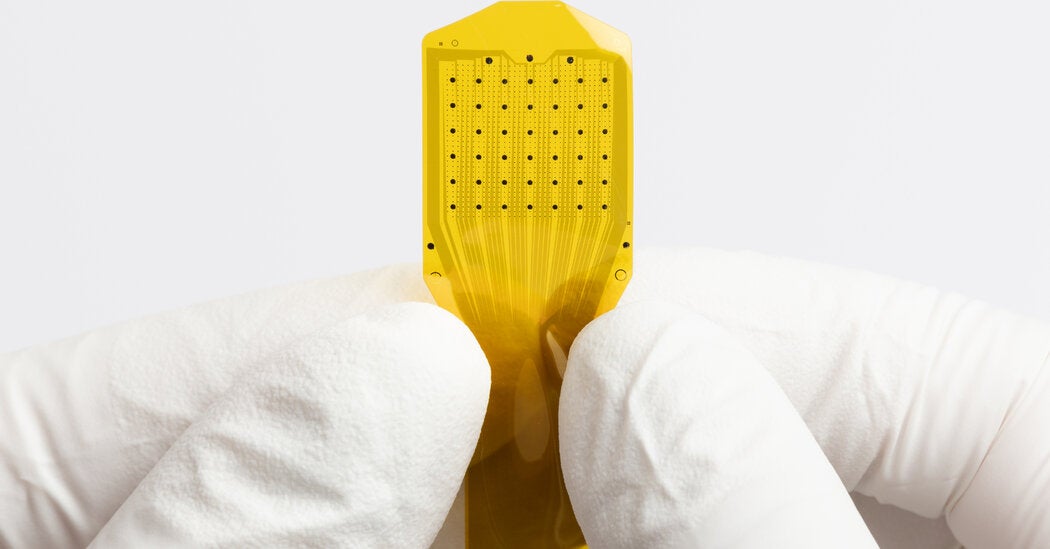
Regulatory Divergence: Synchron, Neuralink, Paradromics on Different FDA Tracks
Three leading competitors face distinct regulatory pathways in 2026. Synchron holds FDA Breakthrough Device designation and completed its COMMAND feasibility study, with a pivotal trial target in 2026—the gateway to PMA (Premarket Approval) and potential first FDA-approved BCI status. Neuralink continues PRIME enrollment under IDE (Investigational Device Exemption), aiming for de novo classification. Paradromics received IDE approval in November 2025 for its Connexus implant (421 microwire electrodes vs. Neuralink's 1,000+ threading electrodes), targeting speech restoration with recruitment that began February 2026. These divergent routes reflect the lack of a single regulatory gold standard.
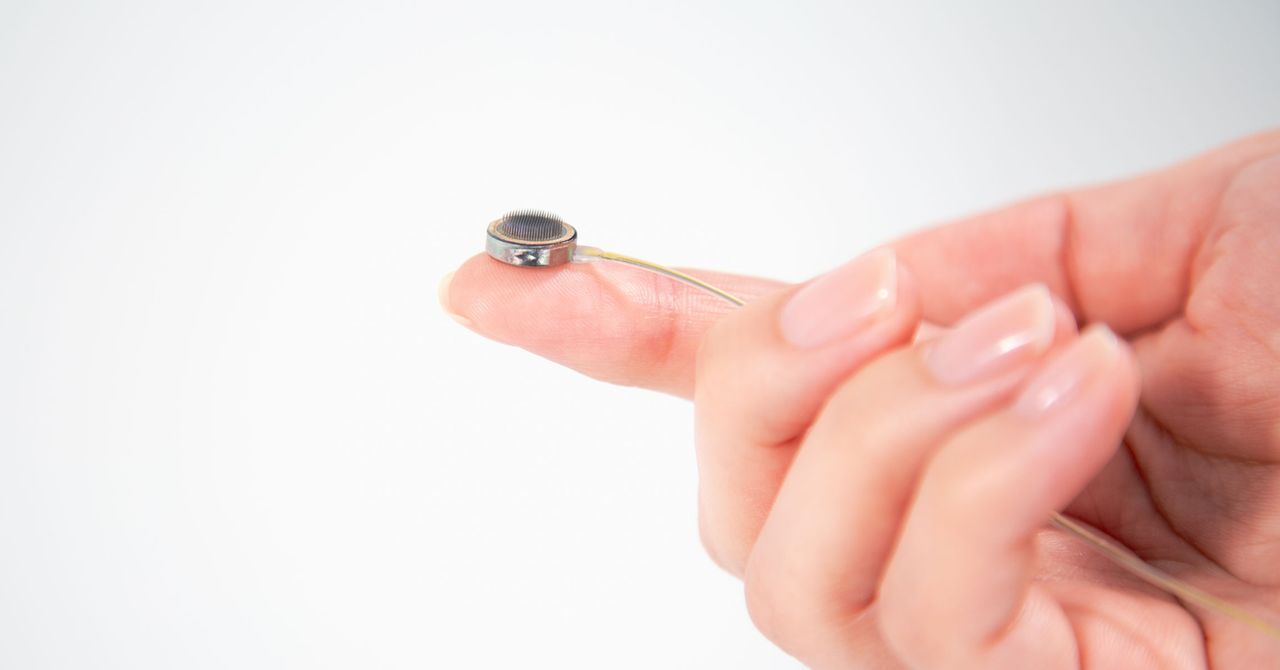
Local view
China: Brainhu's announcement resonated across Chinese tech media as evidence of domestic BCI leadership moving beyond Western competitors. Sina News and 21 Finance highlighted the integration of AI and physical fabrication as a breakthrough in "real-world implant utility" rather than lab demonstrations. The framing emphasizes that Chinese startups are now solving application-layer problems, not just implant safety.
Japan: No fresh local-language coverage with explicit 2026-09-26 cutoff date available for this signal.
Context & numbers
- Precision Neuroscience total funding: $430 million (Series D $250M)
- Regulatory pathways in 2026: Synchron (PMA-track), Neuralink (de novo IDE), Paradromics (IDE, speech focus), Precision (510(k), Class II)
- Paradromics electrode count: 421 microwires vs. Neuralink's 1,000+
- Calibration-free decoder: Described by Neuralink as addressing "one of the trickiest problems" in BCI design; breakthrough timing unspecified but linked to imminent publication
On the radar
- Neuralink publication imminent: DJ Seo's October 3 statement signals a peer-reviewed paper on calibration-free decoding is forthcoming; watch for Nature Neuroscience or similar venue
- Synchron 2026 pivotal trial results: Critical inflection point for first potential FDA BCI approval; timing and primary endpoints will shape competitive landscape
- Brainhu scale-up: Chinese media suggest additional patient cases in pipeline; watch for announcements of multi-patient cohorts or expanded applications beyond motor/creative domains
Note: This article prioritizes developments published or updated after 2026-09-26. Older content on FDA pathways, journal articles, and ethics frameworks, while foundational, has been excluded per freshness rules. Readers seeking historical context on BCI regulation and prior clinical trial data may consult archived editions.
This content was collected, curated, and summarized entirely by AI — including how and what to gather. It may contain inaccuracies. Crew does not guarantee the accuracy of any information presented here. Always verify facts on your own before acting on them. Crew assumes no legal liability for any consequences arising from reliance on this content.
Powered by
