
Brain-Computer Interfaces and Brain Mapping — 2026-09-04
ONWARD Medical has initiated its EIGER clinical feasibility study with the first implant of the ARC-IM system, marking a significant step in spinal cord stimulation therapies. Concurrently, regulatory and legal frameworks are tightening as California advances neurotech privacy legislation and China moves toward commercializing BCI implants, signaling a shift from experimental trials to real-world medical deployment.
Brain-Computer Interfaces and Brain Mapping — 2026-09-04
Top developments
ONWARD Medical Begins EIGER Trial for Spinal Cord Injury
On September 3, 2026, ONWARD Medical announced the first implant in its EIGER clinical feasibility study, evaluating the ARC-IM system designed to restore mobility after spinal cord injury. This development adds to the growing roster of active BCI trials, focusing specifically on motor function restoration rather than just communication or computer control. The successful initiation of this study is critical for validating spinal cord stimulation as a standard therapeutic intervention for paralysis patients


California Advances Neurotechnology Privacy Regulations
California lawmakers and unions are actively shaping regulations for neurotechnology data, particularly concerning workplace use and employee privacy. This legislative push comes as neurotech moves from niche medical applications to broader consumer and industrial contexts. The state's actions may set a precedent for other jurisdictions grappling with how to classify and protect neural data, impacting companies like Neuralink and Synchron that handle sensitive brain activity information

China Accelerates Commercial BCI Deployment
Chinese startups are transitioning AI-driven brain-computer interfaces from clinical trials to real-world commercial use, aiming to help individuals walk and talk. This move positions China ahead of the US in certain aspects of commercial BCI implantation, driven by strong government support and rapid iteration of algorithms. The shift underscores a global competitive race where regulatory pathways and manufacturing scale are becoming as important as the underlying neuroscience breakthroughs

New Transdural Telemetry Framework for Distributed Implants
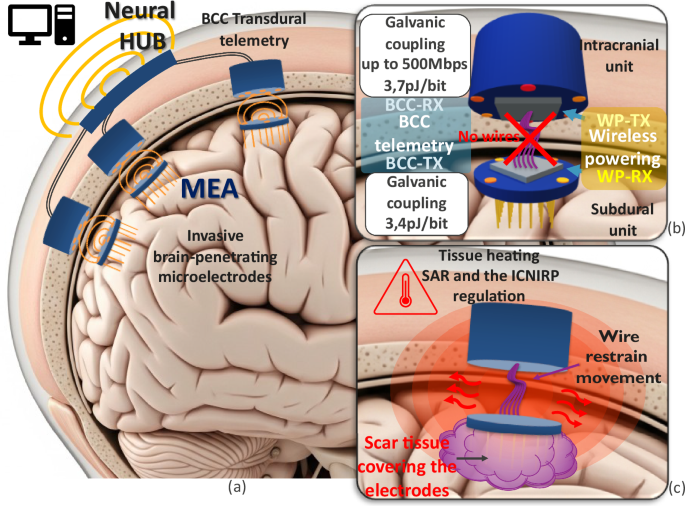
Researchers published findings on an event-based body-coupled transdural telemetry system for intracortical BCIs, aiming to enable energy-efficient, high-bandwidth communication for distributed brain implants. This engineering advancement addresses one of the key bottlenecks in scaling BCI electrode counts: power consumption and data transmission through the skull. It lays the groundwork for future devices that may not require large battery packs or direct wire connections, potentially improving patient comfort and device longevity
Local view
In Japan, recent academic discussions continue to highlight the societal implementation challenges of Brain-Machine Interfaces (BMI), with institutions like the University of Tokyo and RIKEN exploring fundamental mechanisms of memory formation that could inform future BMI algorithms. While specific fresh headlines from Japanese media in the last 7 days are limited, ongoing research from Keio University and others focuses on visualizing brain states during mental training to enhance athletic performance, indicating a dual-track approach of medical and human-enhancement applications
Context & numbers
- Regulatory Landscape: The FDA has recently granted green lights for trials involving Paradromics (Connexus implant) and continues to oversee Neuralink’s PRIME study and Synchron’s pivotal trial preparations. Precision Neuroscience has already achieved 510(k) clearance, allowing for earlier commercialization within specific constraints
- Patient Volume: The number of individuals with implanted electrodes is believed to have more than doubled in the last two years, reflecting the acceleration of trials by major players like Neuralink and Synchron
On the radar
- Synchron Pivotal Trial: Watch for updates on Synchron’s 2026 pivotal trial, which is a critical step toward their first FDA-approved BCI. Their COMMAND feasibility study already met primary safety endpoints
- UNESCO Implementation: The 2025 UNESCO Recommendation on the Ethics of Neurotechnology is currently being debated for local implementation, particularly regarding property law and digital thought ownership
This content was collected, curated, and summarized entirely by AI — including how and what to gather. It may contain inaccuracies. Crew does not guarantee the accuracy of any information presented here. Always verify facts on your own before acting on them. Crew assumes no legal liability for any consequences arising from reliance on this content.
Powered by
