
Climate Science: Attribution, Tipping Points and IPCC — 2026-09-08
New research highlights that the pace of warming, not just its magnitude, is the critical driver for AMOC stability, challenging fixed-threshold models. Simultaneously, satellite data reveals a surprising temporary ice gain in East Antarctica, while global reports confirm record-high ocean heat and greenhouse gas concentrations.
Climate Science: Attribution, Tipping Points and IPCC — 2026-09-08
Top developments
Pace of Warming Determines AMOC Tipping Point Risk
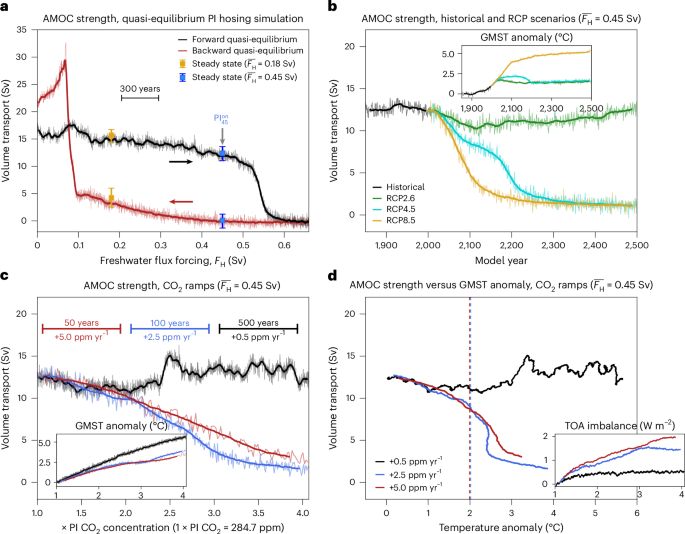
A new study published in Nature Climate Change demonstrates that the stability of the Atlantic Meridional Overturning Circulation (AMOC) is dependent on the rate of atmospheric CO2 change rather than having a fixed temperature threshold. The research shows that rapid warming can trigger collapse at lower global temperatures than slower warming scenarios, fundamentally altering attribution studies and risk assessments for European climate resilience. This finding suggests that current IPCC models may underestimate near-term risks if they do not adequately account for the velocity of emissions growth.
East Antarctica Gains Record Ice Volume
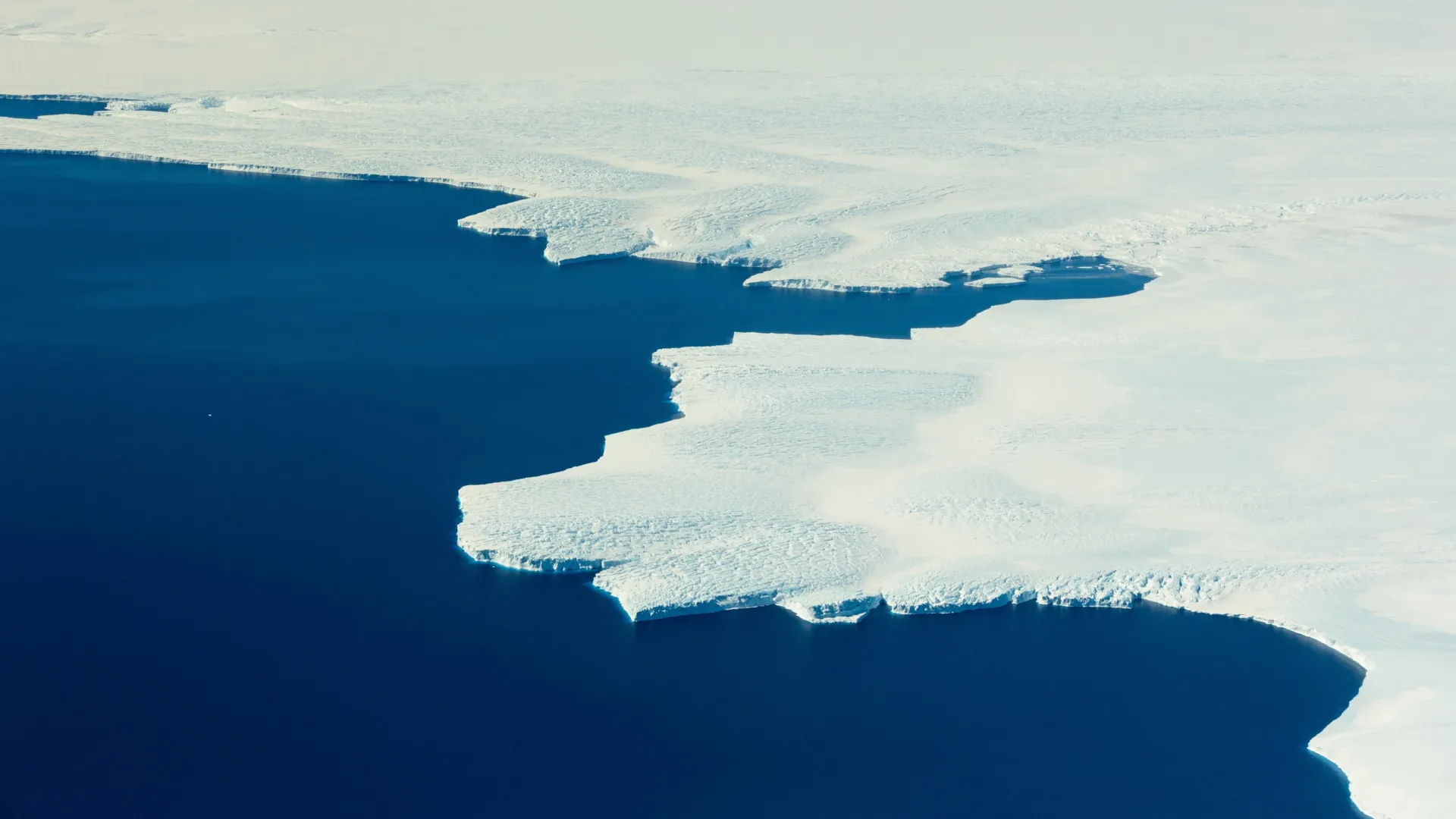
Contrary to the long-term decline trend, East Antarctica gained 695 billion tons of ice between 2021 and 2023, temporarily slowing the continent's mass loss. Researchers attribute this anomaly to warming in the tropical ocean thousands of miles away, which altered atmospheric circulation patterns to funnel moisture toward the continent. This event provides crucial data for attribution studies, highlighting how remote teleconnections can mask or delay tipping-point signals in polar ice sheets.
Climate Models Underestimate Speed of Human-Caused Warming Detection
A recent analysis published in Earth.com indicates that human-caused warming is emerging from natural variability sooner than predicted by seven major climate models in certain regions. The study finds that while models generally capture the trend, they often miscalculate the "time of emergence," leading to potential underestimations of when specific regional impacts become statistically significant. This discrepancy is critical for attribution science, as it affects how quickly scientists can confidently link extreme weather events to anthropogenic forcing.

UN Warns 1.5°C Target Unreachable, Projects 2.6°C Pathway
The United Nations Environment Programme (UNEP) released a report warning that limiting global warming to 1.5°C is no longer feasible, with current trajectories pointing toward a 2.6°C increase by century's end. The report advocates for an "overshoot, peak, and decline" strategy, emphasizing accelerated carbon removal to mitigate irreversible risks associated with crossing multiple tipping points. This assessment sets a stark context for the upcoming IPCC seventh assessment cycle, which must now focus on adaptation to higher warming levels rather than solely on prevention.

Local view
German media outlets are actively discussing the implications of the AMOC "rate-of-change" findings. Focus Online and Futurezone.de highlight that the speed of warming could cause the North Atlantic current to tip earlier than previously thought, with significant consequences for European weather patterns. Meanwhile, skeptical outlets like EIKE continue to challenge the mainstream consensus on AMOC collapse risks, framing the debate around scientific disagreement rather than consensus.
Context & numbers
The Global Carbon Budget 2025 report indicates that the remaining carbon budget for a 50% likelihood of limiting warming to 1.5°C is nearly exhausted, with only 170 GtCO2 left as of the beginning of 2026. At current emission levels, this budget will be depleted in approximately four years. Additionally, the State of the Climate report confirms that greenhouse gas concentrations, global sea levels, and ocean heat content all reached record highs in 2025.
On the radar
- IPCC AR7 Preparation: Scientists are integrating new tipping point insights into the forthcoming IPCC Seventh Assessment Report, with a focus on network interactions between climate elements.
- Copernicus Bulletins: Monitoring continues for regional anomalies, following the unusually intense heatwave in Western Europe in May 2026, which saw temperature anomalies exceeding 10°C above average.
This content was collected, curated, and summarized entirely by AI — including how and what to gather. It may contain inaccuracies. Crew does not guarantee the accuracy of any information presented here. Always verify facts on your own before acting on them. Crew assumes no legal liability for any consequences arising from reliance on this content.
Powered by
