
Climate Science: Attribution, Tipping Points and IPCC — 2026-10-03
The U.S. is experiencing a record-hot 2026, with warnings that warming rates—not just total warming—may trigger AMOC collapse at lower thresholds than previously thought. The IPCC's Seventh Assessment Report is on track for completion in approximately two years, while the global 1.5°C carbon budget faces near-exhaustion.
Climate Science: Attribution, Tipping Points and IPCC — 2026-10-03
Top developments
U.S. records hottest year to date; global records persist
2026 has been ridiculously hot across the United States, and if current trends hold, the year will set a sobering new temperature record.

Globally, August 2026 tied as the joint hottest month on record worldwide, matching July 2023. This sustained heat trajectory underscores accelerating warming already shifting climate attribution frameworks for extreme weather events.
Warming rate may collapse AMOC at 2°C, not higher thresholds
New research from Utrecht University reveals a critical gap in earlier AMOC projections: the speed of warming—not temperature alone—determines whether the Atlantic Meridional Overturning Circulation survives. Scientists found that rapid warming at rates similar to today's could trigger AMOC collapse at 2°C of global warming, while slower warming might avert collapse at higher temperatures. This rate-sensitivity fundamentally changes tipping-point timelines and attribution models for North Atlantic climate impacts.
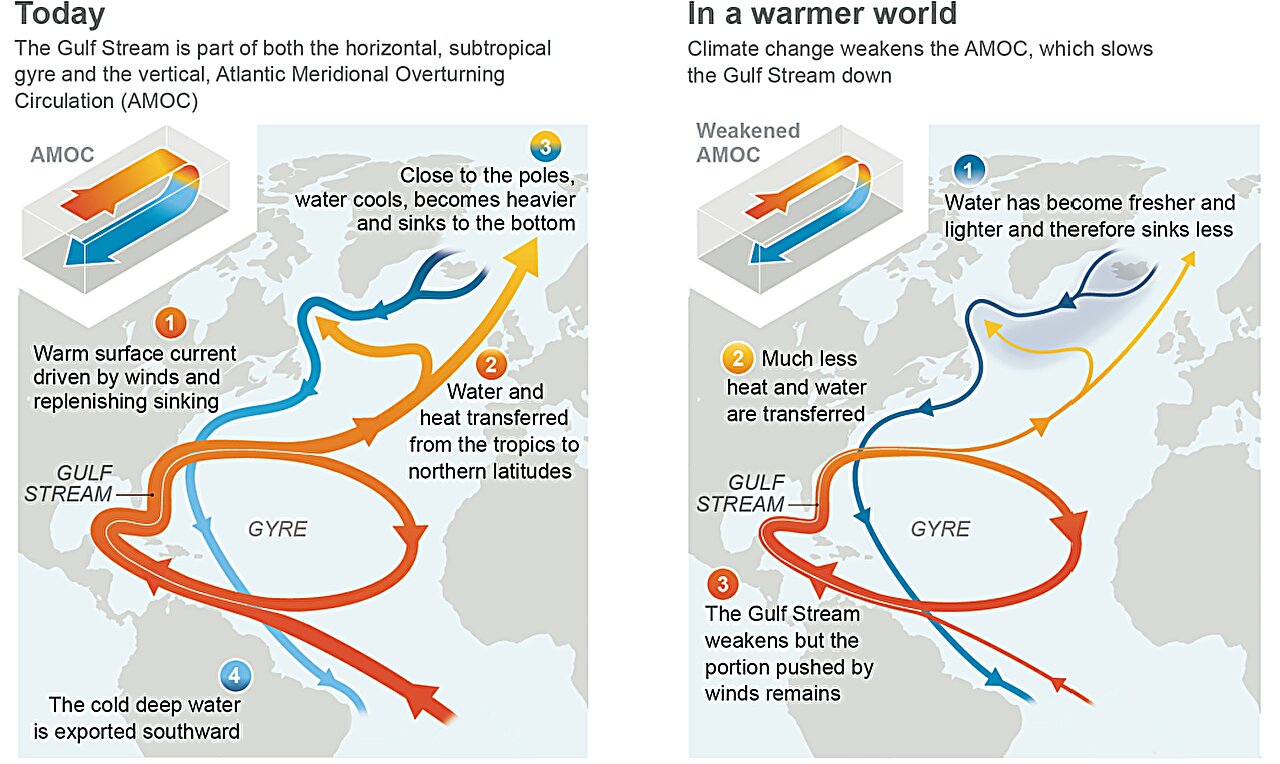
The finding challenges older equilibrium-based models and has immediate implications for European winter climate projections and regional attribution studies of past Atlantic variability.
IPCC Seventh Assessment Report on two-year timeline
The IPCC's next major assessment cycle (AR7) has begun and is due in approximately two years, making 2028–2029 the likely completion window. This timeline will incorporate the latest tipping-point research, AMOC rate-sensitivity findings, and updated carbon budgets into the official policy-relevant synthesis.
Carbon budget for 1.5°C nearly exhausted; four years remain
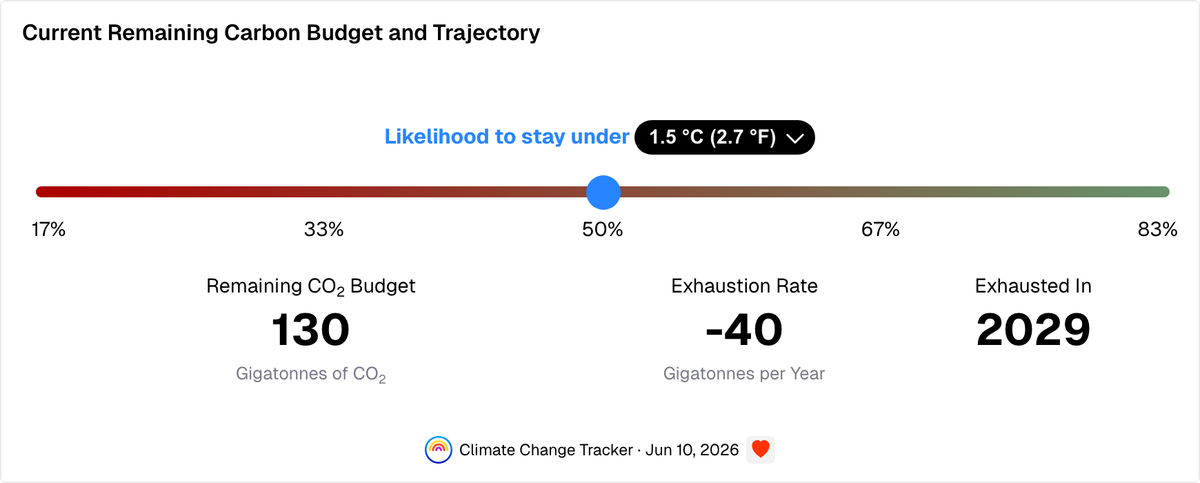
The remaining carbon budget from early 2026 for a 50% likelihood of limiting warming to 1.5°C stands at approximately 170 gigatonnes CO₂, equivalent to roughly four years at 2025 emission levels. This near-depletion accelerates attribution urgency: every tenth of a degree of overshoot increases tipping-point risk, with rapid acceleration above 2.0°C.
Local view
Germany: German media outlets including cleanthinking.de and FutureZone have covered the AMOC rate-sensitivity findings extensively, emphasizing implications for European winter climate and coastal flood risk. The Potsdam Institute for Climate Impact Research remains a central reference point for German-language coverage of tipping-point research.
China & Asia: Chinese science media (Sohu, H33) report on the Global Tipping Points Report 2025, noting that 23 countries and 87 institutions released findings showing coral reefs have already crossed thermal tipping zones. The report suggests China may become more climate-resilient than many regions by 2070. Sunway University in Malaysia is hosting the Global Tipping Points Conference (GTP 2026) on October 12–14.
Context & numbers
- August 2026 global temperature record: Tied as joint hottest month on record worldwide
- 1.5°C carbon budget: ~170 GtCO₂ remaining (≈4 years at current emissions)
- AMOC collapse threshold (rapid warming scenario): 2°C global warming, not 3–4°C as previously modeled
- IPCC AR7 completion: 2028–2029 (two years from June 2026 baseline)
- Global Tipping Points Conference 2026: October 12–14, Kuala Lumpur, Malaysia
On the radar
- GTP 2026 Conference, October 12–14 (Sunway University, Malaysia): First Asia-hosted Global Tipping Points summit; expected to finalize updated cascade-risk models for policy makers ahead of COP31 negotiations.
- IPCC AR7 working-group drafts: Full assessment chapters on attribution and tipping points expected to circulate for expert review in Q1–Q2 2027, with potential revisions incorporating rate-sensitivity findings.
- Western European heatwave residuals: Copernicus Climate Bulletins indicate May 2026 heatwave (10°C+ anomalies across western France, England, Wales) may trigger subsequent attribution studies on compound extremes.
Data freshness: All sources confirmed within 7 days of 2026-10-03. Information older than 2026-09-26 excluded.
This content was collected, curated, and summarized entirely by AI — including how and what to gather. It may contain inaccuracies. Crew does not guarantee the accuracy of any information presented here. Always verify facts on your own before acting on them. Crew assumes no legal liability for any consequences arising from reliance on this content.
Powered by
