
Climate Science: Attribution, Tipping Points and IPCC — 2026-10-12
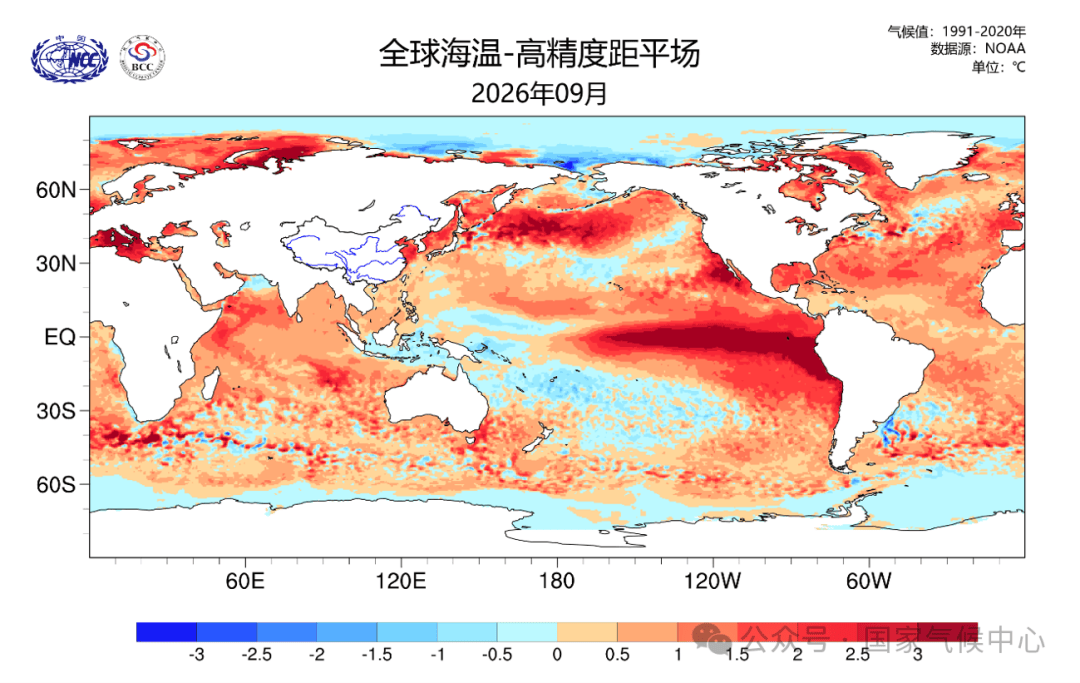
A comprehensive new audit of climate literature reveals a dangerous "blind spot" where scientific attention does not track risk, leaving high-probability systems like boreal permafrost under-studied compared to Greenland ice sheets. Meanwhile, September 2026 was confirmed as the second-hottest on record, driven by a developing super El Niño that is accelerating global temperature anomalies.
Climate Science: Attribution, Tipping Points and IPCC — 2026-10-12
Top developments
PNAS Study Exposes Research Imbalance in Tipping Point Science
A new study published in PNAS and covered widely this week audits 25 years of climate literature (20,736 publications) to assess how scientific attention aligns with actual risk. The findings reveal a structural blind spot: while the Greenland and Antarctic ice sheets receive disproportionate research focus, systems with lower warming thresholds and higher immediate risk—such as boreal permafrost thaw and the North Atlantic subpolar gyre—are critically under-monitored. This imbalance matters for attribution studies because it limits our ability to detect early warning signals for tipping points that may trigger sooner than those in better-studied regions.

September 2026 Confirmed as Second-Hottest Month Globally
Copernicus data confirms that September 2026 was the second-warmest September on record globally, trailing only the record set in 2023. The month’s extreme heat is attributed to the interaction between long-term anthropogenic warming and the emergence of a super El Niño event. For attribution scientists, this provides a fresh dataset to quantify the human contribution to recent heatwaves and to test model sensitivity against real-time ocean heat content anomalies.

Super El Niño Formation Accelerates Warming Trajectory
China’s National Climate Center announced that a super El Niño event officially formed in September 2026, with sea surface temperatures in the central-eastern Pacific expected to peak in late autumn. This event is projected to be the strongest since systematic monitoring began, potentially pushing global mean temperatures further above pre-industrial levels. This development is critical for IPCC AR7 modeling, as it tests the limits of current carbon budget calculations which assume standard variability patterns.
Arctic Tipping Point Models Show Sensitivity to Delayed Mitigation
New research in Communications Earth & Environment suggests that the collapse of the Atlantic Meridional Overturning Circulation (AMOC) and abrupt Arctic cooling are primarily triggered if CO2 emission cessation is delayed until after global temperatures exceed 2°C. In scenarios where mitigation occurs earlier, the Arctic maintains a warming trend without catastrophic AMOC collapse. This refines the "tipping point" timeline for policymakers, emphasizing that the window for preventing abrupt regional climate shifts is tightly coupled with near-term emissions reductions.
Local view
India Today highlights the domestic implications of the global September heat record, noting that India experienced a deficient monsoon season linked to the broader El Niño pattern. The outlet emphasizes the urgency for local adaptation strategies as ocean heat content continues to rise, directly impacting regional weather stability.
Sohu (China) reports on the National Climate Center's confirmation of the super El Niño, framing it as a major challenge for disaster prevention systems in China and neighboring countries. The coverage underscores the interconnected nature of global climate drivers and their localized impacts on agriculture and water resources.
Context & numbers
- Carbon Budget: The remaining carbon budget for a 50% likelihood of limiting warming to 1.5°C is nearly exhausted, with only ~50 GtC (170 GtCO2) left as of early 2026, equivalent to about four years of current emissions.
- Warming Rate: Recent analysis indicates that global warming has accelerated to approximately 0.35°C per decade over the past ten years, up from ~0.2°C per decade from 1970–2015, after removing natural variability factors.
- Publication Volume: The PNAS audit analyzed 20,736 publications over 25 years to determine research bias.
On the radar
- IPCC AR7 Progress: The Seventh Assessment Report (AR7) assessment is currently underway, with the final report due in approximately two years. The uneven distribution of tipping point research identified this week will likely influence the Working Group I draft priorities.
- World Weather Attribution Updates: WWA continues to publish rapid attribution studies following extreme weather events. Given the September heat record, new papers quantifying the human influence on late-summer heatwaves are expected in coming weeks.
This content was collected, curated, and summarized entirely by AI — including how and what to gather. It may contain inaccuracies. Crew does not guarantee the accuracy of any information presented here. Always verify facts on your own before acting on them. Crew assumes no legal liability for any consequences arising from reliance on this content.
Powered by
