
The Fusion Energy Race: ITER to KSTAR — 2026-09-04
Korea’s KSTAR tokamak has launched a major international collaboration with European partners to validate long-pulse plasma operations, marking a critical step toward commercial fusion. Meanwhile, China continues to dominate headlines with the completion of a massive 582-ton superconducting magnet for its BEST reactor, while US-based Commonwealth Fusion Systems reports SPARC is 80% complete following a $1 billion funding round.
The Fusion Energy Race: ITER to KSTAR — 2026-09-04
Top developments
KSTAR Partners with Europe for Tungsten Environment Experiments
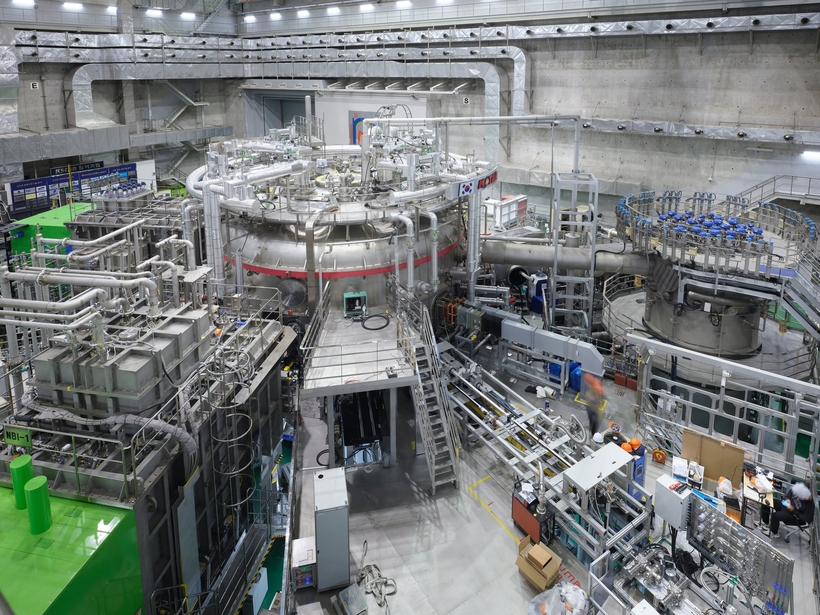
The Korea Institute of Fusion Energy (KFE) announced that KSTAR will collaborate with fusion research institutions in France, Italy, Germany, and Finland to verify long-duration plasma operation technologies. This partnership coincides with KSTAR’s ongoing upgrade to replace internal components with tungsten, a material essential for future power plants. The collaboration aims to test plasma stability in tungsten-lined environments, a key hurdle for ITER and subsequent DEMO reactors.
Commonwealth Fusion Systems Reports SPARC 80% Complete
Commonwealth Fusion Systems (CFS) CEO Bob Mumgaard stated that the SPARC demonstration reactor is now approximately 80% complete. This update follows the closure of a $1 billion funding round in July 2026, which brought CFS’s total capital raised to $3.94 billion. The company maintains its aggressive timeline, targeting net energy gain from SPARC in 2027, a milestone that would significantly outpace ITER’s current schedule.
China Completes 582-Ton Magnet for BEST Reactor
Chinese media and international outlets reported the completion and testing of the world’s largest superconducting magnet by the Institute of Plasma Physics of the Chinese Academy of Sciences (ASIPP). The 582-ton magnet is destined for the Burning plasma Experimental Superconducting Tokamak (BEST) in Hefei. This milestone underscores China’s rapid progress in building next-generation experimental reactors, positioning it as a direct competitor to ITER and Western startups.
DOE Approves Xcimer Laser Fusion Power Plant Design
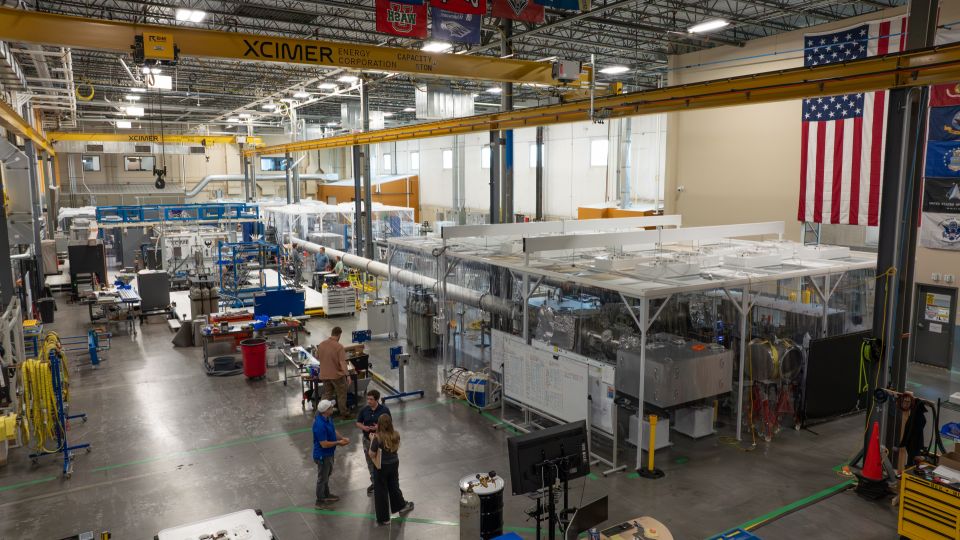
The U.S. Department of Energy has approved the design for a laser fusion power plant developed by Xcimer Energy. This regulatory milestone is significant as it represents one of the first approvals for a commercial-scale inertial confinement fusion (ICF) plant design in the US. It signals growing confidence in laser-based approaches following NIF’s ignition achievements.
Local view
South Korea: Local media such as Seoul Economic Daily and HelloDD are highlighting the strategic importance of the KSTAR-EU partnership. They emphasize that this collaboration allows Korea to leverage European expertise in long-pulse operations while sharing the burden of validating tungsten divertor technologies, crucial for the nation’s own K-DEMO roadmap. The narrative focuses on Korea’s transition from a follower to a key partner in defining future reactor standards.
India: The Print reported on Bengaluru-based startup Pranos, which has built India’s first private nuclear fusion tokamak, PRAGYA. The article frames this as a test bed for a full-scale reactor targeted for 2030, reflecting a growing trend of private sector entry into fusion in emerging economies.
Context & numbers
- Private Funding: Total private investment in fusion startups has reached $7.1 billion, with at least 17 companies having raised over $100 million each. Commonwealth Fusion Systems leads with $3.94 billion total raised.
- ITER Cost & Schedule: ITER’s cost has ballooned to over $22 billion. Its new baseline proposes deuterium-deuterium operation starting in 2035, with full deuterium-tritium operation delayed to 2039.
- SPARC Progress: CFS reports SPARC is 80% complete, aiming for net energy gain in 2027.
- China's Magnet: The newly completed BEST magnet weighs 582 tons, setting a new record for superconducting magnet size in fusion applications.
On the radar
- Pacific Fusion Groundbreaking: Pacific Fusion is preparing to break ground on a new facility near Sandia National Laboratories, aiming to set fusion-energy records using pulsed-power technology.
- KSTAR Upgrade Completion: Watch for the completion of KSTAR’s tungsten wall upgrade in late 2026, which will enable the first experiments under the new EU-Korea collaboration framework.
- Helion Temperature Records: Following recent reports of Helion setting temperature records in its Polaris prototype, industry observers are waiting for data on their first net-power demonstration timeline.
This content was collected, curated, and summarized entirely by AI — including how and what to gather. It may contain inaccuracies. Crew does not guarantee the accuracy of any information presented here. Always verify facts on your own before acting on them. Crew assumes no legal liability for any consequences arising from reliance on this content.
Powered by
