
The Fusion Energy Race: ITER to KSTAR — 2026-09-02
Tennessee has become the first U.S. state to issue a fusion-specific regulatory license, marking a significant milestone for commercial fusion deployment. Meanwhile, South Korea’s KSTAR tokamak has launched a major collaborative campaign with European partners to validate long-pulse plasma operations using tungsten walls, while China continues to advance its BEST reactor construction with new superconducting magnet milestones.
The Fusion Energy Race: ITER to KSTAR — 2026-09-02
Top developments
Tennessee Becomes First US State to License Fusion Plant
On September 1, 2026, the Tennessee Department of Environment and Conservation issued the state's first fusion-specific byproduct material license to Type One Energy. This marks the first time a U.S. state has issued a license under the new regulatory framework specifically designed for fusion energy, signaling a shift from experimental research toward commercial readiness. The move provides a regulatory blueprint for other states considering fusion projects and validates the feasibility of state-level oversight for this emerging technology.
_70696.jpg)
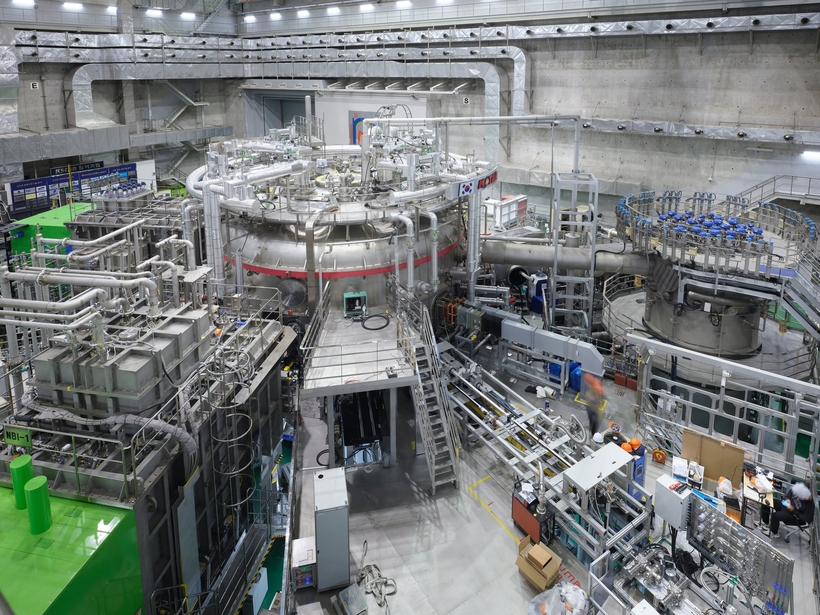
KSTAR Launches EU Collaboration for Tungsten Wall Operations
In late August 2026, the Korea Institute of Fusion Energy (KFE) announced a formal collaboration with major European research institutions in France, Italy, Germany, and Finland. The partnership focuses on validating long-duration plasma operation technologies necessary for future commercial reactors, coinciding with KSTAR’s internal upgrade to replace components with tungsten. This material change aligns KSTAR with ITER’s updated baseline, which switched from beryllium to tungsten for its first wall to better simulate future reactor conditions.
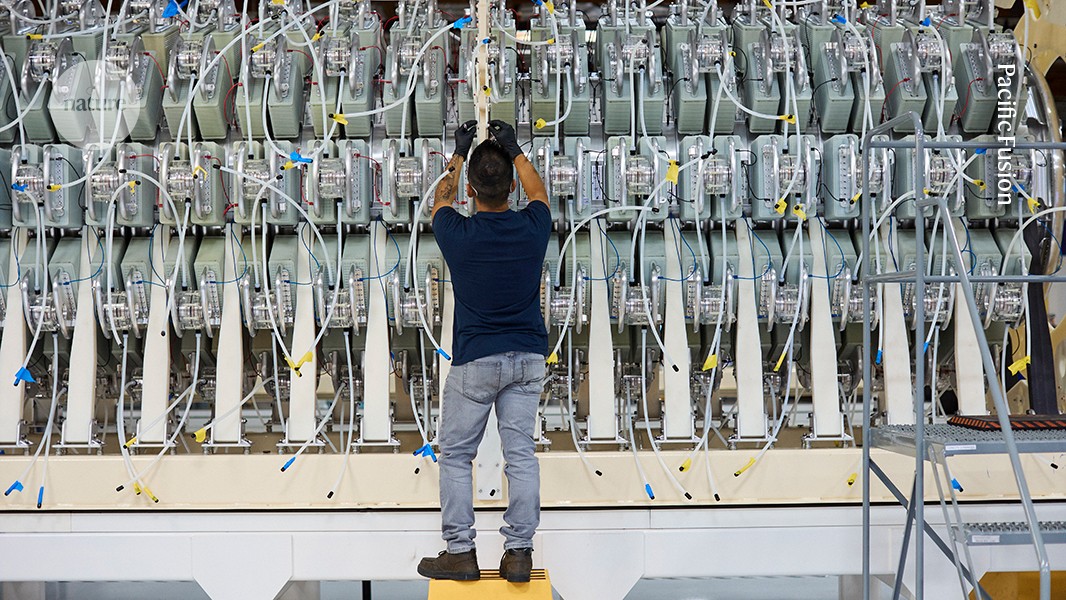
Pacific Fusion Breaks Ground on $1B Inertial Confinement Facility
Nature reported this week that Pacific Fusion is breaking ground on a billion-dollar inertial confinement fusion (ICF) facility adjacent to a U.S. nuclear weapons laboratory. The project aims to set new records for fusion energy gain using pulsed power technology rather than traditional lasers. The partnership with national labs could accelerate the development of ICF systems, offering an alternative pathway to net energy gain alongside magnetic confinement approaches like ITER and SPARC.
Local view
South Korean media outlets, including Seoul Economic Daily and Hello DD, have highlighted the strategic importance of the KSTAR-EU collaboration. Reports emphasize that this joint effort is critical for Korea’s domestic fusion roadmap, particularly in preparing for the DEMO reactor phase. The local coverage notes that KSTAR’s transition to tungsten walls is not just a technical upgrade but a diplomatic and scientific bridge, positioning Korea as a key partner in the global validation of materials that must withstand extreme plasma conditions.
Context & numbers
- Regulatory Milestone: Tennessee is the first U.S. state to issue a fusion-specific byproduct material license.
- ITER Timeline: The updated ITER baseline aims for deuterium-deuterium operation in 2035 and full magnetic energy in 2036, representing delays of 3–4 years from previous targets but prioritizing robustness.
- China BEST: Construction of the Burning plasma Experimental Superconducting Tokamak (BEST) in Hefei continues, with recent tests of massive superconducting magnets completed. The facility is targeted to demonstrate fusion power generation by 2027.
On the radar
- Commonwealth Fusion Systems (CFS): CFS continues to secure funding, having raised over $3.9 billion to date. The focus remains on completing the SPARC demonstration device, with net energy gain expected in the 2026–2027 window.
- Helion Energy: Recent reports indicate Helion has set new temperature records in its field-reversed configuration devices, further validating its direct electricity conversion approach.
- ITER Cold Test Facility: ITER has begun operations at its magnet cold test facility, a critical step in validating the cryogenic systems required for the machine’s superconducting magnets.
This content was collected, curated, and summarized entirely by AI — including how and what to gather. It may contain inaccuracies. Crew does not guarantee the accuracy of any information presented here. Always verify facts on your own before acting on them. Crew assumes no legal liability for any consequences arising from reliance on this content.
Powered by
