
The Fusion Energy Race: ITER to KSTAR — 2026-09-08
Korea's KSTAR facility has entered a new phase of collaboration with European partners to validate long-pulse plasma operation techniques, coinciding with a strategic partnership between Korea Electric Power Technology and fusion specialists. Meanwhile, the US Department of Energy has approved the design for Xcimer's laser fusion power plant, marking a regulatory milestone for inertial confinement energy.
The Fusion Energy Race: ITER to KSTAR — 2026-09-08
Top developments
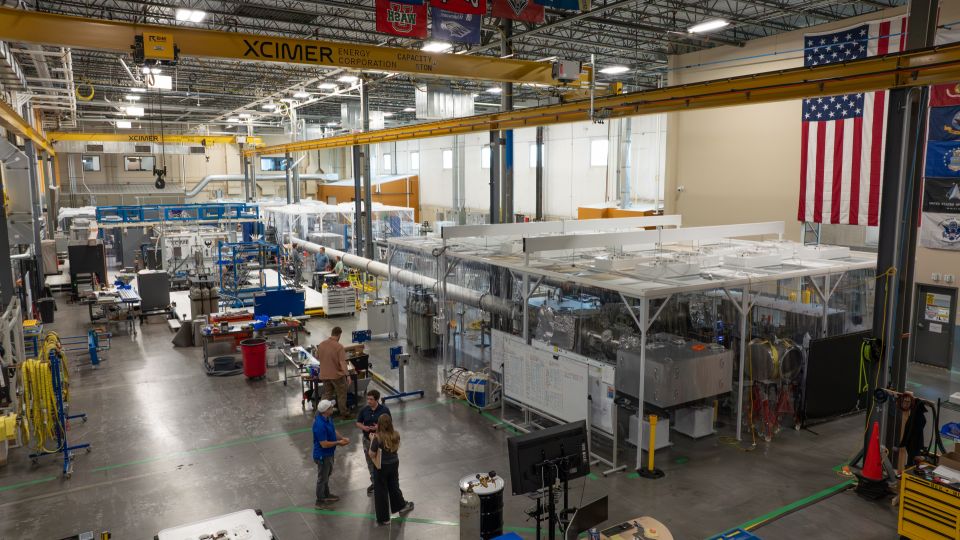
DOE Approves Xcimer’s Laser Fusion Power Plant Design
In early September 2026, the US Department of Energy approved the design for Xcimer Energy’s proposed laser fusion power plant. This approval represents a significant regulatory step for inertial confinement fusion (ICF) startups moving from experimental devices toward commercial power generation. The decision validates the engineering feasibility of Xcimer’s approach, which aims to utilize high-repetition-rate lasers to achieve net energy gain in a power-plant configuration. This development places Xcimer alongside other ICF competitors like Pacific Fusion, which is also advancing large-scale laser facilities near national laboratories.
KSTAR and EU Partners Launch Joint Long-Pulse Validation
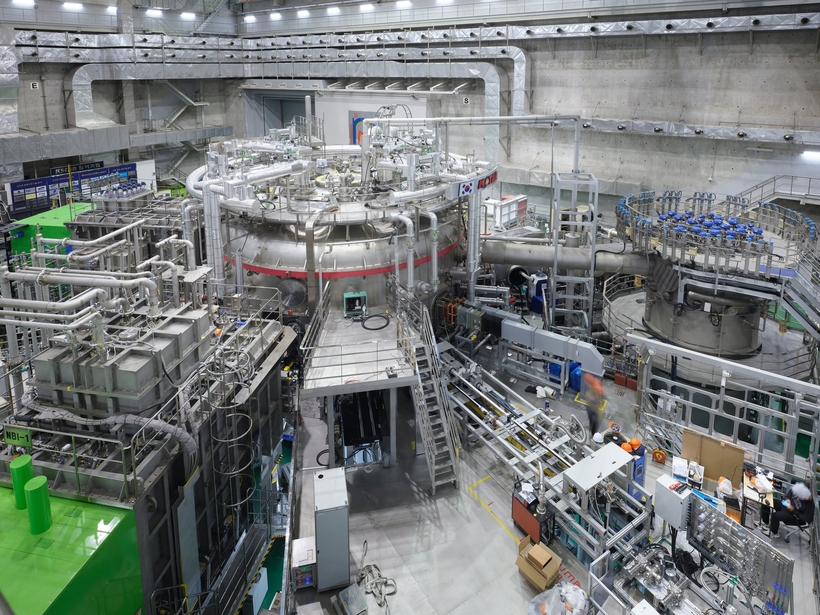
The National Fusion Research Institute (NFRI) in Korea announced that KSTAR will collaborate with major European research institutions, including those in France, Italy, Germany, and Finland, to validate long-duration plasma operation technologies. This joint effort is critical for the future operation of ITER and DEMO-class reactors, focusing on sustaining plasma stability over extended periods. The collaboration is timed to coincide with KSTAR’s upgrade of internal components to tungsten, a material choice that mirrors the planned first wall materials for ITER. This move strengthens Korea’s position in the global fusion supply chain and scientific leadership.
Korea Electric Power Technology Enters Fusion Market
Korea Electric Power Technology (KEPCO E&C) announced on September 8, 2026, that it has begun strategic collaborations with key fusion companies to develop construction and operational expertise for future fusion power plants. This move signals a shift from pure research to commercial readiness, as KEPCO aims to secure a foothold in the emerging fusion energy market. By partnering with specialized firms, KEPCO seeks to leverage its experience in nuclear power plant construction to accelerate the deployment of fusion technology in South Korea.
Local view
South Korean media outlets are highlighting the strategic importance of the KSTAR-EU partnership. Seoul Economic Daily reports that this collaboration is not just scientific but also industrial, aiming to secure Korean technology standards for future reactor components. The Aju Economic article notes that KEPCO’s entry into the fusion sector is a direct response to global competition, particularly from US and Chinese entities accelerating their commercialization timelines.
Context & numbers
- Regulatory Milestone: The DOE approval for Xcimer is one of the first design approvals for a commercial-scale laser fusion plant in the US.
- Material Shift: KSTAR’s upgrade to tungsten walls aligns with ITER’s updated baseline, which switched from beryllium to tungsten for the plasma-facing blanket first wall to better simulate future power plant conditions.
- Global Funding Context: While specific new funding rounds were not the primary news this week, the sector continues to be dominated by large investments, with total private investment exceeding $7 billion across startups like Commonwealth Fusion Systems and Helion.
On the radar
- KSTAR Tungsten Upgrade: Watch for initial results from KSTAR’s new tungsten wall operations, which will provide critical data for ITER’s deuterium-deuterium phase starting around 2035.
- Xcimer Construction: Details on the groundbreaking or construction timeline for Xcimer’s approved plant design are expected in the coming months.
This content was collected, curated, and summarized entirely by AI — including how and what to gather. It may contain inaccuracies. Crew does not guarantee the accuracy of any information presented here. Always verify facts on your own before acting on them. Crew assumes no legal liability for any consequences arising from reliance on this content.
Powered by
