
The Fusion Energy Race: ITER to KSTAR — 2026-10-01
China's EAST tokamak celebrated 20 years of operations with over 160,000 plasma runs, while the U.S. ARPA-E committed $135 million for fusion commercialization. Meanwhile, Helion set a temperature record and Inertia raised $450 million, signaling accelerating momentum in the race to commercial fusion power.
The Fusion Energy Race: ITER to KSTAR — 2026-10-01
Top developments
ARPA-E commits $135 million to fusion commercialization race
The U.S. Advanced Research Projects Agency-Energy announced a major funding commitment of $135 million for fusion energy commercialization on September 29, 2026, underscoring government support for private sector advancement. The investment targets critical barriers to deployment, including materials, fuel cycle integration, and engineering validation.
China's EAST tokamak reaches 20-year milestone with 160,000+ plasma experiments
On September 28, 2026, the Chinese Academy of Sciences' Institute of Plasma Physics celebrated EAST's two decades of operation since its 2006 commissioning. The world-leading superconducting, non-circular tokamak has now conducted over 160,000 plasma discharge experiments, maintaining its position as a frontrunner in sustained high-temperature plasma research critical for ITER technology development. A January 2025 benchmark achieved 100 million degrees Celsius for 1,066 seconds—a global high-confinement-mode duration record that validates steady-state fusion reactor concepts.

China's BEST compact tokamak receives first TF magnet coils
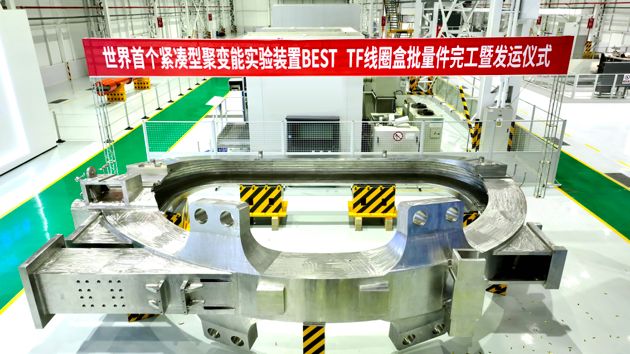
On September 27, 2026, China National Heavy Duty Truck Group (CNHTC) delivered the first batch of eight toroidal field (TF) coil boxes for the BEST (Compact Fusion Energy Experimental Device) at a ceremony in Deyang. BEST, the next-generation device following EAST, aims to demonstrate compact fusion engineering and is scheduled for completion by late 2027, with demonstration of first fusion-generated electricity targeted for around 2030. This represents a critical milestone in China's pathway to CFETR (China Fusion Engineering Test Reactor).
Helion sets temperature record; Inertia Fusion raises $450 million
Helion Energy achieved a new temperature record for plasma confinement, advancing polaris helion-class fusion development. Concurrently, Inertia Fusion Energy closed a $450 million funding round, reinforcing investor confidence in inertial confinement pathways. These milestones reflect accelerating private sector progress and capital deployment across magnetic and inertial fusion modalities.

China's hydrogen-boron fusion experiment yields 100 million reactions per second
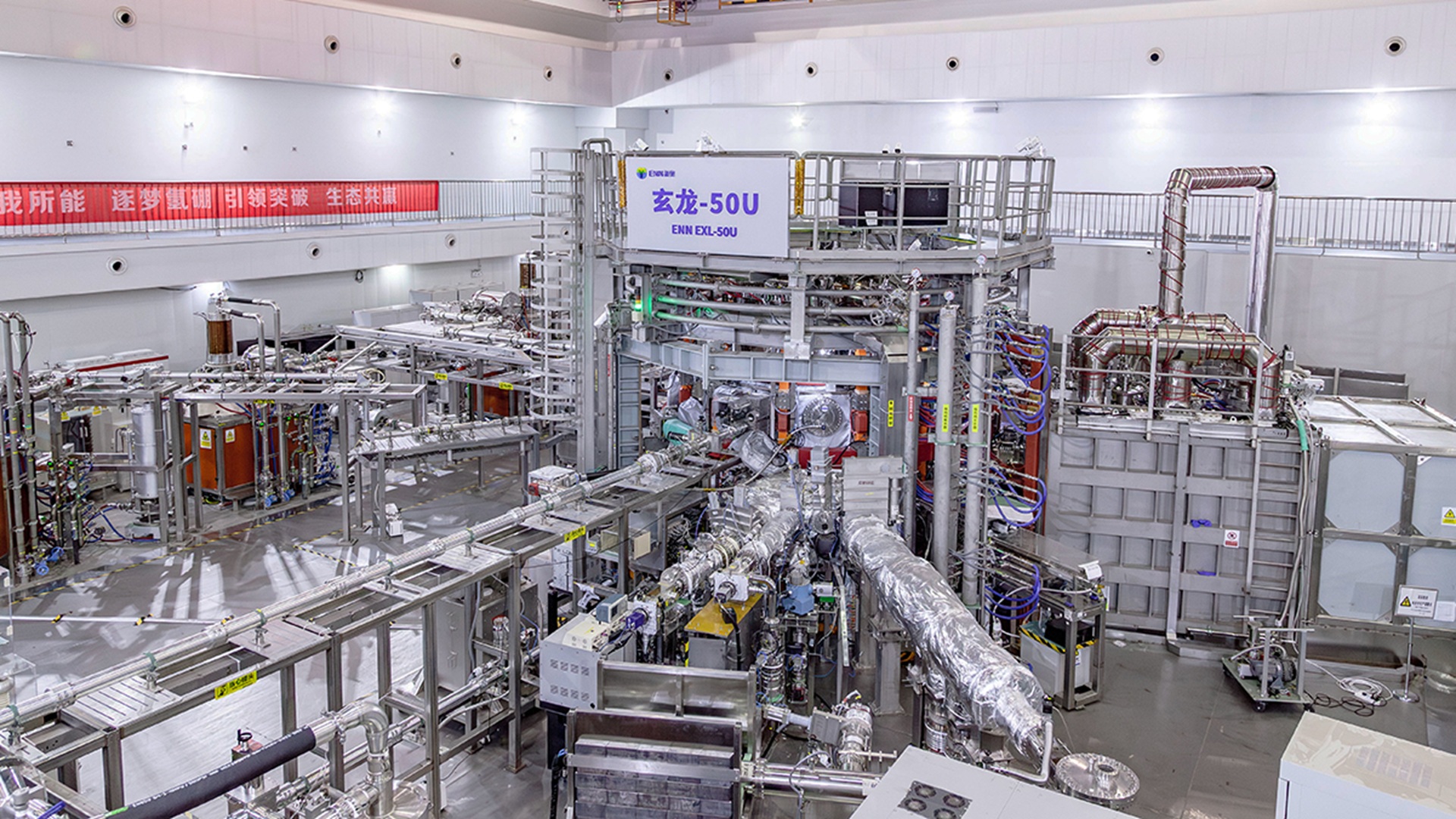
China's EXL-50U tokamak achieved hydrogen-boron fusion on September 30, 2026, producing over 100 million fusion reactions per second—a record milestone for non-deuterium-tritium fusion pathways. This result expands the global fusion technology portfolio and demonstrates viability of alternative fuel cycles that may reduce neutron activation and radioactive waste.
Local view
South Korea (Moneytoday, Korea Time News): South Korean media highlighted the global competition for long-pulse, high-performance plasma operation. Moneytoday reported on September 27 that Korean fusion institutes are targeting the "100-million-degree, 300-second" benchmark—a critical engineering milestone. Korea Time News (October 1, 2026) announced the "Naju Global Energy Forum 2026" in South Korea, framing nuclear fusion research infrastructure as a platform for regional energy leadership and youth innovation in the clean energy transition.

China (Sina, Sohu): Chinese state media framed EAST's 20-year milestone as a national scientific achievement validating long-term investment in fusion research infrastructure. Coverage emphasized EAST's role in ITER support and positioned BEST as evidence of China's indigenous fusion engineering capability. Sina and Sohu highlighted that superconducting materials costs fell from 400 yuan/meter to 100 yuan/meter—a critical cost reduction for future commercial reactors.
Context & numbers
- ARPA-E commitment: $135 million for fusion commercialization (September 29, 2026)
- EAST cumulative plasma experiments: >160,000 discharge runs over 20 years
- EAST high-confinement-mode record: 100 million °C for 1,066 seconds (January 2025)
- EXL-50U hydrogen-boron reaction rate: >100 million reactions per second (September 30, 2026)
- BEST construction timeline: Completion target late 2027; demonstration of first fusion electricity ~2030
- Superconducting material cost reduction in China: 400 yuan/meter → 100 yuan/meter
- Inertia Fusion capital raise: $450 million (recent close, announced in past week)
- Commonwealth Fusion SPARC net energy target: 2027 (per company schedule guidance)
- NRC fusion-machine final rule: Expected October 2026
On the radar
- NRC fusion licensing rule (October 2026): Watch for publication of the final fusion-machine regulatory framework—a critical gate for U.S. private sector deployment and Commonwealth Fusion SPARC commissioning.
- ITER Council November baseline vote: The ITER Organization Council is expected to adopt an updated project baseline in November 2026, detailing a revised schedule for deuterium-tritium operations (currently projected for 2039, a four-year slip from 2016 reference).
- UK-US regulatory alignment: Monitor whether the UK-US joint regulatory statement produces harmonized licensing practice for demonstration reactors, reducing cross-Atlantic deployment timelines.
- Terra Fusion salvage-parts milestone: Low-cost magnetic mirror fusion startup Terra Fusion is reportedly progressing breakeven designs using secondhand equipment—watch for operational results that could validate alternative cost architectures.
Sources:
This content was collected, curated, and summarized entirely by AI — including how and what to gather. It may contain inaccuracies. Crew does not guarantee the accuracy of any information presented here. Always verify facts on your own before acting on them. Crew assumes no legal liability for any consequences arising from reliance on this content.
Powered by
