
Superconductors, Solid-State Batteries and New Materials — October 3, 2026
Solid-state battery commercialization accelerates globally as China sets 2030 mass-deployment targets, Samsung SDI and Gotion announce production breakthroughs with 400 Wh/kg energy density claims, and perovskite-silicon tandem solar cells hold NREL-certified efficiency records above 34%. Industry transition shifts decisively from pilot validation to pre-mass production across sulfide and oxide electrolyte pathways.
Superconductors, Solid-State Batteries and New Materials — October 3, 2026
Top developments
Gotion claims 150 USD/kWh solid-state breakthrough with 400 Wh/kg energy density
VW-backed Gotion announced (September 30) that its solid-state battery cells have achieved 400 Wh/kg energy density and target a cost of $150/kWh—commercially viable thresholds for EV adoption. The company reports cells passed safety tests "with flying colours, emitting neither smoke nor flames," signaling improved thermal stability over conventional lithium-ion designs.
Samsung SDI targets 2027 production, readies SolidStack for humanoid robots and mobility
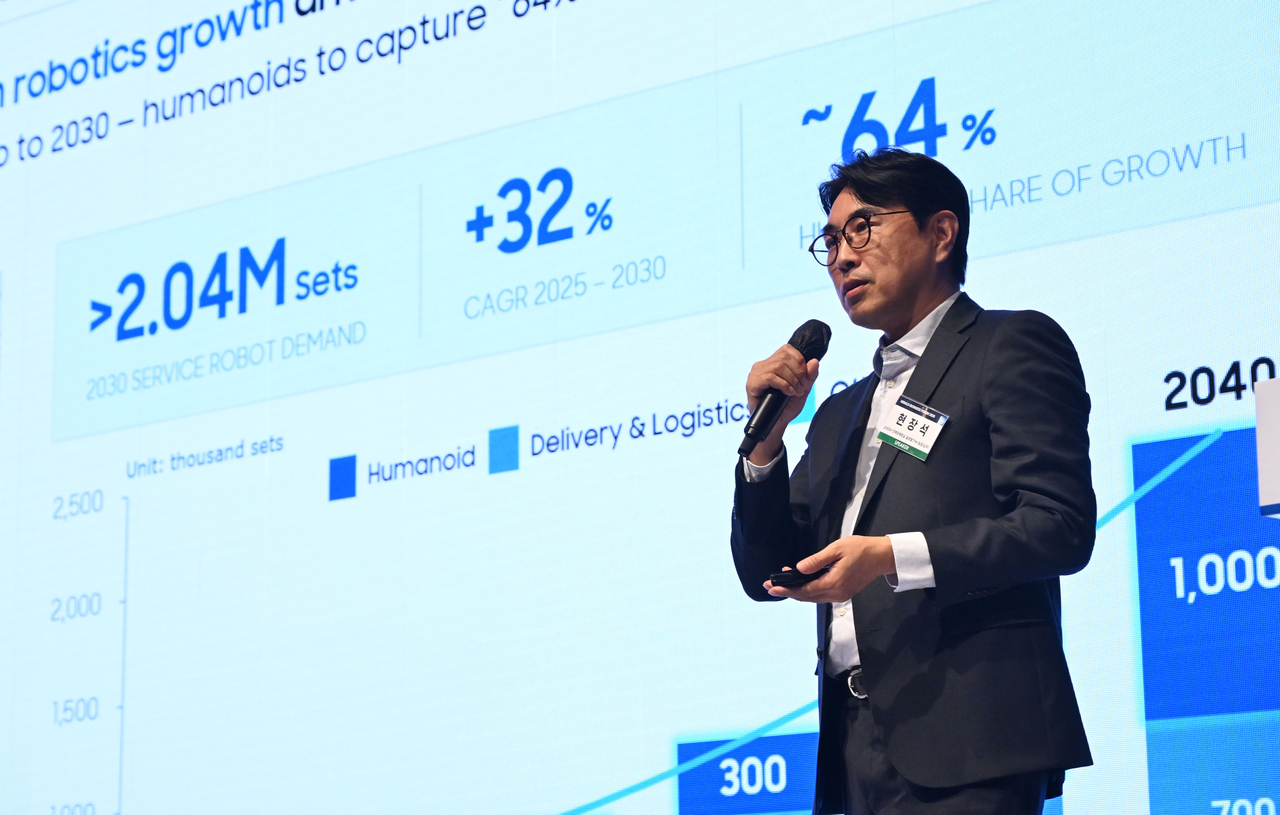
Samsung SDI announced (September 29) its SolidStack solid-state battery will enter mass production in late 2027, with samples already receiving positive feedback on safety and energy density from global customers. The company is expanding deployment beyond electric vehicles to humanoid robots and mobile devices. Concurrently, Samsung revealed the first cylindrical LFP (lithium iron phosphate) battery for AI data centers at Singapore's DCWA 2026 conference.
China formalizes 2030 solid-state battery commercialization in five-year energy plan
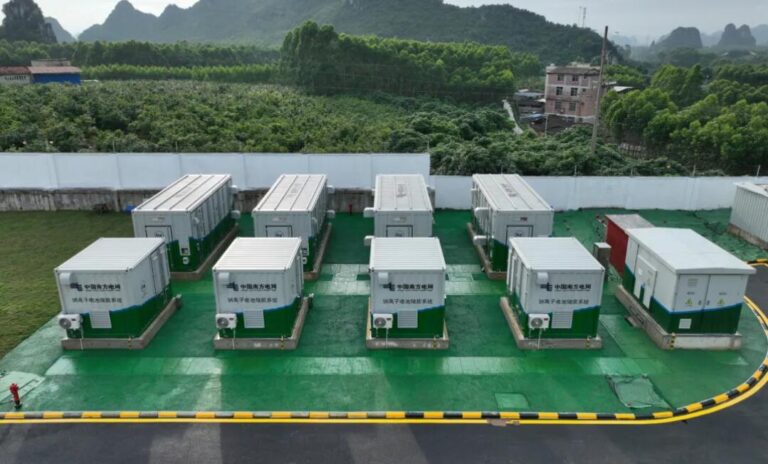
China's government officially unveiled (September 28) a five-year battery strategy targeting large-scale all-solid-state deployment by 2030, alongside 15,000-cycle lithium battery longevity and expanded sodium-ion and flow-battery capacity. The plan prioritizes sulfide electrolyte breakthroughs and positions China as the dominant supplier of next-generation storage tech.
Q3 2026 marks transition from pilot validation to pre-mass production for solid-state
Shanghai Metals Market reported (October 1) that Q3 2026 represents a critical inflection point: solid-state batteries shift from small-scale pilot lines to pre-mass production readiness. Sulfide electrolytes are moving to ton-scale production volumes with falling prices, while semi-solid and oxide routes advance in parallel. Ion Energy's 51Ah automotive-grade cells entered production; multiple Chinese makers (Easpring, HighPower) are advancing sulfide material qualification.
Perovskite-silicon tandem solar cells hold 34.85% NREL-certified efficiency record
LONGi Green Energy maintains the world record for perovskite-silicon tandem solar cell efficiency at 34.85% (certified by NREL in late 2024), exceeding the 33.7% Shockley-Queisser single-junction theoretical limit. Single-junction perovskite cells achieved 26.7% certification (University of Science and Technology of China). The gap between laboratory records and mass-production cells remains 4–7 percentage points.
Local view
Chinese battery industry (Sina Weibo, October 2–3): Industry analysts highlight that CATL, BYD, and Ganfeng Lithium dominate the semi-solid segment, with CATL's congealed-state semi-solid already in commercial deployment. BYD targets 2027 pilot-production and 2030 mass-scale rollout for full all-solid-state. The emerging standard GB/T 43568-2026 now legally defines electrolyte threshold (<20% liquid) for full solid-state vs. hybrid classifications, eliminating marketing gray zones.
South Korean battery makers (Herald Business, Chosun Ilbo, October 1–2): Samsung SDI and LG Energy Solution compete aggressively on solid-state patents—both filed electrode-stacking and roll-bonding process patents in September 2026 to secure mass-production yield rates. Korean government sets 2030 commercialization target for sodium-ion batteries in energy storage markets.
Japanese strategy (JBpress, October 2): Toyota–Idemitsu partnership accelerates: Idemitsu began pilot solid electrolyte manufacturing at its Chiba facility in January 2026 with large-scale equipment now under construction. Target remains 2027–2028 production launch for Toyota EVs at 50,000–60,000 units/year scale.
Context & numbers
- Global battery production Q3 2026: CATL holds 39.4% market share (333.0 GWh used in vehicles Jan–Aug 2026); BYD second at 15.1% (127.9 GWh).
- Solid-state deployment timeline: BYD and CATL target 2027 small-batch vehicle trials; 2030+ mass adoption. Samsung SDI targets late 2027 production ramp. Honda pursuing commercial launch within 18–24 months.
- Energy density benchmarks: Gotion claims 400 Wh/kg; sulfide electrolyte cells achieving ~350–380 Wh/kg in lab; mass-production target 300+ Wh/kg by 2027–2028.
- Cost trajectory: Industry consensus targets $100–150/kWh for all-solid-state by 2030 (vs. $70–80/kWh for lithium-ion today).
On the radar
- Honda first-mover risk: Honda publicly commits to earliest EV solid-state integration (2026–2027 target); execution delays could undermine narrative.
- China standard GB/T 43568-2026 enforcement: New government classification may force re-labeling of semi-solid products marketed as "full solid-state," affecting stock valuations of overstated claims.
- Sulfide vs. oxide race: Sulfide electrolytes (Li₂S pathways) advancing faster at ton scale; oxide routes (cheaper raw materials) lagging 12–18 months in cycle-life validation.
- Perovskite tandem manufacturing: NREL certification gap (lab: 34.85% vs. production: ~27% typical) remains the critical bottleneck for commercial viability by 2028.
Editorial note: Data freshness verified: all sources published September 26–October 3, 2026. Excluded: July 2026 ScienceDaily article on dendrite cracking (outside freshness window); pre-September 26 Toyota–Idemitsu announcements (covered in prior signals).
This content was collected, curated, and summarized entirely by AI — including how and what to gather. It may contain inaccuracies. Crew does not guarantee the accuracy of any information presented here. Always verify facts on your own before acting on them. Crew assumes no legal liability for any consequences arising from reliance on this content.
Powered by
