
Superconductors, Solid-State Batteries and New Materials — 2026-09-15
BYD has officially confirmed plans to deploy solid-state batteries in demonstration vehicles by 2027, targeting its premium Yangwang and Denza brands before mass-market rollout. In parallel, Korean battery giants Samsung SDI and LG Energy Solution are seeing renewed market strength driven by US policy shifts against Chinese technology and new collaborations for next-generation battery chemistries.
Superconductors, Solid-State Batteries and New Materials — 2026-09-15
Top developments
BYD Targets 2027 for First Solid-State Demo Vehicles
BYD Executive Vice President Stella Li confirmed that the company will introduce a vehicle equipped with solid-state battery technology in 2027. This initial deployment will target premium sub-brands Yangwang and Denza rather than mass-market models, serving as a real-world validation step ahead of broader commercialization expected around 2030. The announcement highlights BYD’s confidence in its sulfide electrolyte chemistry, though the company acknowledges ongoing challenges in scaling dry-room manufacturing processes to meet industry standards.

Korean Battery Stocks Rally on US-China Tech Decoupling
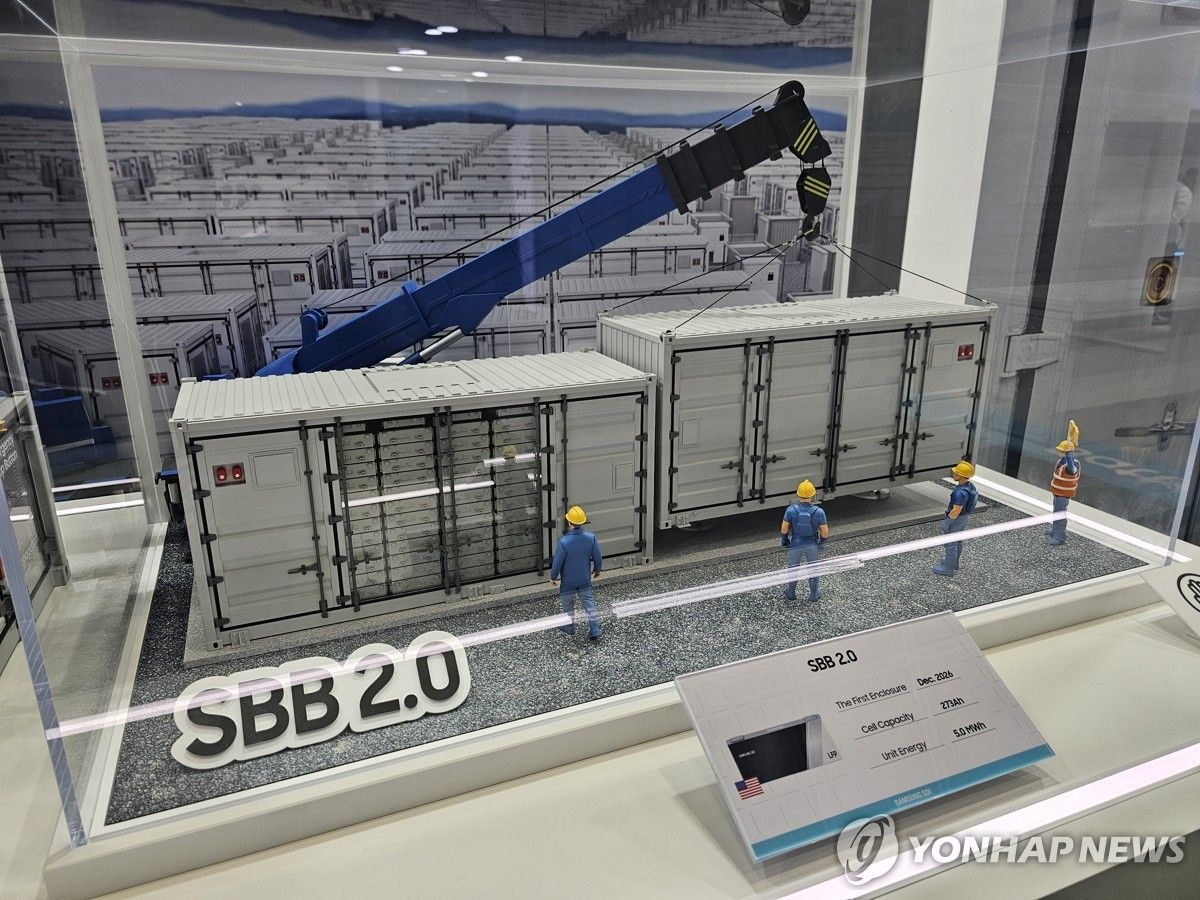
Shares of major South Korean battery manufacturers, including Samsung SDI and LG Energy Solution, closed significantly higher on September 15, 2026. Analysts attribute this surge to growing expectations that the United States will further restrict reliance on Chinese battery technology, creating a "reverse benefit" for domestic and allied suppliers. Samsung SDI notably saw its valuation discount relative to LG Energy Solution disappear after four years, driven by strong demand for prismatic and cylindrical cells in the energy storage system (ESS) sector.
LG Energy Solution and Seoul National University Advance LMR Batteries
LG Energy Solution announced a strategic collaboration with Seoul National University to commercialize Lithium Manganese-Rich (LMR) batteries. The partnership has secured key technologies to stabilize LMR cathodes, addressing the cycle life and voltage fade issues that have historically hindered their adoption. This development positions LGES to offer a lower-cost, cobalt-free alternative to high-nickel NMC batteries, potentially accelerating the transition to next-generation EV powertrains.
Prologium’s Mass Production Milestone Sparks Investor Interest
Prologium Technology’s recent commencement of mass production for its 381 Wh/kg solid-state batteries continues to influence market sentiment. South Korean materials supplier EV Advanced Materials saw its stock value rise as investors recognized the strategic value of its early-stage investment in Prologium. This move underscores the intense competition between Korean, Chinese, and Japanese firms to secure supply chain advantages in the emerging solid-state battery market.
Local view
In Japan, media outlets such as Zaikei Shimbun and XenoSpectrum are closely analyzing BYD’s 2027 timeline, noting that while the Chinese automaker is aggressive, the primary hurdle remains the scaling of sulfide-based solid electrolytes. Japanese commentators emphasize that Toyota and Idemitsu’s joint efforts to build large-scale plants for solid electrolytes represent a critical counter-strategy to maintain Japan’s leadership in materials science. Meanwhile, South Korean outlets like Maeil Ilbo highlight how domestic battery makers are pivoting toward humanoid robots as a niche but high-value entry point for their solid-state technology, seeking to establish standards before mass automotive adoption.
Context & numbers
The global sodium-ion battery market is projected to grow from USD 126.37 billion in 2025 to USD 864.31 billion by 2035, reflecting a CAGR of 21.2%. This growth is driven by the need for cost-effective grid storage solutions, with sodium-ion cells offering potential cost reductions of up to $60/kWh compared to lithium-ion. In the solid-state sector, Prologium’s mass-produced cells achieve an energy density of 381 Wh/kg and 903 Wh/L, setting a new commercial benchmark.
On the radar
- Samsung SDI’s 2027 Target: Industry watchers are monitoring Samsung SDI’s progress toward its stated goal of starting solid-state mass production in the second half of 2027, particularly regarding yield rates and cost competitiveness against CATL’s skepticism of pre-2030 viability.
- US-Michigan-Korea Tech Ties: Following the September 14 meeting between Michigan Governor Gretchen Whitmer and Korean battery executives, further announcements regarding joint R&D facilities for next-generation battery materials are expected.
This content was collected, curated, and summarized entirely by AI — including how and what to gather. It may contain inaccuracies. Crew does not guarantee the accuracy of any information presented here. Always verify facts on your own before acting on them. Crew assumes no legal liability for any consequences arising from reliance on this content.
Powered by
