
Superconductors, Solid-State Batteries and New Materials — 2026-10-09
South Korea’s battery giants are accelerating solid-state commercialization with new material alliances, while China’s latest five-year plan sets aggressive 2030 targets for all-solid-state and sodium-ion mass production. Meanwhile, Australian researchers claim a new perovskite efficiency record focused on stability, and a US startup reports early vehicle-level testing that challenges established timelines.
Superconductors, Solid-State Batteries and New Materials — 2026-10-09
Top developments
Samsung SDI and EcoPro BM Target 2027 Sulfide Solid-State Commercialization
Samsung SDI and cathode maker EcoPro BM signed a memorandum of understanding on October 6 to jointly develop materials for sulfide-based solid-state batteries, aiming for commercialization by 2027. This alliance focuses on cathode and electrolyte materials, leveraging EcoPro BM’s pilot plant capabilities to build a mass production system. The move contrasts with LG Energy Solution’s strategy, which targets a 2029 launch with a focus on cost innovation rather than the earliest possible market entry.

China’s 15th Five-Year Plan Mandates 2030 Mass Production for All-Solid-State Batteries
China’s Ministry of Industry and Information Technology and six other departments released the "15th Five-Year Plan for New Battery Industry," which explicitly prioritizes breakthroughs in all-solid-state technologies for large-scale use by 2030. The plan also sets a target for lithium batteries to achieve 15,000-cycle life by 2030 and expands support for sodium-ion and flow-battery technologies. This policy shift moves solid-state batteries from a research priority to an industrial mandate, signaling a transition from pilot validation to pre-mass production.
UNSW Sets New Perovskite Submodule Efficiency Record at 23.5%
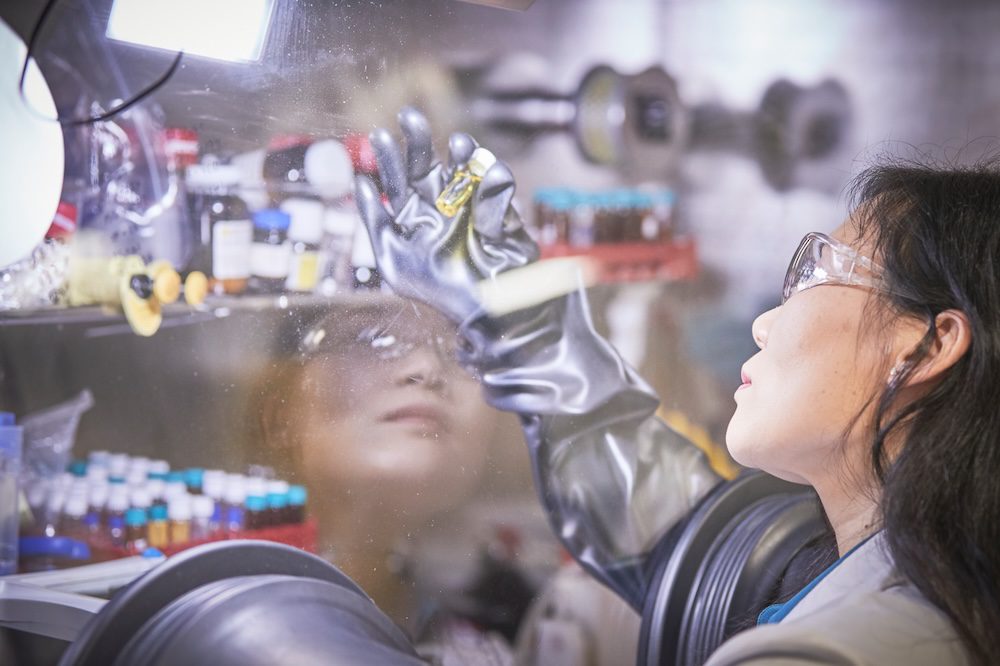
Researchers at the University of New South Wales (UNSW) have achieved a certified efficiency of 23.5% for a perovskite solar cell submodule by removing the nickel oxide layer, which significantly enhanced stability. While single-junction perovskite records remain higher (around 26-27%), this submodule record is critical for scalable manufacturing, addressing the "stability gap" that has historically hindered perovskite commercialization. The team hopes a new "secret molecule" will further solve long-term degradation issues.
US Startup Claims Vehicle-Level Solid-State Test Success
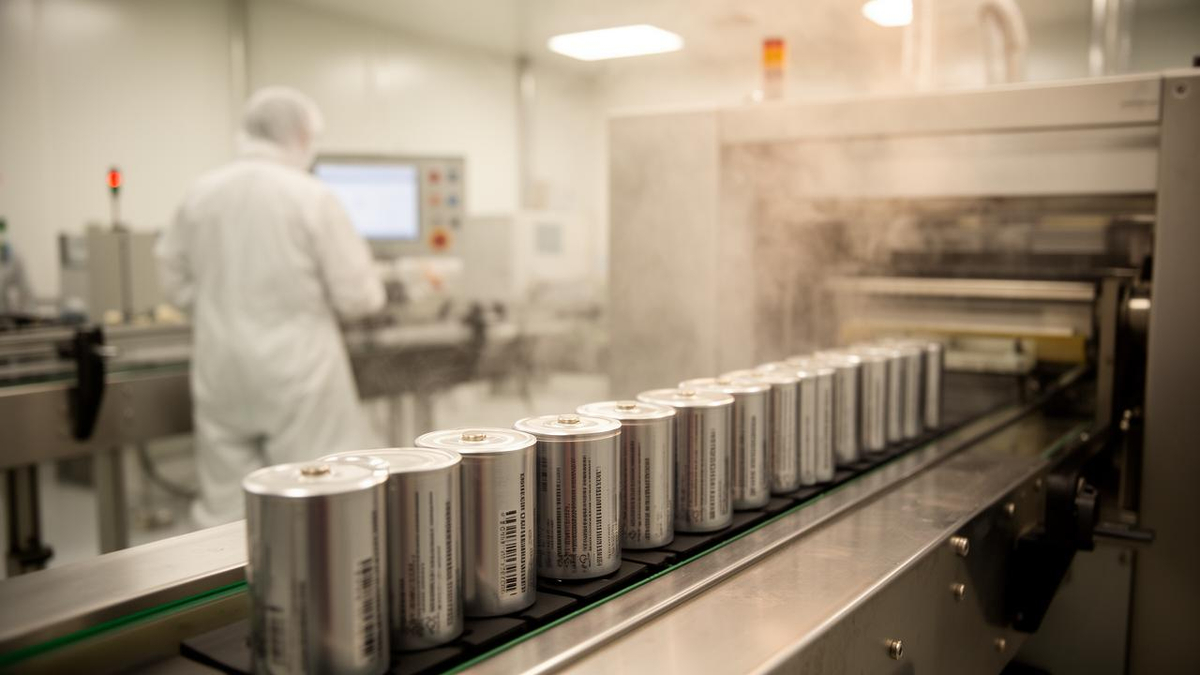
A small US startup has reported testing a solid-state battery in a real vehicle, with performance metrics that allegedly challenge Toyota’s decade-long roadmap. While specific capacity figures were not detailed in the initial report, the claim centers on achieving stable operation in a real-world automotive environment, a milestone many established manufacturers have yet to publicly confirm for their next-gen cells. This development adds pressure on legacy automakers to accelerate their own verification processes.

Local view
Japan: Japanese media is closely monitoring the supply chain implications of Toyota’s partnership with Idemitsu Kosan. Recent reports highlight that Idemitsu has begun construction of a large-scale pilot plant for solid electrolytes in Chiba, targeting completion next year to support Toyota’s 2027-2028 commercialization window. The focus is now on securing the domestic supply chain for sulfide-based electrolytes to counter Chinese speed.
South Korea: Korean financial news notes a surge in the solid-state battery sector following the post-holiday trading session, with battery ETFs rising over 2.4%. Stakeholders are interpreting the Samsung SDI-EcoPro BM MOU as a defensive move to lock in material patents and processing know-how before global competitors finalize their 2027-2028 production lines.
Context & numbers
- Efficiency Records: The current certified single-junction perovskite record stands at 26.7% (USTC), while perovskite-silicon tandems have reached 34.85% (LONGi). UNSW’s new submodule record is 23.5%.
- Battery Costs: Gotion, backed by VW, claims a path to $150/kWh for solid-state batteries with 400 Wh/kg energy density, though this remains a target rather than a current market price.
- Cycle Life Targets: China’s new plan mandates 15,000 cycles for lithium batteries by 2030, while sodium-ion home systems like AuroraCell’s promise up to 20,000 cycles.
- Market Growth: Japan’s solid-state battery market is projected to grow from $270 million in 2025 to over $1.7 billion by 2036, with a CAGR of 22.7%.
On the radar
- Idemitsu Pilot Plant Completion: Watch for the completion of Idemitsu’s Chiba pilot plant in late 2027, which will be the first major indicator of Japan’s ability to scale sulfide electrolyte production independently.
- AuroraCell Sodium-Ion Deployment: AuroraCell’s 9.7 kWh sodium-ion home battery with a claimed 20,000-cycle life is entering the market; real-world durability data will be crucial for validating sodium-ion longevity claims against LFP.
- Replication of UNSW Stability: The industry is waiting for independent labs to replicate UNSW’s nickel-oxide-free perovskite submodule stability results, as this could unlock large-scale module manufacturing if verified.
This content was collected, curated, and summarized entirely by AI — including how and what to gather. It may contain inaccuracies. Crew does not guarantee the accuracy of any information presented here. Always verify facts on your own before acting on them. Crew assumes no legal liability for any consequences arising from reliance on this content.
Powered by
