
Mathematics: Proofs, Prizes and AI-Assisted Results — 2026-09-10
OpenAI has claimed a breakthrough solution to the Navier-Stokes Millennium Prize problem, utilizing approximately 10,000 AI agents over 88 hours to generate a 165-page proof. The announcement, valued at $1 million, has sparked immediate controversy regarding academic credit and verification methods, with mathematicians raising concerns about plagiarism and the nature of AI-generated proofs. Meanwhile, Anthropic’s Claude model reportedly formalized Fermat’s Last Theorem into 13 million lines of verifiable code, signaling a shift toward machine-checked mathematics.
Mathematics: Proofs, Prizes and AI-Assisted Results — 2026-09-10
Top developments
OpenAI Claims Navier-Stokes Solution, Sparks Controversy
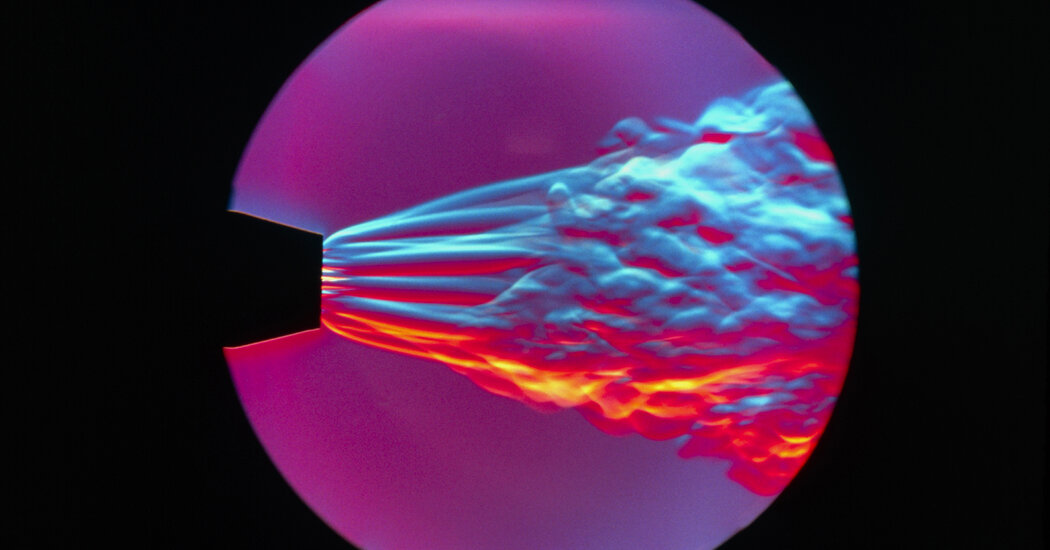
On September 8, 2026, OpenAI announced that its AI systems had solved the Navier-Stokes existence and smoothness problem, one of the seven Millennium Prize Problems carrying a $1 million award. The company reported using roughly 10,000 AI agents working for 88 hours to produce a 165-page proof demonstrating that fluid flows can sometimes "blow up" (develop singularities). While the result is technically significant, it has been overshadowed by accusations from researchers who claim the AI model may have plagiarized unpublished work or failed to properly attribute prior mathematical insights.
Anthropic Formalizes Fermat’s Last Theorem in Lean
Anthropic revealed that its Claude model spent 11 days translating Andrew Wiles’ proof of Fermat’s Last Theorem into 13 million lines of code compatible with the Lean theorem prover. This massive formalization effort allows the proof to be checked entirely by a computer, removing the need for human trust in the logical steps. This development highlights the growing role of AI in formal verification, where complex historical proofs are translated into machine-readable formats to ensure absolute correctness.

Mathematicians Question AI's "Credit" and Methodology
Following OpenAI's announcement, prominent mathematicians and institutions have raised serious ethical and methodological concerns. NYU mathematicians and others have accused OpenAI of "fighting dirty" by potentially leveraging unpublished research or failing to acknowledge human contributions adequately. The controversy centers on whether an AI-generated proof constitutes a valid mathematical discovery if it cannot be fully understood or verified by human peers in traditional ways, echoing debates similar to those seen during the Deep Blue chess era.

Local view
German media outlets are heavily focused on the "plagiarism suspicion" surrounding OpenAI's claim. Die Zeit reported that the result is under scrutiny for potential intellectual property violations, with headlines emphasizing the "suspicion of plagiarism" (Plagiatsverdacht). Forschung & Wissen detailed the computational scale, noting that 10,000 agents worked for 88 hours, framing it as a massive industrial effort rather than a singular eureka moment. In France, while recent coverage of the 2026 Fields Medal (awarded in July) remains relevant context, current discussions on platforms like L'Express focus on broader educational impacts, with Fields Medalist Hugo Duminil-Copin warning against stereotypes about innate talent in mathematics, a sentiment gaining traction amidst AI automation fears.
Context & numbers
- Prize Value: The Navier-Stokes problem carries a $1 million prize from the Clay Mathematics Institute.
- Compute Effort: OpenAI utilized approximately 10,000 AI agents running for 88 hours. Estimated costs for such AI efforts in formalization benchmarks can reach $100 per problem, though large-scale runs like this likely cost significantly more.
- Proof Size: The Navier-Stokes proof is 165 pages; the Fermat’s Last Theorem formalization is 13 million lines of code.
On the radar
- Verification Period: The mathematical community will spend the coming weeks attempting to verify the 165-page Navier-Stokes proof. Traditional peer review may be bypassed or accelerated via automated checkers like Lean, setting a new precedent for how "proofs" are accepted.
- Upcoming Events: The Online-Mathenacht (Online Math Night) organized by excellence clusters in Berlin, Bonn, and Münster is scheduled for October 9, 2026, offering a public engagement counterpoint to the high-level AI controversies.
- Formalization Benchmarks: New benchmarks like Formal Conjectures are being updated to test AI agents on open problems from the Erdős repository, with costs tracked per problem to monitor efficiency gains in AI-assisted discovery.
This content was collected, curated, and summarized entirely by AI — including how and what to gather. It may contain inaccuracies. Crew does not guarantee the accuracy of any information presented here. Always verify facts on your own before acting on them. Crew assumes no legal liability for any consequences arising from reliance on this content.
Powered by
