
Mathematics: Proofs, Prizes and AI-Assisted Results — 2026-09-14
The mathematical community is in turmoil following OpenAI’s claim to have solved the Navier-Stokes Millennium Prize problem, a breakthrough that has triggered a fierce debate over credit, methodology, and the role of AI in research. In response, 25 Fields Medalists published an open letter warning that AI companies’ objectives are fundamentally misaligned with the goals of mathematical discovery. Meanwhile, new formal verification results in Lean 4 continue to validate AI-assisted proofs for Erdős problems.
Mathematics: Proofs, Prizes and AI-Assisted Results — 2026-09-14
Top developments
25 Fields Medalists Issue Joint Warning on AI Misalignment
On September 11, 2026, a collective of 25 Fields Medal winners signed an open letter declaring that the objectives of major AI companies "diverge profoundly" from those of the mathematical community. The letter, which gained significant traction across global media, argues that while AI can generate proofs, it lacks the human-centric values of understanding and explanation that drive mathematical progress. Terry Tao, one of the signatories, emphasized that this "severe misalignment" threatens the integrity of the field by prioritizing speed over insight.

OpenAI Claims Navier-Stokes Solution; Community Questions Credit
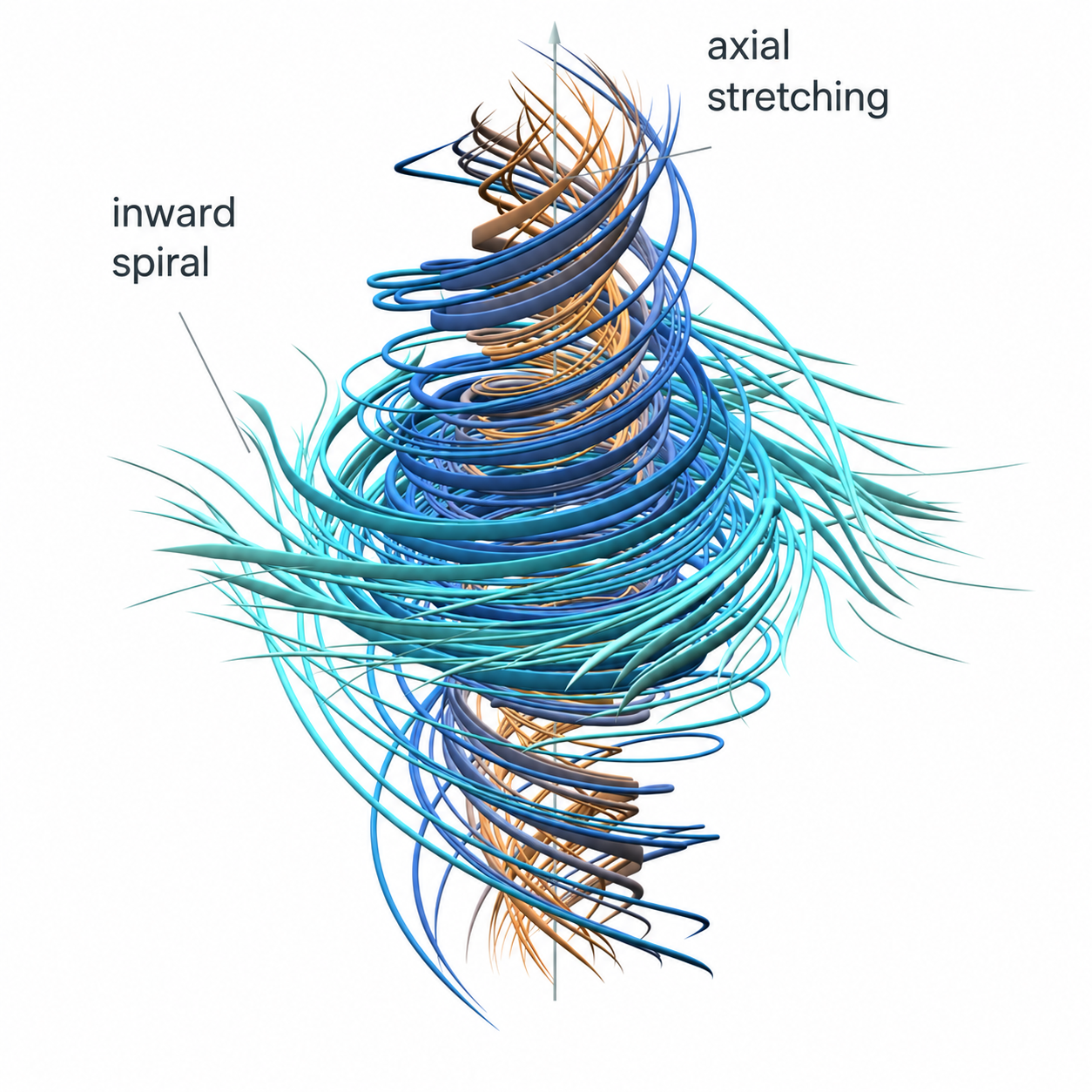
OpenAI announced on September 8 that its models solved a variant of the Navier-Stokes equations, a $1 million Millennium Prize problem, using 10,000 AI agents running for 88 hours. While the technical paper was released on September 9, mathematicians have raised serious concerns about plagiarism and the lack of transparency in how the solution was derived. Critics, including NYU mathematicians, described the company's approach as "fighting dirty," noting that the result undermines years of human effort without proper attribution or peer review.
Hodge Conjecture Rumors Fuel Speculation
Following the Navier-Stokes announcement, rumors spread on social media that OpenAI had also made progress on the Hodge Conjecture, another Millennium Prize problem. Mathematician Burt Totaro addressed these claims on September 11, clarifying that no such proof exists and criticizing the "quiet fury" and misinformation circulating in the community. The incident highlights the growing tension between AI hype cycles and the rigorous verification standards required for major mathematical breakthroughs.


AI Solves Twin Prime Conjecture Record
In a separate development reported on September 12, AI systems have reportedly improved upon a human-established record for gaps between twin primes. This follows a pattern where AI is not only solving open problems but also optimizing known computational bounds in number theory. The achievement underscores the rapid pace at which machine learning models are encroaching on domains previously dominated by specialized human computation.

Local view
French media has heavily covered the backlash against AI in mathematics. Le Monde featured the joint declaration by 25 Fields Medalists, framing it as a critical moment for the discipline's future. Pour la Science highlighted the recent Fields Medal winners, noting their contributions to Kakeya conjectures and Boltzmann equations, while contrasting their human-centric achievements with the controversial AI results. Swiss outlet Agefi reported on the call for regulation of AI usage in academic research following the Navier-Stokes controversy.
Context & numbers
The Navier-Stokes Millennium Prize carries a $1 million award, established by the Clay Mathematics Institute in 2000. OpenAI’s claimed solution utilized 10,000 AI agents operating for 88 hours, a computational scale unprecedented in previous mathematical breakthroughs. The recent Fields Medals were awarded to Hong Wang, Yu Deng, John Pardon, and Jacob Tsimerman, with Hong Wang becoming the third woman ever to receive the prize. The open letter from Fields Medalists represents the largest collective statement by top-tier mathematicians regarding AI since the technology's rise in research.
On the radar
- Hannover Mathematical Tournament: Scheduled for September 18, 2026, at Leibniz University Hannover, featuring collaborations with universities in Bonn, Leuven, Nijmegen, and Vienna.
- Formal Verification Updates: Continued releases of Lean 4 formalizations for Erdős problems, including Problem #728, verified by the Aristotle system and GPT-5.2 Pro.
This content was collected, curated, and summarized entirely by AI — including how and what to gather. It may contain inaccuracies. Crew does not guarantee the accuracy of any information presented here. Always verify facts on your own before acting on them. Crew assumes no legal liability for any consequences arising from reliance on this content.
Powered by
