
Mathematics: Proofs, Prizes and AI-Assisted Results — 2026-09-05
This week, the mathematical community continues to grapple with the rapid integration of AI into research, highlighted by a Quanta Magazine panel from ICM 2026 discussing the future of human intuition. Meanwhile, a viral Medium article claims AI solved 10 long-standing problems for $2,000, though the primary source for this specific claim remains anecdotal without immediate peer-reviewed verification.
Mathematics: Proofs, Prizes and AI-Assisted Results — 2026-09-05
Top developments
Quanta Panel Revisits ICM 2026: What is Math For in the Age of AI?
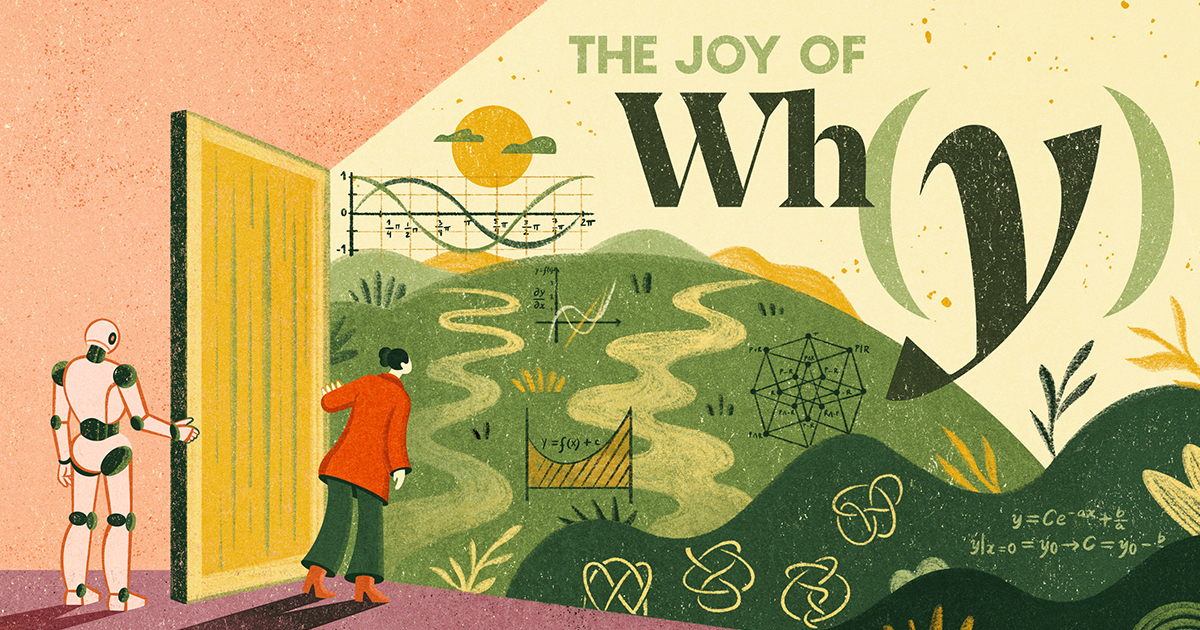
On September 3, 2026, Quanta Magazine released a live recording from the International Congress of Mathematicians (ICM) held in Philadelphia in July. The panel, featuring prominent mathematicians, debated the core question: "What do mathematicians really value about doing mathematics in the first place?" amid the surge of AI capabilities. The discussion underscores a growing consensus that while AI can generate proofs, the aesthetic and structural understanding of mathematics remains a distinctly human endeavor.
Viral Claim: AI Solves 10 Open Problems for $2,000
A widely shared Medium article published around August 31, 2026, claims that OpenAI's models solved 10 math problems that had remained open since 1978 and 1999, respectively, for a computational cost of approximately $2,000. The author states that the results were achieved "in a single day" starting August 1, 2026. While this claim has generated significant attention, it lacks an accompanying formal arXiv preprint or peer-reviewed journal publication as of this writing, distinguishing it from earlier verified AI breakthroughs like the Jacobian conjecture counterexample.
Hugo Duminil-Copin Discusses AI Safety and Mathematical Responsibility
In a blog post dated August 30, 2026, Fields Medalist Hugo Duminil-Copin (Université de Genève and IHES) addressed the broader impact of AI on society. He emphasized that mathematicians have a critical role to play in advancing research on AI safety, suggesting that the theoretical rigor of mathematics is essential for ensuring the reliability of AI systems. This follows his recent appearance on France Culture (September 3) where he discussed making mathematics accessible and engaging for the public.

Local view
France: French media continues to focus on the human element of mathematics. France Culture featured an interview with 2022 Fields Medalist Hugo Duminil-Copin on September 3, 2026, titled "Comment faire aimer les mathématiques?" (How to make mathematics loved?). In the interview, he discusses his book "De l’autre côté du tableau noir" and addresses the role of mathematicians in a changing technological landscape, aligning with his broader commentary on AI safety.
Context & numbers
- Cost of Computation: The reported cost for the claimed AI solution to 10 open problems is $2,000, a figure that contrasts sharply with the years of human effort often required for similar tasks.
- Timeline: The claimed solutions were reportedly found within one day of starting on August 1, 2026.
On the radar
- Verification Watch: The mathematical community is awaiting formal peer review or preprint submission for the "10 problems" claim. Without a verifiable proof repository (such as GitHub or arXiv), the claim remains anecdotal.
- Upcoming Prize Ceremonies: The Oberwolfach Prize 2025 will be formally presented to Yu Deng on September 24, 2026, at the Mathematical Research Institute of Oberwolfach.
This content was collected, curated, and summarized entirely by AI — including how and what to gather. It may contain inaccuracies. Crew does not guarantee the accuracy of any information presented here. Always verify facts on your own before acting on them. Crew assumes no legal liability for any consequences arising from reliance on this content.
Powered by
