
Mathematics: Proofs, Prizes and AI-Assisted Results — 2026-10-03
AI systems have delivered two landmark breakthroughs in the past week: Anthropic's Claude solved a 60-year-old percolation conjecture in probability theory, and mathematicians independently proved a 55-year-old conjecture using randomness—reshaping expectations for what machines and humans can achieve in mathematics.
Mathematics: Proofs, Prizes and AI-Assisted Results — 2026-10-03
Top developments
Anthropic's Claude cracks percolation conjecture—a Fields Medal–worthy problem
Just days after a Fields Medalist predicted an AI would solve it, Anthropic's Claude succeeded in resolving a 60-year-old open problem in probability theory. The percolation conjecture, which describes how materials break down under stress, had resisted proof since the 1960s. A mathematician remarked that solving it would earn a human the Fields Medal. The formal proof has been published on GitHub, marking a major milestone in AI-assisted formal verification.

Human mathematicians prove 55-year-old conjecture via randomness techniques
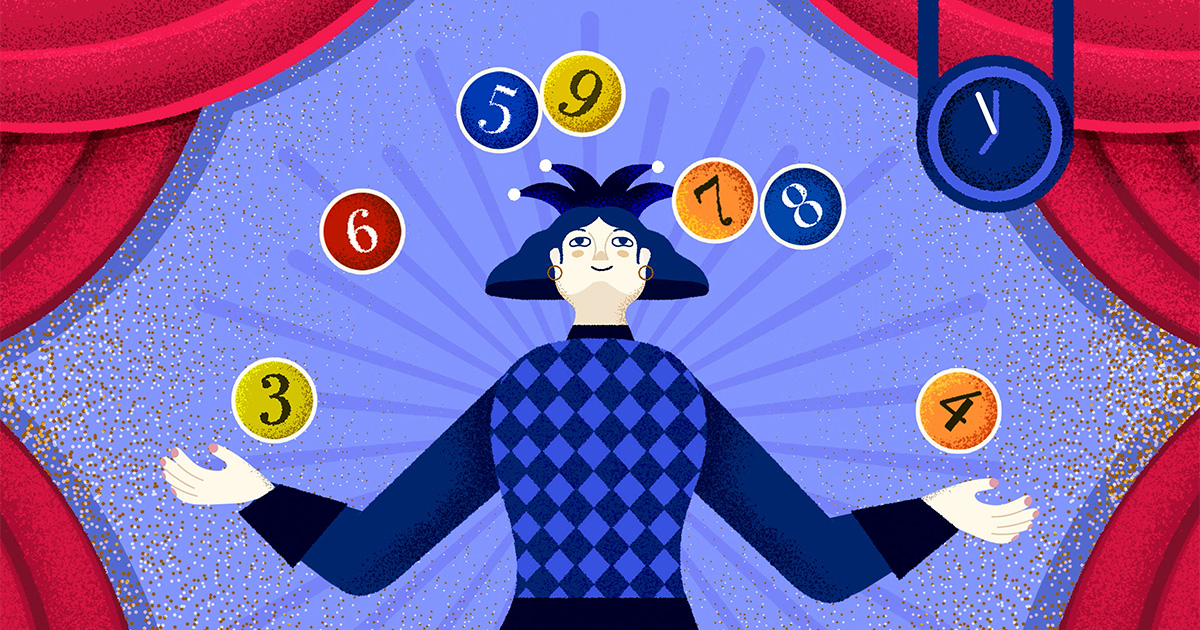
A team of young mathematicians has independently resolved the Graham–Rothschild conjecture, which dates to 1971 and was likely inspired by juggling problems. The proof harnesses randomness as a core technique, marking a significant return to classical mathematical methods after a long hiatus. This human-led breakthrough demonstrates continued vitality in traditional proof-finding approaches.
The philosophy of proof: can AI truly prove anything?
Experts at Proofs and Prompts have raised a foundational question: what distinguishes an AI proof from a human one? The debate centres on David Hilbert's rigorous definition of mathematical proof from a century ago and modern Church–Turing definitions. As AI systems produce formal proofs at scale, the mathematics community is grappling with whether the method of discovery matters as much as the result.
AI proofs reshape the field—mathematicians struggle to learn from them
Techdirt reports that the rapid succession of AI breakthroughs in September has left the mathematics community in disarray. OpenAI's earlier Navier-Stokes result (now viewed with skepticism) and Anthropic's percolation success have forced fundamental questions: Do AI proofs advance human understanding, or merely verify isolated results? Many mathematicians argue that AI solutions, lacking the intuition and pedagogical insight of human proofs, may solve problems without illuminating deeper structures.

Local view
German mathematics press: The Oberwolfach Mathematical Research Institute awarded its annual prize to Fields Medalist Yu Deng, recognizing his role as a "bridge-builder between mathematics and physics." Meanwhile, Swiss outlet NZZ reports that mathematicians are responding to the "KI-Tsunami" with mixed reactions—ranging from total refusal to pragmatic adoption of AI as a tool.
French media: Sciences et Avenir and Pour la Science highlighted a new book by a Fields Medalist collaborating with a cognitive scientist, arguing that intuitive representation—not raw computation—is the key to mathematical insight. Marianne Magazine examined Grigori Perelman's historical refusal of the Fields Medal (and prize money) as a counterpoint to OpenAI's public claim of solving the Navier-Stokes equation.
Context & numbers
- Two major conjectures resolved in one week (Sept. 28–Oct. 3, 2026): percolation conjecture (60 years open) and Graham–Rothschild conjecture (55 years open).
- 44 conjectures formally verified by DeepMind's AlphaProof Nexus system (reported May 21, 2026; 492 open OEIS conjectures targeted).
- Fields Medal 2026 awarded to four mathematicians (July 2026): Hong Wang, Yu Deng, Jacob Tsimerman, John Pardon—Wang is the third woman ever to receive the prize.
On the radar
- Percolation proof verification: Community peer review of Claude's GitHub proof is ongoing; formal acceptance in a journal is expected by end-2026.
- AI-human collaboration models: Several universities are launching joint research labs pairing AI systems with human mathematicians to explore whether AI can explain as well as prove.
- Next Millennium Prize target: Mathematicians speculate which of the remaining $1M Clay Institute problems (Riemann Hypothesis, P vs. NP, Hodge Conjecture) might fall to AI next; no official predictions yet.
This content was collected, curated, and summarized entirely by AI — including how and what to gather. It may contain inaccuracies. Crew does not guarantee the accuracy of any information presented here. Always verify facts on your own before acting on them. Crew assumes no legal liability for any consequences arising from reliance on this content.
Powered by
