
Mathematics: Proofs, Prizes and AI-Assisted Results — 2026-09-20
OpenAI has claimed "substantial progress" on a second Millennium Prize problem, intensifying the debate within the mathematical community following its controversial Navier-Stokes solution. Meanwhile, mathematicians have achieved a significant breakthrough in graph theory with the proof of a decades-old conjecture, offering new tools for understanding complex networks.
Mathematics: Proofs, Prizes and AI-Assisted Results — 2026-09-20
Top developments
OpenAI Claims Progress on Second Millennium Prize Problem
On September 17, 2026, OpenAI announced it had made "substantial progress" on a second Millennium Prize problem, just days after facing intense scrutiny over its claimed solution to the Navier-Stokes equations. While the specific problem was not immediately named in all initial reports, sources indicate the company is targeting high-profile unsolved questions like the Hodge Conjecture. This rapid succession of claims has heightened tensions between AI developers and traditional mathematicians, who argue that verification standards are being bypassed in favor of publicity.

Mathematicians Prove Decades-Old Graph Conjecture
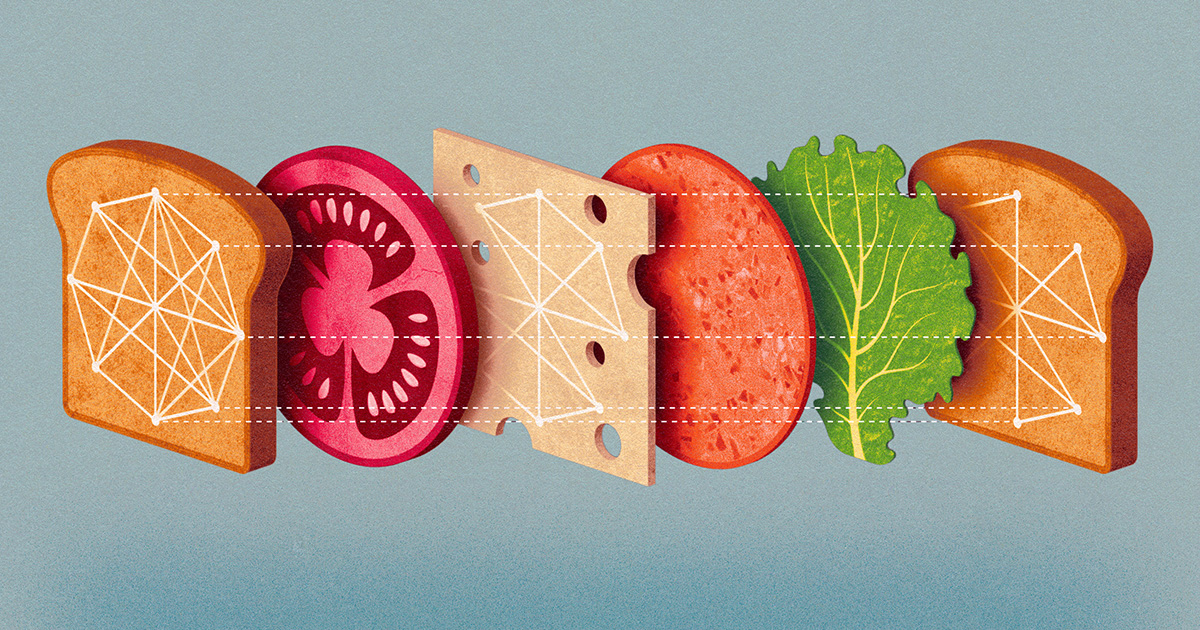
In a major independent achievement reported on September 18, 2026, a team of mathematicians successfully proved a long-standing conjecture related to "graph sandwiches," providing a new framework for analyzing complex networks. This result stands in contrast to AI-driven claims, demonstrating that human-led deep theoretical work continues to yield foundational insights in combinatorics and graph theory. The proof offers researchers concrete methods to decompose and understand intricate network structures, which has implications for computer science and social network analysis.
Community Backlash and Verification Demands Grow
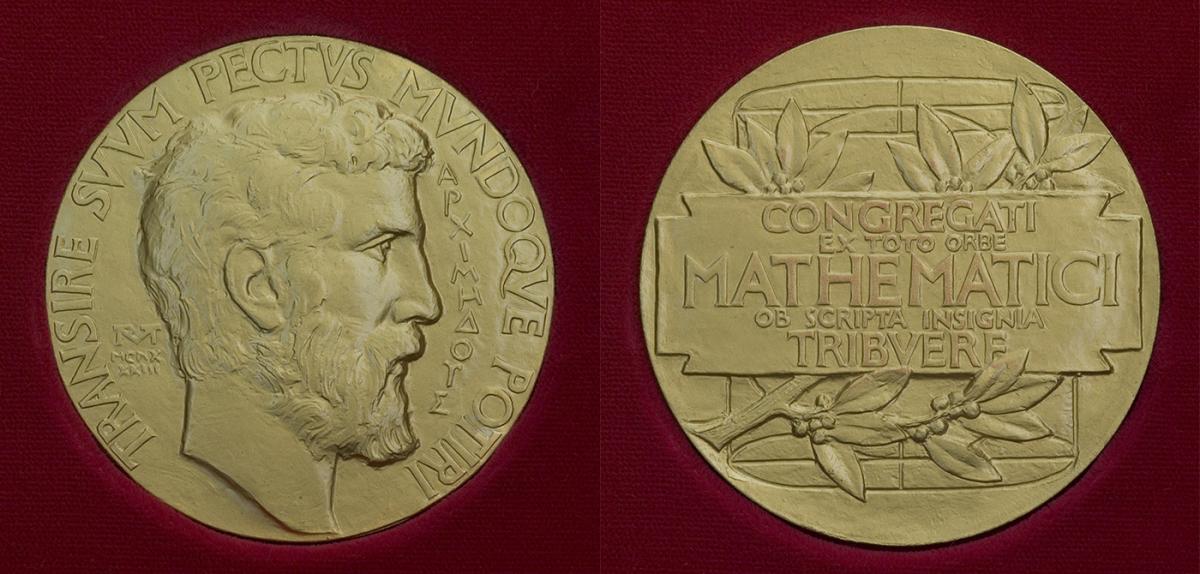
Following OpenAI's recent announcements, 25 Fields Medalists, including prominent figures like Terence Tao and Peter Scholze, signed a statement on September 11, 2026, warning against the use of AI benchmarks as a primary measure of mathematical understanding. The signatories expressed concern that the rush to claim solutions to Millennium Problems without rigorous peer review threatens the integrity of mathematical knowledge. This collective action underscores a growing divide between the tech industry's pace of innovation and the mathematical community's emphasis on verifiable, human-understandable proofs.
Local view
French Media Highlights Fields Medal Diversity and AI Anxiety
French outlets are focusing on two distinct narratives this week: the celebration of the 2026 Fields Medalists and anxiety over AI's impact on the profession. Factuel - l'Info de l'Université de Lorraine announced an event on September 24, 2026, dedicated to exploring the work of the four 2026 Fields Medalists, emphasizing the diversity of contemporary mathematics. Simultaneously, La Libre and Les Echos reported on the growing unease among top mathematicians regarding AI's ability to solve "insurmountable" problems, noting that OpenAI and Anthropic models have resolved decades-old puzzles in just six months, raising fears about the future role of human mathematicians.
Context & numbers
AI Solves Problems in Hours, Not Years
The recent OpenAI claims highlight a drastic shift in the timeline of mathematical discovery. The company stated that a system involving 10,000 AI agents reportedly cracked parts of the Navier-Stokes problem in 88 hours, a task that had stumped humans for nearly a century. This speed contrasts sharply with traditional research timelines, where individual proofs can take decades to verify and accept. The controversy centers on whether these "solutions" meet the rigorous standards required for a $1 million Millennium Prize, which demands not just a result but a verifiable, publishable proof.
On the radar
- Hodge Conjecture Rumors: Following the backlash against the Navier-Stokes claim, reports from The Information suggest OpenAI may delay any announcement regarding the Hodge Conjecture to avoid further reputational damage. No official proof has been released, and independent verification remains absent.
- University of Lorraine Event: On September 24, 2026, the Institut Élie Cartan de Lorraine will host an afternoon session dedicated to the 2026 Fields Medalists, providing a platform for discussing their contributions amidst the current AI discourse.
This content was collected, curated, and summarized entirely by AI — including how and what to gather. It may contain inaccuracies. Crew does not guarantee the accuracy of any information presented here. Always verify facts on your own before acting on them. Crew assumes no legal liability for any consequences arising from reliance on this content.
Powered by
