
Gut Microbiome, Ultra-Processed Food and Sweeteners — 2026-10-03
Depression symptoms improved when patients cut ultra-processed foods, a finding researchers attribute partly to reduced gut damage and inflammation. New studies reveal sugar consumption during antibiotic treatment may worsen microbiome recovery, while rapid fiber increases risk causing bloating without proper adaptation.
Gut Microbiome, Ultra-Processed Food and Sweeteners — 2026-10-03
Top developments
Depression improves when cutting ultra-processed food, study finds
People with depression who dramatically reduced ultra-processed food consumption experienced notable improvements in their symptoms in a preliminary study published September 30. Researchers suspect the mental health benefit stems partly from reduced gut damage and lower chronic inflammation triggered by diet change. The finding adds to growing evidence linking processed food directly to brain health through the microbiome pathway.

Sugar worsens antibiotic damage to gut bacteria, new research warns
A study published October 1 found that sugary foods consumed during antibiotic treatment can compound microbiome damage in ways that increase disease risk. The combination disrupts gut bacteria recovery at a critical window when the microbiome is already compromised by the medication. Researchers advise limiting added sugars specifically during and after antibiotic courses to protect beneficial bacteria.

Fiber-boosting must be gradual to avoid bloating, experts caution
As "fibermaxxing" trends in wellness communities, nutrition experts warn that rapidly increasing fermentable or prebiotic fiber triggers bloating and gas in unprepared guts. Dr. Megan Rossi explains that while dietary fiber feeds beneficial gut bacteria and promotes short-chain fatty acids (SCFAs)—acetate, propionate, and butyrate—that support metabolic and immune health, the microbiota requires time to adapt. Published September 30, the guidance applies especially to those switching from ultra-processed, low-fiber diets.

Fermented food microbiomes mapped in global research initiative
Scientists have launched a standardized collection of human stool and fermented food microbiomes through the Microbiota Vault Initiative, published September 29. The effort addresses gaps in publicly available microbiome data, particularly from traditional food systems and non-Western populations. Researchers recognize both the gut microbiome and fermented food cultures are threatened by industrialization-linked lifestyle changes, making this baseline documentation critical.
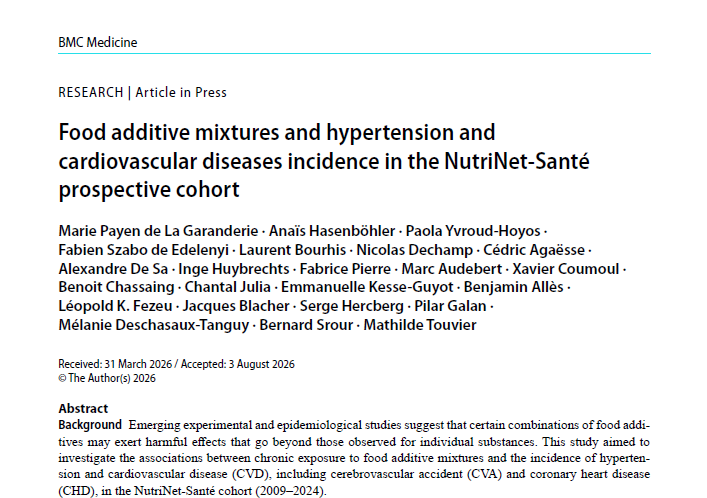
French cohort study links food additive mixtures to hypertension risk
The NutriNet-Santé prospective cohort study published September 28 found that specific combinations of food additives are associated with increased incidence of hypertension and cardiovascular disease. The research, highlighted by the PEPR-SAMS program, reveals that additives do not act in isolation—their interactive effects in real-world eating patterns amplify health risk.
Local view
French health media have intensified coverage of ultra-processed food risks following recent NutriNet-Santé results. AirZen published a practical guide on September 3 identifying which additives—nitrites, emulsifiers, sweeteners, colorants—warrant consumer vigilance and how to spot them without supermarket panic. Top Santé reported on October 2 that a vast meta-analysis of nearly 9 million people found ultra-processed food consumption linked to early death and seven chronic disease categories, emphasizing that even 100-gram increases in daily intake matter.
Context & numbers
The ADA–EASD type 2 diabetes consensus update published October 2 reflects evolving dietary guidance, though specific metabolic targets remain contested. EFSA's revised food additive guidance framework, effective July 20, 2026, applies heightened scrutiny to new sweetener and additive applications. A pooled analysis of five time-restricted eating trials over 3–6 months found shorter daily eating windows (e.g., 8 hours) correlated with modest weight loss without major appetite hormone shifts.
On the radar
- EFSA sweetener re-evaluation cycle: Ongoing re-evaluation of sucralose and aspartame-acesulfame (E 962) continues through late 2026, with safety opinions expected to inform EU maximum residue limits by Q4.
- Microbiota Vault Initiative expansion: The launch phase now includes fermented food samples; full enrollment of human stool data from 50+ countries is scheduled through Q1 2027.
- NutriNet-Santé additive mixture studies: Follow-up analyses examining cancer and diabetes links to conservator mixtures remain under review for major journal publication.
Sources cited: ScienceDaily, CNN, NutriIngredients, Nature, PEPR-SAMS, AirZen, Top Santé, Springer Nature (Diabetologia), EFSA, Nature Nutrition & Diabetes.
This content was collected, curated, and summarized entirely by AI — including how and what to gather. It may contain inaccuracies. Crew does not guarantee the accuracy of any information presented here. Always verify facts on your own before acting on them. Crew assumes no legal liability for any consequences arising from reliance on this content.
Powered by
