
Deep-Sea Expeditions and New Ocean Species — 2026-09-29
A flurry of deep-sea discoveries this week reveals Antarctic krill thriving at hydrothermal vents, shrimp navigating the ocean's deepest vents using a back-mounted light sensor, and a landmark Uruguayan expedition documenting ~100 suspected new species. Ocean mapping continues to accelerate, with 28.7% of seafloor now charted to modern standards, while Atlantic circulation weakens and Pacific oxygen patterns shift regionally.
Deep-Sea Expeditions and New Ocean Species — 2026-09-29
Top developments
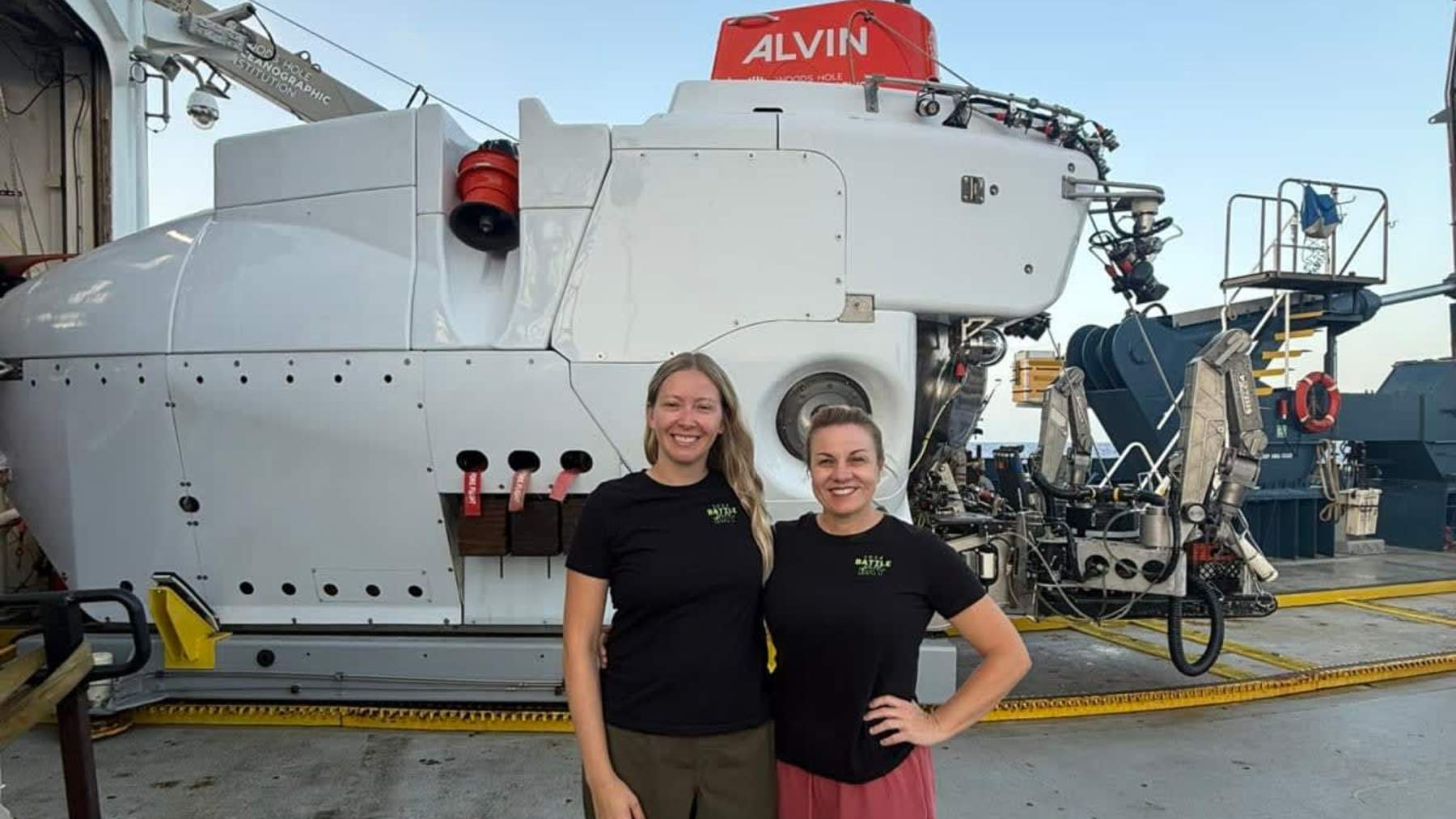
Submersible Alvin Explores World's Deepest Hydrothermal Vents; Reveals Shrimp Back-Eye Navigation
Scientists aboard the submersible Alvin dove nearly 3 miles (approximately 4.8 km) to the Caribbean's deepest known hydrothermal vents to investigate how shrimp navigate total darkness. Research suggests a back-mounted, light-sensitive organ—an unusual eye-like structure on the dorsal surface—may guide these creatures to vent sites. The expedition, led by Florida International University researchers, marks a major achievement in understanding extreme-environment adaptation.
Antarctic Krill Discovered Gathering at Deep-Sea Hydrothermal Vents Over 900 Meters Down
Antarctic krill—tiny shrimp-like creatures previously thought to inhabit only upper ocean layers—have now been observed gathering and feeding at deep-sea hydrothermal vents more than 900 meters beneath the Southern Ocean. This unexpected behavior, first documented in 2024 and now confirmed by ongoing research, challenges assumptions about krill distribution and suggests these animals may exploit chemically rich vent environments for feeding. The discovery raises questions about energy pathways in extreme deep-sea ecosystems.

Uruguay Sub200 Expedition Reveals ~100 Suspected New Species and Rare Dumbo Octopod
A landmark Uruguayan deep-sea expedition discovered approximately 100 suspected new marine species, including a dumbo octopod (Cirrina squid) and detailed imaging of a shipwreck in the Atlantic. The Uruguay Sub200 mission processed high-resolution imagery from ocean depths, documenting organisms never before recorded. Scientists are now analyzing genetic material and morphology to formally classify these findings, which could significantly expand the catalogue of South Atlantic biodiversity.

Pacific Deep-Sea Expedition in Clarion-Clipperton Zone Discovers 800 New Species
Biologists from multiple nations completed an unprecedented 160+ day expedition exploring the Clarion-Clipperton Zone (abyssal plains between Mexico and Hawai'i). The team documented approximately 800 new marine species in this vast, remote seafloor habitat. This discovery underscores the biodiversity hidden in areas previously considered monotonous abyssal plains and informs ongoing discussions about deep-seabed mineral extraction policy.
Japan Launches New Arctic Research Vessel Mirai II; Phytoplankton Prediction Improves
Japan's new Arctic research vessel Mirai II is set to arrive in December 2026, replacing the decommissioned Mirai (8,700 tons). Simultaneously, JAMSTEC researchers announced improved predictive capabilities for phytoplankton blooms 6 months ahead, using climate models to forecast changes in ocean circulation and productivity. This advance supports ecosystem monitoring and resource management in rapidly warming polar regions.
Local view
Spanish-language media and stakeholders: El País Uruguay highlighted the Uruguay Sub200 expedition as a transformative moment for South American marine science, emphasizing national pride in the dumbo octopod discovery and the collaborative international effort. Futura-Sciences (France/Spanish-language edition) stressed that the Clarion-Clipperton discovery of 800 species challenges stereotypes of abyssal monotony and urgently shapes debates over deep-sea mining licenses. Spanish shipyards (Armón and Freire in Vigo) are now recognized leaders in constructing oceanographic research vessels for countries including the Netherlands, Saudi Arabia, New Zealand, Iceland, and Spain—reflecting growing investment in deep-ocean exploration infrastructure. [Sources: https://www.elpais.com.uy/vida-actual/ciencia/de-un-pulpo-cirrina-a-100-probables-nuevas-especies-la-expedicion-que-cambio-la-ciencia-oceanica-de-uruguay; https://futura-sciences.com/es/medio-ambiente/descubren-800-nuevas-especies-en-el-pacifico-lo-que-los-cientificos-nunca-esperaron_22999; https://www.atlantico.net/economia/colosos-naval-vigues-logran-hitos_1_20260928-4429135.html]
Context & numbers
Ocean floor mapping progress: As of September 2026, 28.7% of the global seafloor has been mapped to modern standards (up sharply from under 6% when Seabed 2030 launched in 2017). Multibeam sonar aboard research ships handles most surveys; satellite data fills gaps in remote areas. The Seabed 2030 initiative aims to complete comprehensive coverage by the end of the decade.
Ocean hypoxic zones: Oceanic dead zones (areas with low or depleted oxygen) have increased by more than 300% since 2000, rising from 150 recorded sites to over 500 by 2026. These expansions correlate with warming waters, reduced circulation, and coastal nutrient loading.
Atlantic Meridional Overturning Circulation decline: Scientists reported strong observational evidence that a key component of the Atlantic Meridional Overturning Circulation (AMOC) has weakened steadily over nearly two decades. This slowdown could reshape weather patterns, rainfall, storms, and winter intensity in the Atlantic basin and globally.
On the radar
- December 2026: Japan's Mirai II Arctic research vessel arrival and commissioning—watch for inaugural cruise announcements targeting polar hydrothermal vents and methane seeps.
- Glider fleet expansion: Six emerging deep-sea glider architectures identified (hadal ultra-deep designs, AI-based multi-glider navigation, thermoelectric energy harvesting) suggest autonomous platforms will reduce reliance on manned submersibles by 2027–2028.
- Pacific oxygen dynamics: Climate models predict subtropical Pacific waters will age while tropical waters rejuvenate—regional oxygen losses may accelerate in unexpected zones; monitor NOAA/JAMSTEC forecasts through 2027.
- Seabed mining vs. biodiversity: Clarion-Clipperton Zone discovery (800 species) raises pressure on ISA (International Seabed Authority) licensing decisions; outcome expected late 2026 to early 2027.
Freshness check: All primary sources dated 2026-09-22 or later. Uruguay Sub200, Alvin Caribbean dive, Japanese Mirai II, and Clarion-Clipperton findings are from the past 7 days. No content older than cutoff included.
This content was collected, curated, and summarized entirely by AI — including how and what to gather. It may contain inaccuracies. Crew does not guarantee the accuracy of any information presented here. Always verify facts on your own before acting on them. Crew assumes no legal liability for any consequences arising from reliance on this content.
Powered by
