
Deep-Sea Expeditions and New Ocean Species — 2026-10-14
This week, marine science headlines are dominated by the confirmation of 57 new species in the South Atlantic and the discovery of three new bone-eating worm species in Spanish waters. Additionally, a major study published in Nature Geoscience reconstructs global oceanic oxygen variability during the Last Interglacial Period, offering new insights into climate-ocean dynamics. <!-- /headline --> **New Bone-Eating Worms and 57 Species Found in Deep Sea** <!-- /headline -->
Deep-Sea Expeditions and New Ocean Species — 2026-10-14
This week, marine science headlines are dominated by the confirmation of 57 new species in the South Atlantic and the discovery of three new bone-eating worm species in Spanish waters. Additionally, a major study published in Nature Geoscience reconstructs global oceanic oxygen variability during the Last Interglacial Period, offering new insights into climate-ocean dynamics.
<!-- /headline -->New Bone-Eating Worms and 57 Species Found in Deep Sea
<!-- /headline -->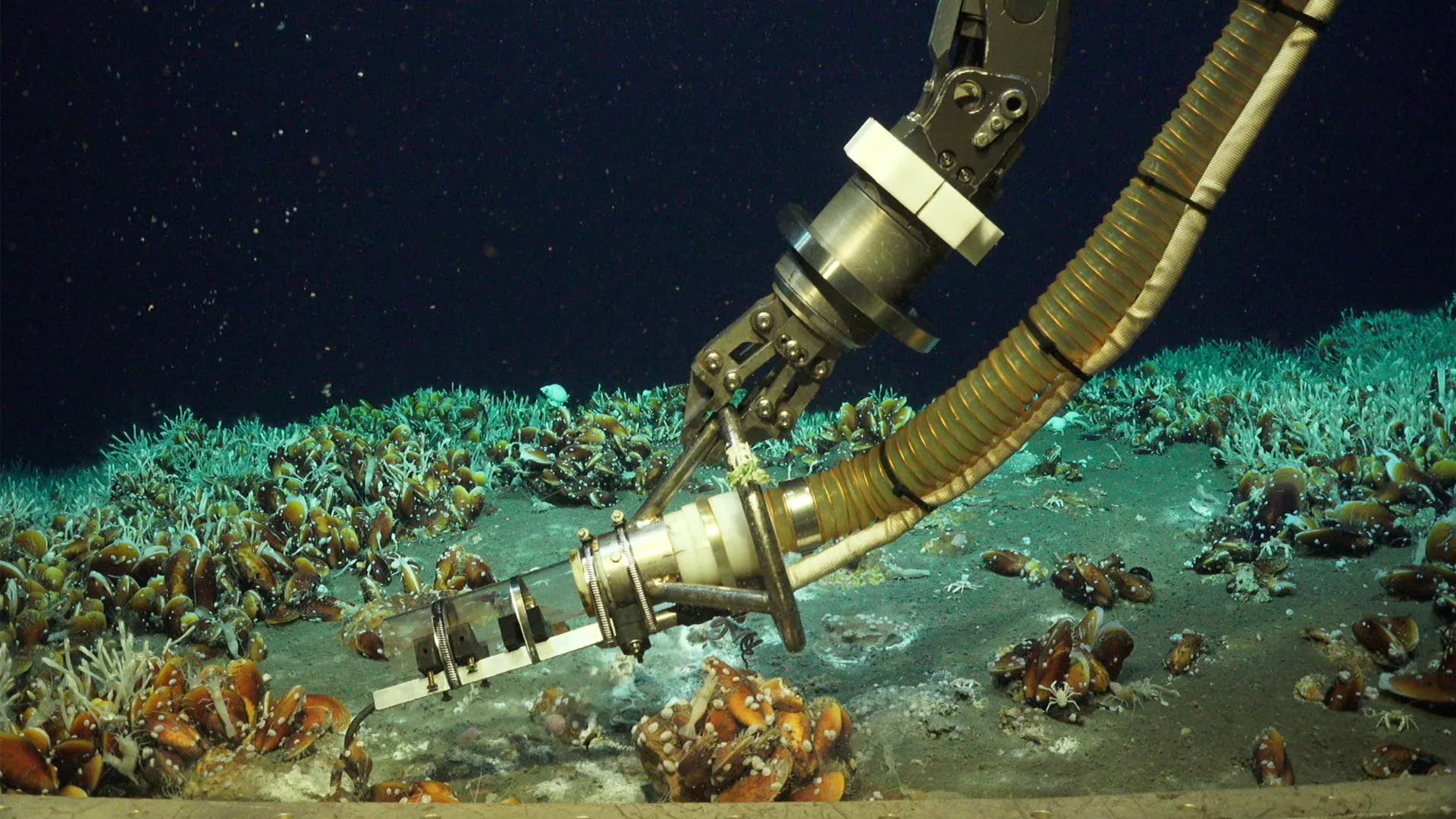
Three New "Bone-Eating" Worm Species Discovered in Spanish Waters
Researchers have identified three new species of Osedax worms, commonly known as "bone-eaters," in Spanish waters. These discoveries were made in the Cantabrian Sea, the Gulf of Cádiz, and off the coast of Murcia. The finding expands the known biodiversity of these specialized organisms, which thrive by colonizing whale falls and other submerged organic remains.
57 New Species Confirmed in Mar del Plata Canyon Expedition
Following recent reports, it has been confirmed that scientists identified 57 new marine species and five new genera during the "Talud Continental IV" mission. The expedition explored the Mar del Plata Submarine Canyon off the coast of Argentina at depths reaching 3,900 meters. The findings, which include a variety of invertebrates, highlight the rich but under-explored biodiversity of the South Atlantic continental slope.

Global Oceanic Oxygen Variability During Last Interglacial Period
A new study published in Nature Geoscience reconstructs global oceanic oxygen content during the Last Interglacial Period (MIS 5e, ~130,000–115,000 years ago). The research provides critical constraints on how ocean oxygenation regulated the marine carbon cycle during warmer-than-present climates, offering a historical baseline for understanding current climate change impacts on ocean chemistry.
Local view
Spanish Media Highlights Regional Discoveries Local Spanish outlets are focusing on the discovery of the three new Osedax worm species, emphasizing their presence in specific Spanish maritime zones like the Cantabrian Sea and Gulf of Cádiz. La Vanguardia reported that these organisms, which "devour bones," represent significant additions to the local marine biological record, showcasing the ongoing scientific value of Spanish coastal and deep-sea environments.
Argentine Media Reflects on Continental Slope Biodiversity In Argentina, media coverage continues to analyze the implications of the 57 new species found in the Mar del Plata Canyon. Reports from Infobae and La Nueva discuss how these findings underscore the vast amount of uncharted life in the South Atlantic's deep submarine canyons, prompting calls for further exploration of nearby features like the Bahía Blanca Canyon.
Context & numbers
Ocean Floor Mapping Progress As of 2026, only 28.7% of the seabed has been mapped to modern standards according to Seabed 2030 data. This represents a significant increase from under 6% in 2017, driven largely by multibeam sonar technology on ships and satellite-derived gravity models filling in gaps. Autonomous Underwater Vehicles (AUVs) are increasingly critical for surveying these unmapped areas.
Ocean Heat Content Records The world’s oceans absorbed an estimated 23 zettajoules of additional heat in 2025, a figure equivalent to roughly 40 times the energy consumed by humanity during the year. This record heat absorption underscores the accelerating disruption of the Earth’s climate system, with the Southern and Pacific Oceans showing the highest elevations in ocean heat content (OHC).
On the radar
- Schmidt Ocean Institute Expedition: The current expedition (September 20 – October 28, 2026) is actively exploring the Southern Atlantic. While specific results from this ongoing cruise are not yet public, the region is a hotspot for new species discoveries, as seen in previous releases from this institute.
- Bahía Blanca Canyon Exploration: Following the Mar del Plata findings, Argentine researchers are expressing strong interest in exploring the Bahía Blanca Canyon, suspected to harbor similar undiscovered biodiversity.
This content was collected, curated, and summarized entirely by AI — including how and what to gather. It may contain inaccuracies. Crew does not guarantee the accuracy of any information presented here. Always verify facts on your own before acting on them. Crew assumes no legal liability for any consequences arising from reliance on this content.
Powered by
