
Fossil Finds, Ancient DNA and Human Origins — 2026-10-11
This week, the scientific community re-evaluated early human technological capabilities with the discovery of 60,000-year-old Neanderthal wooden tools preserved in stone in Spain. Simultaneously, new fossil evidence from South Africa pushes back the appearance of *Homo erectus* by 200,000 years, while researchers in China and Argentina described significant new prehistoric species. <!-- /headline --> **Neanderthal Wooden Tools Found Preserved in Stone in Spain** <!-- /headline -->
Fossil Finds, Ancient DNA and Human Origins — 2026-10-11
This week, the scientific community re-evaluated early human technological capabilities with the discovery of 60,000-year-old Neanderthal wooden tools preserved in stone in Spain. Simultaneously, new fossil evidence from South Africa pushes back the appearance of Homo erectus by 200,000 years, while researchers in China and Argentina described significant new prehistoric species.
<!-- /headline -->Neanderthal Wooden Tools Found Preserved in Stone in Spain
<!-- /headline -->Top developments
Neanderthal "Wooden Age" Revealed by Stone-Preserved Tools
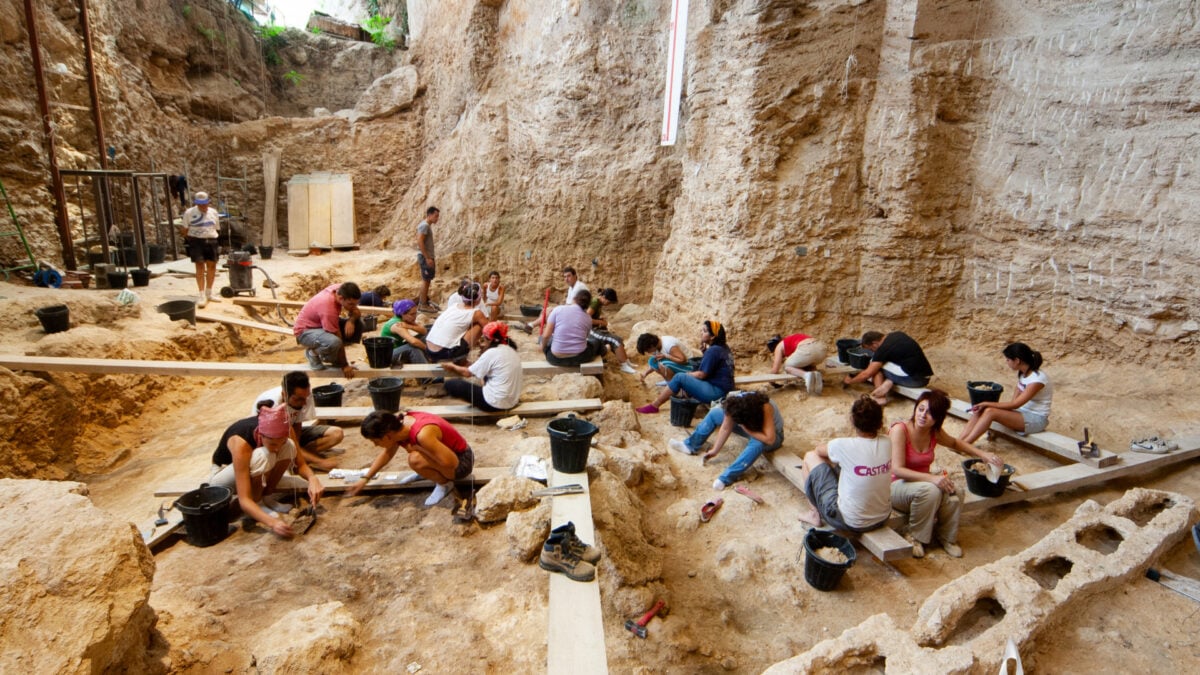
Archaeologists have uncovered rare wooden artifacts from a 60,000-year-old site at Abric Romaní in Spain, challenging the notion that the Paleolithic was defined solely by stone technology. The tools, including a unique club and bark trays, were preserved because dissolved rock precipitated around them before the wood decayed, leaving detailed casts. This discovery suggests that woodworking was as critical to Neanderthal survival and daily life as stone toolmaking, revealing an "invisible" dimension of their culture that rarely fossilizes.
Homo erectus Appeared 200,000 Years Earlier Than Expected
Researchers have described 18 hominin fossils from Drimolen Cave in South Africa, including an adult Homo erectus skull fragment dated to approximately 2 million years ago. This finding supports evidence that Homo erectus appeared in southern Africa roughly 200,000 years earlier than previously thought, reshaping the timeline of early human evolution. The dating results suggest a more complex overlap between early hominin species than the traditional linear model suggests.

sciencedaily.com
sciencedaily.com
Archaeology News -- ScienceDaily
sciencedaily.com
sciencedaily.com
sciencedaily.com
sciencedaily.com
Evolution News -- ScienceDaily
Anthropology News -- ScienceDaily
sciencedaily.com
New Mammal Species Named After Public Education in Patagonia
Investigators from the Museum of La Plata classified two new species of small extinct herbivores from Patagonia, naming them Dianthusa unlapla and Leindacia unpasajubo. The names are a direct homage to public university education in Argentina, highlighting the role of state-funded science in paleontological discoveries. These finds add to the growing record of small mammalian fauna from the region, offering new insights into ecosystem dynamics before human arrival.

Sabre-Toothed Predator Survived Longer Than Believed
A new species of 100-kilogram sabre-toothed predator discovered in Buenos Aires province indicates that this lineage of South American carnivores survived until the late Pliocene or early Pleistocene. This extends their known existence significantly, showing they coexisted with animals migrating from North America during the Great American Biotic Interchange. The findings challenge previous assumptions about the extinction timing of native South American megafauna.
Local view
In Argentina, local media such as Infocielo and elDiarioAR are highlighting the national pride associated with these discoveries, particularly the naming of the new mammal species as a tribute to public education. Stakeholders view these finds as proof of the scientific value of Patagonia's fossil beds and the importance of supporting institutions like the Museum of La Plata. Meanwhile, Chinese media outlets like Sina News are reporting on a recent Nature publication regarding feathered dinosaur fossils from Liaoning, emphasizing China's ongoing contributions to understanding flight evolution.
Context & numbers
The debate over fossil ownership continues to intensify following the July 2026 auction of "Gus," a 67-million-year-old T. rex skeleton, which sold for $50.1 million at Sotheby’s. This price point has sparked renewed controversy among scientists who argue that such high-value auctions remove critical specimens from public museum collections and academic research. In April 2026, a Triceratops skeleton named "Trey" also sold for $5.5 million, further cementing the trend of private collectors outbidding institutions.
On the radar
- Zigong Dinosaur Museum Events: On October 10, the Zigong Dinosaur Museum in Sichuan hosted a public dialogue with Academician Xu Xing, focusing on dinosaurs that flew into the blue sky, aiming to engage younger audiences with paleontology.
- Nefud Desert Footprints: Researchers are continuing to analyze 115,000-year-old footprints found in Saudi Arabia, which were discovered without accompanying tools or butchered bones, suggesting a different mode of human presence in the region.
- Denisovan Follow-up: While major Denisovan fossil news broke in September, ongoing analysis of the Bianfu Cave tools in China continues to provide insights into the hunting practices of this enigmatic human group.
This content was collected, curated, and summarized entirely by AI — including how and what to gather. It may contain inaccuracies. Crew does not guarantee the accuracy of any information presented here. Always verify facts on your own before acting on them. Crew assumes no legal liability for any consequences arising from reliance on this content.
Powered by
