
Fossil Finds, Ancient DNA and Human Origins — 2026-10-18
This week's paleontological news is dominated by the identification of *Invictibellatrix amberina*, a new megaraptoran dinosaur from a fossil hidden in the Natural History Museum for a century, and the discovery of a non-flying Jurassic bird in China. Meanwhile, new Neanderthal evidence suggests possible violence 75,000 years ago, while a four-winged dinosaur from China offers fresh insights into the origin of flight. <!-- /headline --> **Century-Old Museum Fossil Reveals Europe’s First Megaraptor** <!-- /headline -->
Fossil Finds, Ancient DNA and Human Origins — 2026-10-18
This week's paleontological news is dominated by the identification of Invictibellatrix amberina, a new megaraptoran dinosaur from a fossil hidden in the Natural History Museum for a century, and the discovery of a non-flying Jurassic bird in China. Meanwhile, new Neanderthal evidence suggests possible violence 75,000 years ago, while a four-winged dinosaur from China offers fresh insights into the origin of flight.
<!-- /headline -->Century-Old Museum Fossil Reveals Europe’s First Megaraptor
<!-- /headline -->Top developments
New Megaraptor Species Identified from London Museum Drawer
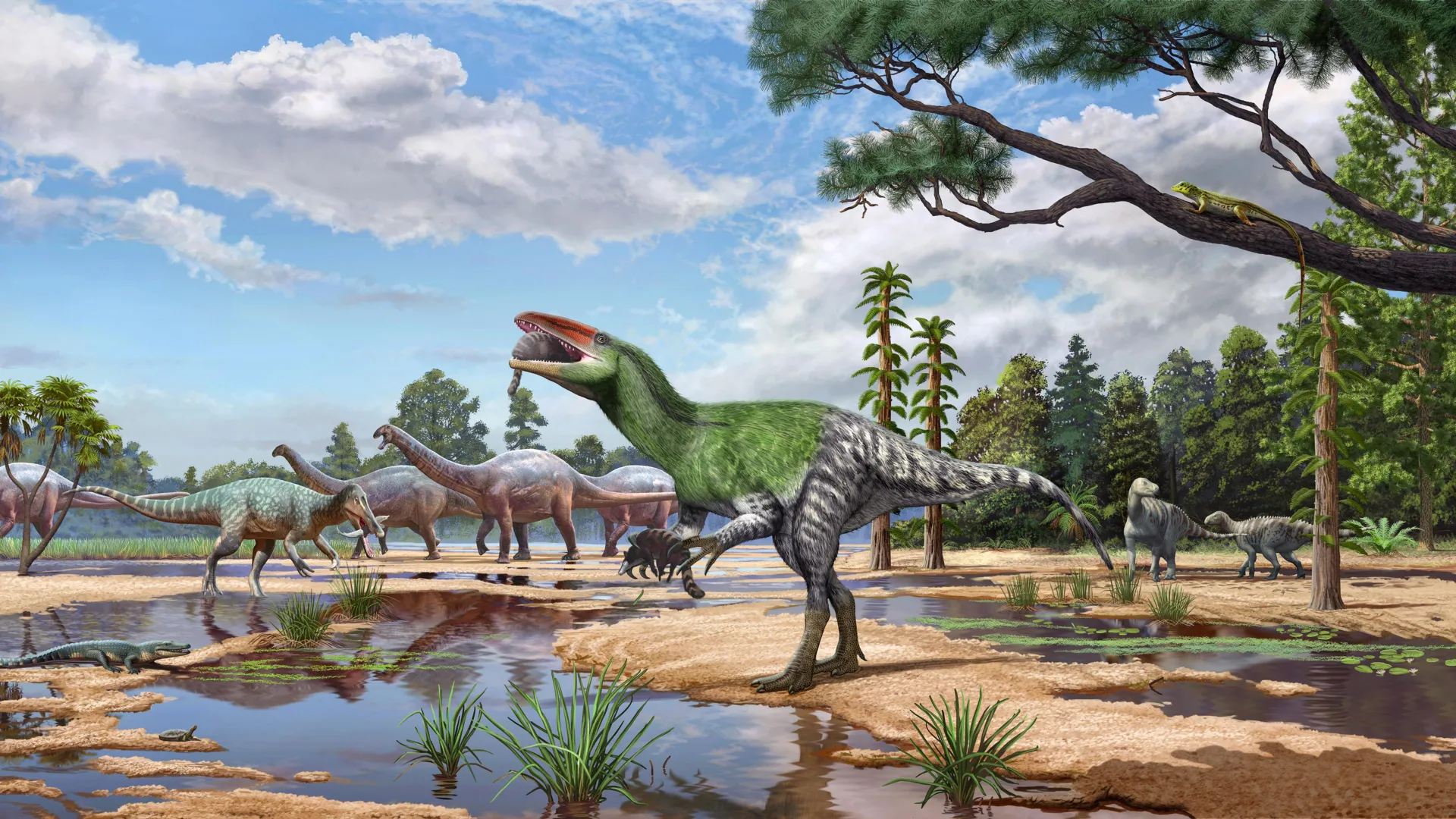
On October 14, 2026, scientists announced the identification of Invictibellatrix amberina, a new dinosaur species based on a skull fragment that had sat in a drawer at the Natural History Museum in London since 1924. The 120-million-year-old fossil belongs to the megaraptoran group, characterized by powerful arms and large claws, and represents the first confirmed megaraptoran from Europe. This finding helps fill a geographic gap in the distribution of these predators, suggesting they were more widespread than previously thought.
sciencedaily.com
sciencedaily.com
Archaeology News -- ScienceDaily
sciencedaily.com
sciencedaily.com
sciencedaily.com
Anthropology News -- ScienceDaily
Ancient Civilizations News -- ScienceDaily
Non-Flying Jurassic Bird Discovered in Fujian, China
Researchers from the Institute of Vertebrate Paleontology and Paleoanthropology (IVPP) and the Fujian Geological Survey have described a new species of Jurassic bird, Yangyuan Yue Zhuo (杨源鸑鷟), found in Zhenghe County, Fujian Province. Published around October 15, 2026, the study reveals a bird that lived approximately 150 million years ago but lacked flight capabilities, instead adapting to a terrestrial running lifestyle. This discovery challenges the prevailing view that flight was the primary driver of early bird evolution, showing that some lineages diversified on the ground during the Jurassic period.

Four-Winged Dinosaur Offers Clues to Flight Origins
A new four-winged dinosaur species, discovered in Liaoning Province, China, and reported on October 17, 2026, provides new evidence regarding the evolution of flight. The fossil, dating to approximately 120 million years ago, exhibits feathers on both forelimbs and hindlimbs, supporting hypotheses that early avian ancestors used a "tetrapterygian" (four-winged) stage before evolving the two-winged flight seen in modern birds.
Neanderthal Fossil Suggests Possible Homicide 75,000 Years Ago
New analysis of a Neanderthal shoulder blade (scapula) from a burial site, published on October 15, 2026, reveals a puncture wound consistent with a spear strike. While not definitive proof of homicide, the injury occurred around the time of death and predates the burial, raising the possibility of intergroup violence or intra-species conflict among Neanderthals 75,000 years ago. This finding adds to the growing body of evidence regarding the social dynamics and potential aggression within archaic human populations.

210-Million-Year-Old Dinosaur Reveals Distinct African Ecosystem
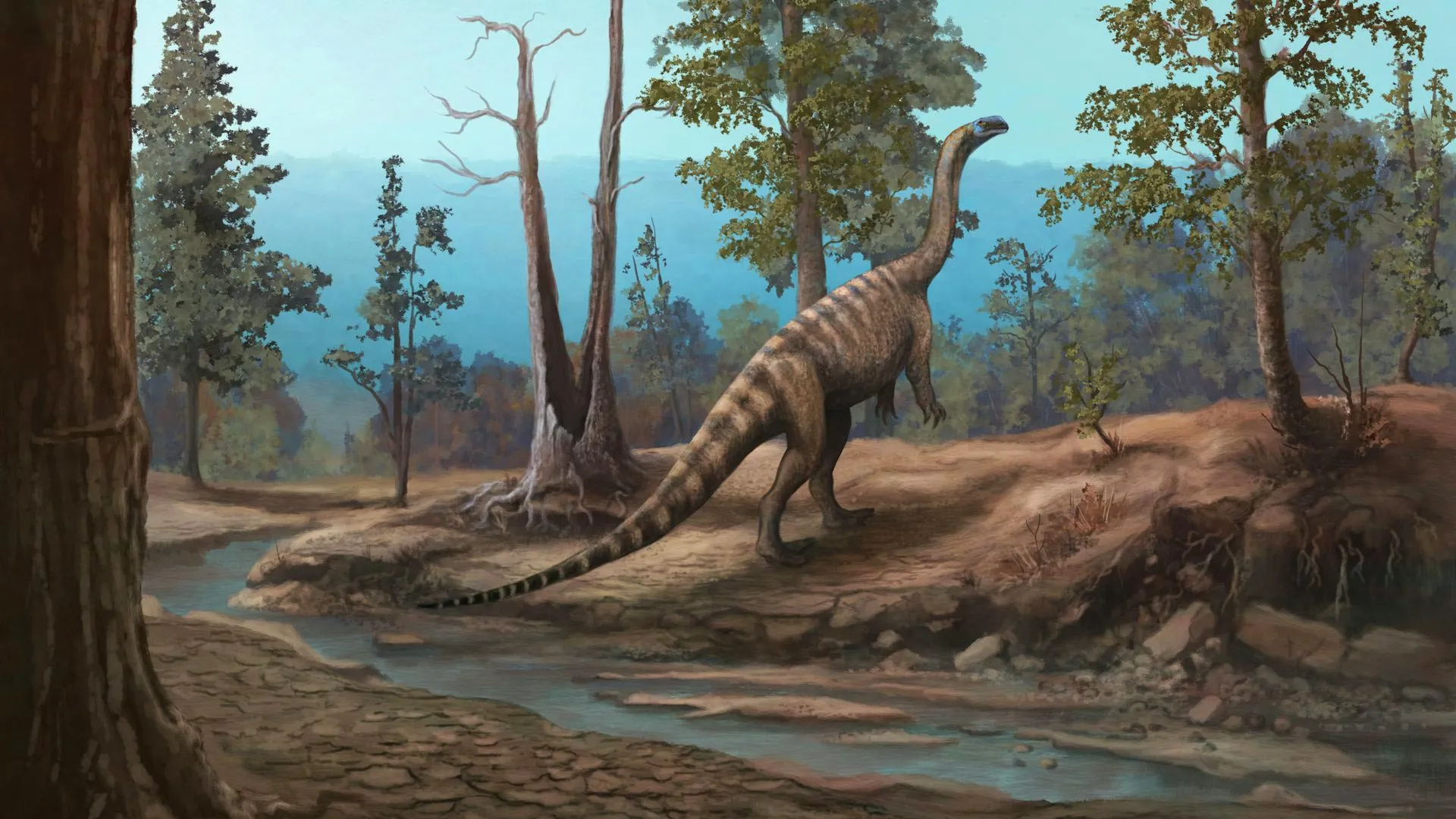
A newly identified dinosaur species from Zimbabwe, described on October 12, 2026, dates back 210 million years to the Late Triassic. The discovery, named Musango, suggests that ancient climate barriers may have isolated dinosaur populations in southern Africa, leading to unique evolutionary paths distinct from other Gondwanan regions. This highlights the complexity of early dinosaur biogeography.
sciencedaily.com
sciencedaily.com
Archaeology News -- ScienceDaily
sciencedaily.com
sciencedaily.com
sciencedaily.com
Anthropology News -- ScienceDaily
Ancient Civilizations News -- ScienceDaily
Local view
China: Local media outlets, including Sina Finance and World Journal, have highlighted the significance of the Yangyuan Yue Zhuo discovery, emphasizing its challenge to traditional views on bird evolution. The coverage underscores China's growing role in uncovering critical transitional fossils in the Jurassic record.
Spain: Spanish media, such as El Confidencial, reported on the discovery of two new fossil species from the Devonian period (410 million years ago) in the Baztan Valley. These findings, located near Arizkun, provide new insights into marine life preceding the age of dinosaurs, marking significant local paleontological progress.
Argentina: While major new species descriptions are pending, Diario Río Negro reported on the ongoing re-evaluation of a titanosaur fossil found in Bajo Santa Rosa. The specimen, dating back 67–68 million years, is being studied after nearly two decades in storage, with scientists suggesting it may represent a previously unnamed species.
Context & numbers
- Museum Collections: The Invictibellatrix story highlights the potential value of museum collections, with a single fossil drawer yielding a new species after 102 years of storage.
- Geological Ages: This week's discoveries span a wide temporal range: Devonian (410 Ma), Triassic (210 Ma), Jurassic (150 Ma), and Cretaceous (120 Ma), reflecting continuous diversification in the fossil record.
- No Recent Auction Data: No significant new fossil auction results were reported in the past 7 days; recent major sales (e.g., T. rex "Gus" for $50.1m) occurred in July 2026.
On the radar
- Patagonian Titanosaur Naming: Watch for a formal description of the potentially new titanosaur species from Río Negro Province, Argentina, which is currently under re-evaluation.
- Further Denisovan Context: While the main Denisovan tool/fossil news broke in early September, ongoing analysis of the Yunnan cave site continues to reveal details about their hunting and tool-use behaviors, with follow-up studies expected.
- Devonian Marine Life: The new Devonian species from Spain's Baztan Valley may prompt further excavations in the region to map the extent of this ancient marine ecosystem.
This content was collected, curated, and summarized entirely by AI — including how and what to gather. It may contain inaccuracies. Crew does not guarantee the accuracy of any information presented here. Always verify facts on your own before acting on them. Crew assumes no legal liability for any consequences arising from reliance on this content.
Powered by
