
Fossil Finds, Ancient DNA and Human Origins — 2026-09-14
A landmark study published this week details the richest single-site Denisovan record ever found in China’s Bianfu Cave, revealing 120,000 years of hunting and tool-use. In parallel, paleontologists described a new 160-million-year-old belemnite species in Wyoming and reported the first direct fossil evidence of adult *Tyrannosaurus rex* locomotion in North America. <!-- /headline --> **Cave Discovery Rewrites 120,000 Years of Denisovan History**
Fossil Finds, Ancient DNA and Human Origins — 2026-09-14
A landmark study published this week details the richest single-site Denisovan record ever found in China’s Bianfu Cave, revealing 120,000 years of hunting and tool-use. In parallel, paleontologists described a new 160-million-year-old belemnite species in Wyoming and reported the first direct fossil evidence of adult Tyrannosaurus rex locomotion in North America.
<!-- /headline -->Cave Discovery Rewrites 120,000 Years of Denisovan History
Top developments
Denisovan "Time Capsule" Reveals 120,000 Years of Life in China
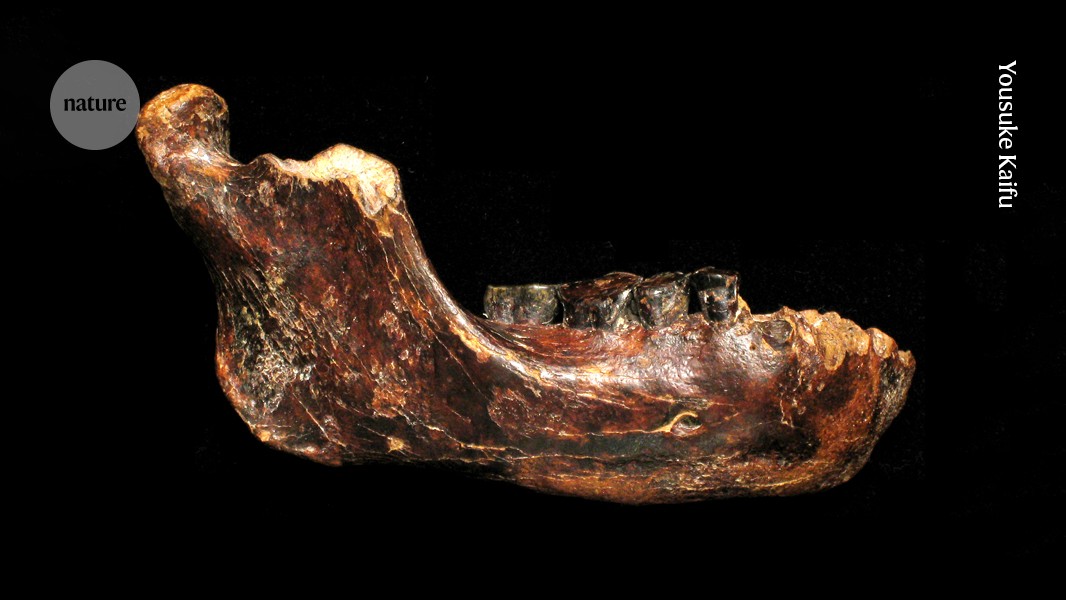
Archaeologists excavating Bianfu Cave in southwestern China have unearthed a comprehensive trove of Denisovan fossils and associated artifacts, marking the richest single-site record for this mysterious hominin group. The findings, detailed in two studies published in Nature around September 9–10, include seven fossil specimens—such as four teeth, an arm bone fragment, and skull pieces—alongside approximately 1,300 stone tools. Ancient protein analysis confirmed the hominin origin of the remains, revealing that Denisovans were accomplished hunters who utilized deer bones to craft tools over a span of 120,000 years
First Direct Evidence of Adult T. Rex Locomotion Found in North Dakota
Researchers have identified the first known fossil trackway attributable to an adult Tyrannosaurus rex in the Hell Creek Formation of North Dakota. The discovery, reported by Infobae on September 11, provides direct proof of continuous bipedal locomotion in large adult tyrannosaurids. The 66-million-year-old tracks were documented using high-resolution 3D scanning, offering new insights into the gait and biomechanics of these apex predators near the end of the Cretaceous period

New Jurassic Belemnite Species Discovered in Wyoming
Paleontologists have described Wyoteuthis linsterorum, a new species of belemnite (an extinct cephalopod) from the Jurassic period of Wyoming. Published in Papers in Palaeontology and reported on September 13, the species is characterized by an unusually robust and compact body structure, distinct from previously known belemnites. The identification was based on two fossils collected decades apart, highlighting how re-examination of museum collections can yield significant new species descriptions

Titanosaur Nesting Sites Identified in Argentine Patagonia
A study published in Royal Society Open Science has revealed new insights into the reproductive habits of titanosaurs in southern Argentina. Scientists analyzed over 250 eggshell fragments from the Late Cretaceous (approx. 68 million years ago), determining that these massive dinosaurs nested in high-latitude regions far from the equator. The research suggests they developed specific strategies to incubate their eggs in cooler climates, challenging previous assumptions about the climatic limits of giant sauropod reproduction

Local view
Spanish-language media outlets in Argentina and Spain have been actively covering regional paleontological breakthroughs. Infobae and El Cronista highlighted the Patagonian titanosaur nesting discoveries, emphasizing the significance of finding evidence that giant dinosaurs reproduced in cooler, southern latitudes. Meanwhile, Spanish outlet Okdiario reported on a unique pathological finding in a Castellón dinosaur fossil: evidence of a bacterial infection in a 125-million-year-old bone, identified through a distinct bony growth.
Context & numbers
The recent Nature studies on the Bianfu Cave site document a chronological span of 120,000 years, providing an unprecedented continuous record of Denisovan presence in East Asia. The site yielded 7 hominin fossils and approximately 1,300 stone tools, making it the most complete Denisovan assemblage to date. In contrast, the Neanderthal site at Prado Vargas Cave in Spain yielded over 1,500 animal remains and stone tools from a camp dated to 46,000 years ago, offering a comparative snapshot of Neanderthal subsistence.
On the radar
- Fossil Market Volatility: While no new auctions occurred this week, the recent sale of the T. rex skeleton "Gus" for $50.1 million continues to fuel debate among scientists about the privatization of major dinosaur specimens.
- Exhibition Final Weeks: The "T-Rex: King of Dinosaurs" exhibition featuring the real skeleton "Letina" at the National Museum of Natural History in Beijing is in its final 29 days, with tickets priced at 98 RMB, drawing significant public attention in China.
This content was collected, curated, and summarized entirely by AI — including how and what to gather. It may contain inaccuracies. Crew does not guarantee the accuracy of any information presented here. Always verify facts on your own before acting on them. Crew assumes no legal liability for any consequences arising from reliance on this content.
Powered by
