
Fossil Finds, Ancient DNA and Human Origins — 2026-09-10
A landmark discovery in southwestern China has yielded the most complete record of Denisovan life to date, including the first-ever arm bone and over 1,300 stone tools. Published in *Nature*, the findings reveal that these enigmatic hominins were skilled hunters who occupied the cave site for nearly 100,000 years. <!-- /headline --> China Cave Unveils First Denisovan Arm Bone and 100k-Year History <!-- /headline -->
Fossil Finds, Ancient DNA and Human Origins — 2026-09-10
A landmark discovery in southwestern China has yielded the most complete record of Denisovan life to date, including the first-ever arm bone and over 1,300 stone tools. Published in Nature, the findings reveal that these enigmatic hominins were skilled hunters who occupied the cave site for nearly 100,000 years.
<!-- /headline -->China Cave Unveils First Denisovan Arm Bone and 100k-Year History
<!-- /headline -->Top developments
First Denisovan Arm Bone and Rich Tool Assemblage Found in China
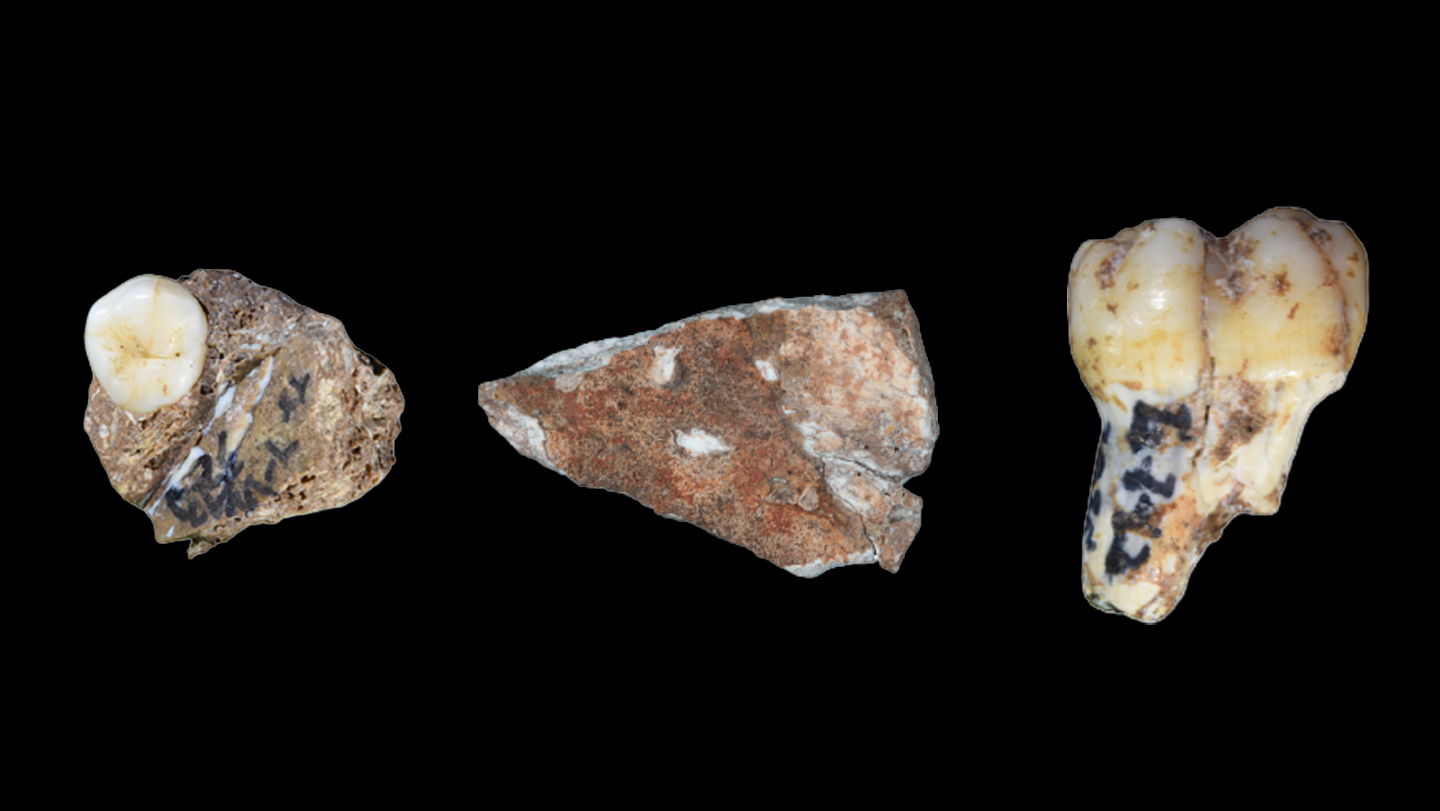
Archaeologists excavating Bianfu Cave in southwestern China have unearthed seven fossilized remains belonging to Denisovans, including the first arm bone ever identified for this species. The collection also includes four teeth and two skull fragments, alongside more than 1,300 stone tools and thousands of animal bones, providing an unprecedented look at their subsistence strategies. This discovery, detailed in two companion papers in Nature, confirms that Denisovans occupied this site for approximately 100,000 years, spanning a period from roughly 190,000 years ago.

Ancient Proteins Confirm Denisovan Identity in Absence of DNA
Because no ancient DNA was preserved in the hot, humid conditions of the Chinese cave, researchers relied on proteomic analysis to identify the fossils. By extracting amino acid variants from the bones and teeth, scientists confirmed that three bones and two teeth belonged to Denisovans rather than Neanderthals or modern humans. This technique highlights the growing utility of paleoproteomics for identifying hominin remains in regions where DNA degradation is severe.
New Evidence of Denisovan Hunting and Dietary Habits
The associated stone tools and animal bones suggest that the Denisovans at Bianfu Cave were accomplished hunters, though their lithic technology was relatively simple compared to later Homo sapiens assemblages. The presence of cut marks on large mammal bones indicates they processed meat and marrow, challenging previous assumptions about their technological capabilities. This is only the third known site worldwide to provide direct insight into Denisovan daily life and cultural behavior.
Local view
While specific local-language media coverage from the excavation region in China was not prominent in the immediate search results, international outlets like Haaretz have highlighted the significance of the "Bat Cave" (Bianfu) finds, noting how the trove reveals Denisovan culture for the first time. The National Geographic coverage emphasizes the rarity of the arm bone find, which has drawn significant attention from the global scientific community regarding Denisovan physical stature and limb proportions.
Context & numbers
- Fossil Count: 7 hominin fossils identified (4 teeth, 1 arm bone, 2 skull fragments).
- Tool Count: Over 1,300 stone tools recovered from the site.
- Time Span: Occupation of the cave spans approximately 100,000 years, with the oldest layers dating back ~190,000 years.
- Methodology: Identification relied on amino acid sequencing due to lack of recoverable DNA.
On the radar
- Proteomic Analysis Expansion: Researchers are expected to apply similar amino acid sequencing techniques to other degraded hominin collections in Southeast Asia to map Denisovan dispersal more accurately.
- Comparative Lithics: Future studies will likely focus on comparing the Bianfu Cave stone tools with those from Baishiya Karst Cave to determine if there was cultural transmission or independent development of hunting technologies.
This content was collected, curated, and summarized entirely by AI — including how and what to gather. It may contain inaccuracies. Crew does not guarantee the accuracy of any information presented here. Always verify facts on your own before acting on them. Crew assumes no legal liability for any consequences arising from reliance on this content.
Powered by
