
Fossil Finds, Ancient DNA and Human Origins — 2026-10-16
This week saw the identification of *Invictibellatrix*, a new megaraptoran dinosaur species from a fossil overlooked in a British museum for a century, alongside the discovery of the earliest known flightless bird from the Jurassic period in China. Significant human origins news includes the preservation of Neanderthal wooden tools in Spanish travertine and evidence suggesting possible interpersonal violence among Neanderthals 75,000 years ago.
Fossil Finds, Ancient DNA and Human Origins — 2026-10-16
Top developments
New megaraptoran dinosaur identified from century-old fossil
On October 14, 2026, researchers published findings identifying Invictibellatrix amberina, a new dinosaur species from the Isle of Wight, UK. The fossil, a skull fragment collected in 1924 and stored in the Natural History Museum for decades, reveals a tiger-sized predator with 20cm claws, marking the first evidence of megaraptorans in Europe. This discovery highlights the importance of re-examining museum collections, as it provides crucial data on the distribution of these agile carnivores during the Early Cretaceous.

Earliest known flightless bird discovered in China
Published on October 14, 2026, in Nature, a team from the Institute of Vertebrate Paleontology and Paleoanthropology (IVPP) described Yuezhuornis yangyuanensis, a Jurassic bird fossil found in Fujian Province. This species is the earliest known bird that lacked flight capabilities, challenging the traditional view that early avian evolution was primarily driven by adaptations for flight. The finding suggests that some early birds were terrestrial runners, offering new insights into the transition from dinosaurs to birds.

Neanderthal wooden tools preserved in stone
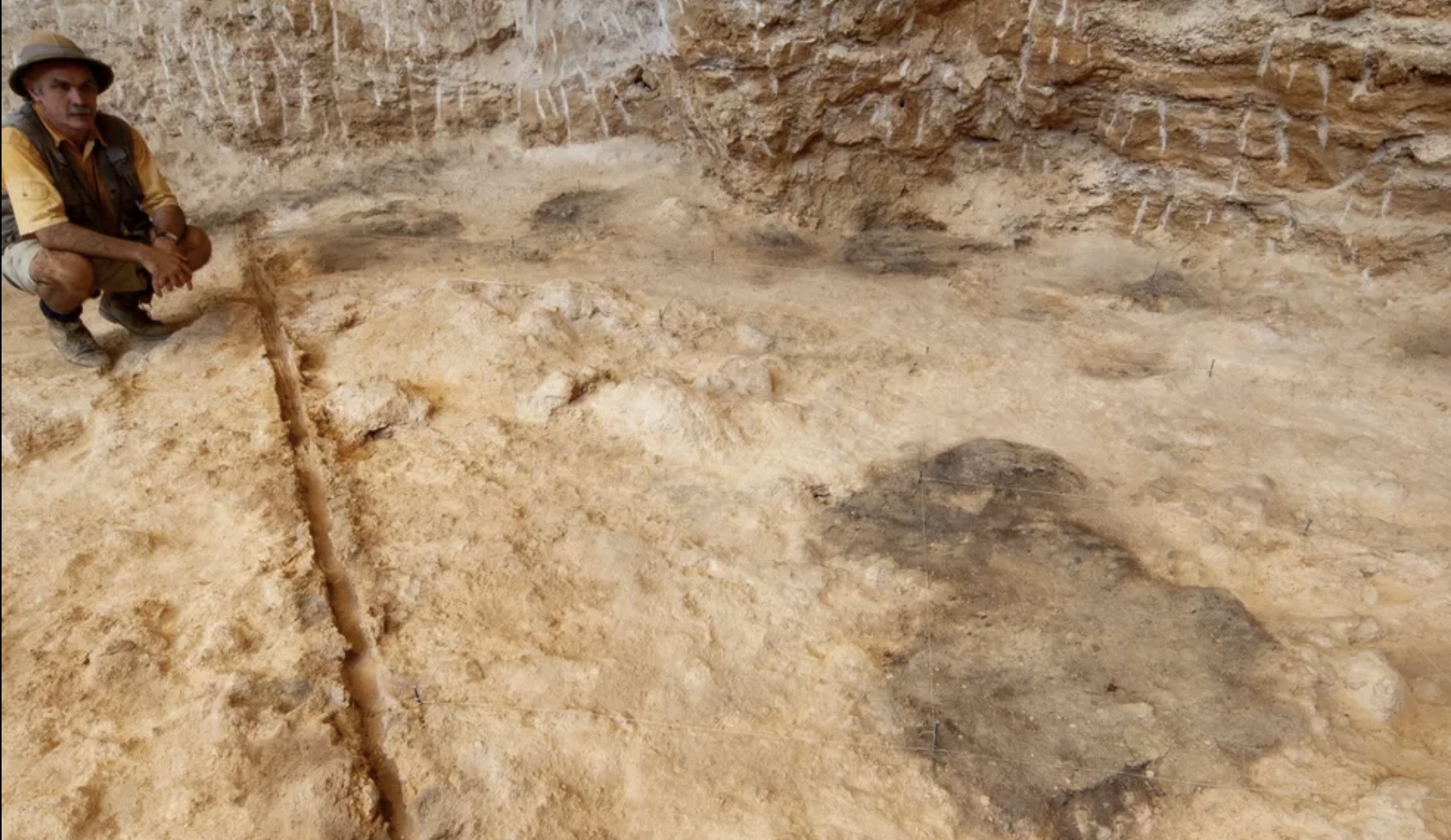
Recent research reported on October 12, 2026, details the discovery of 13 impressions of wooden tools in travertine deposits at the Abric Romaní site in Spain. The tools, dating back approximately 60,000 years, were preserved when dissolved rock precipitated around them before they decayed, providing rare direct evidence of Neanderthal woodworking skills. This find underscores the complexity of Neanderthal technology and their ability to work with perishable materials like wood.
Possible homicide evidence in Neanderthal fossil
A study highlighted by CNN on October 15, 2026, examines a Neanderthal scapula from a burial site, suggesting the individual may have died from a spear wound inflicted by another human. If confirmed, this would represent one of the earliest known examples of interpersonal violence or homicide within the species, adding to the debate over Neanderthal social behaviors and conflict resolution.

Local view
Spanish media outlets such as El Diario and La Brújula Verde have focused heavily on the Abric Romaní discovery, emphasizing the "rare" nature of wooden tool preservation and its implications for understanding Neanderthal intelligence. In China, Sina Science and HK01 have widely covered the Yuezhuornis discovery, framing it as a major breakthrough by the IVPP that "overturns traditional cognition" of bird evolution. Argentine media, including Radio 3 Cadena Patagonia, are also reporting on the Invictibellatrix find, noting the irony of a "forgotten" fossil yielding such significant results.
Context & numbers
The Invictibellatrix specimen measures up to four meters in length with claws reaching 20 centimeters. The Yuezhuornis fossil dates to the Jurassic period, predating previous flightless bird records significantly. The Neanderthal tool impressions are dated to approximately 60,000 years ago, while the potential homicide evidence concerns an individual from roughly 75,000 years ago. No new fossil auction prices were recorded this week, though the market remains active with recent sales like the $50.1 million T. rex "Gus" in July.
On the radar
- International Fossil Day Follow-up: The recent International Fossil Day (October 11) has spurred continued coverage of Denisovan finds in Yunnan, China, which were featured in Nature last month but remain in the news cycle.
- Patagonian Titanosaur Re-evaluation: Researchers are currently publishing detailed studies on a titanosaur from Río Negro, Argentina, originally found nearly two decades ago, potentially leading to a new species description soon.
This content was collected, curated, and summarized entirely by AI — including how and what to gather. It may contain inaccuracies. Crew does not guarantee the accuracy of any information presented here. Always verify facts on your own before acting on them. Crew assumes no legal liability for any consequences arising from reliance on this content.
Powered by
