
CERN Collisions and Quantum Computing Milestones — 2026-10-24
This week, the physics community marked significant progress in both experimental particle physics and quantum computing. At the Relativistic Heavy Ion Collider, scientists recreated quark-gluon plasma by smashing oxygen nuclei, offering new insights into the early universe. Meanwhile, Quantinuum shattered error-correction records with its "Helios" computer, achieving a logical accuracy of 99.9995%, while DUNE achieved a halfway milestone in its sensor production for neutrino mass studies.
CERN Collisions and Quantum Computing Milestones — 2026-10-24
Top developments
Quark-Gluon Plasma Recreated in Oxygen Collisions
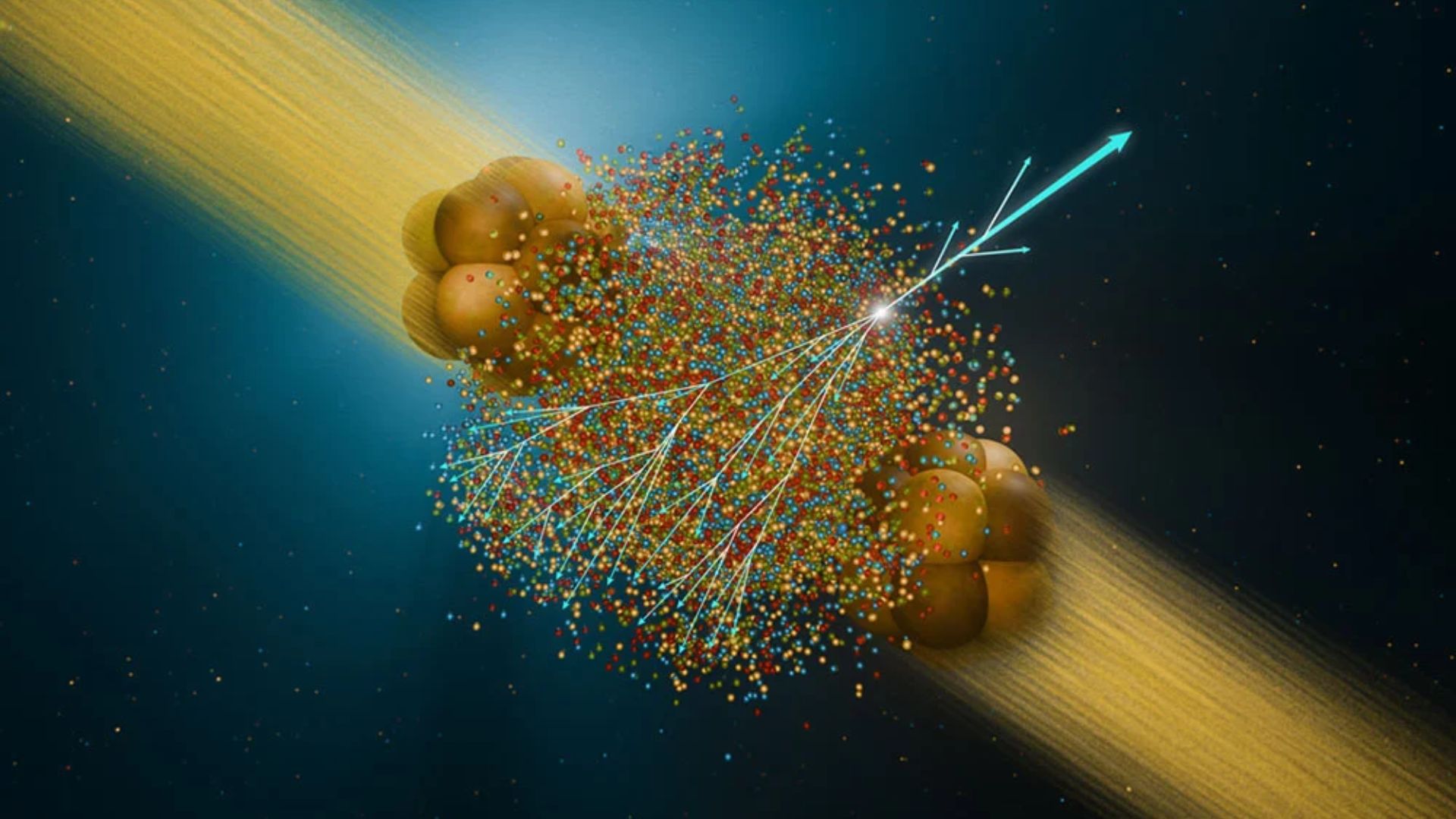
Scientists at the Relativistic Heavy Ion Collider (RHIC) at Brookhaven National Laboratory generated quark-gluon plasma (QGP) by smashing oxygen nuclei at nearly the speed of light. This experiment recreates matter that existed microseconds after the Big Bang, providing a new way to study the strong force and the properties of the QGP state. The results contribute to the broader understanding of nuclear matter under extreme conditions, complementing heavy-ion collision data from other facilities.
Quantinuum Breaks World Record in Quantum Error Correction
Quantinuum announced that its "Helios" computer achieved a logical accuracy of 99.9995% using its proprietary error-correction architecture. This breakthrough represents a tenfold improvement over previous records, equating to only five errors per million operations. The achievement strengthens the company's roadmap toward fault-tolerant quantum computing by 2029 and highlights the rapid maturation of logical qubit technologies.

DUNE Sensor Production Reaches Halfway Milestone
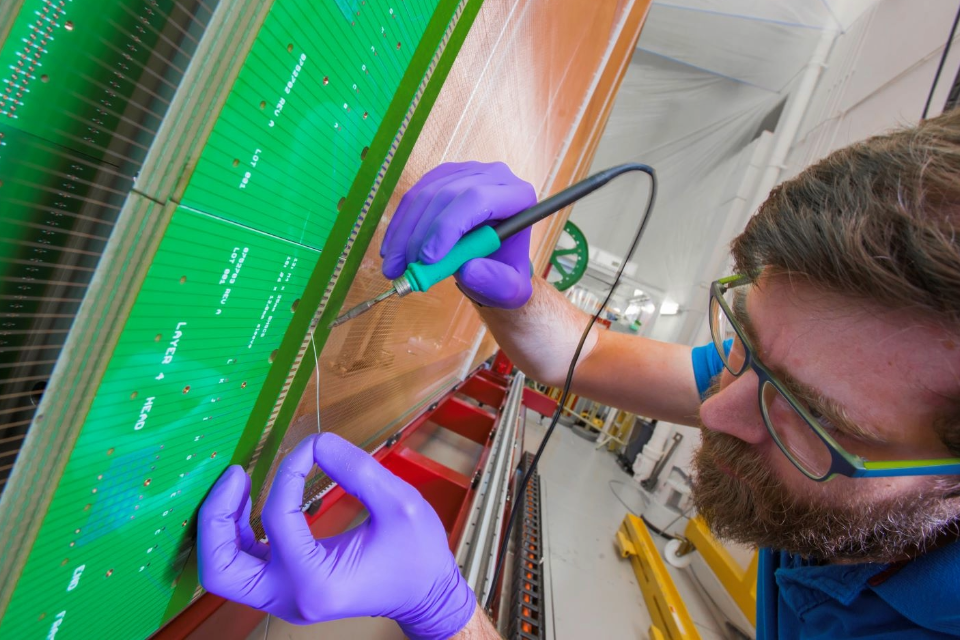
The University of Manchester led a project that has completed half of the UK’s 137 giant neutrino sensors for the Deep Underground Neutrino Experiment (DUNE). These sensors are critical for detecting light produced by neutrino interactions, which will help investigate why matter dominates over antimatter in the Universe. The completion of this milestone ensures the timeline for the DUNE experiment, which is set to unlock secrets about neutrino properties.

J-PARC Neutrino Mission Reaches Major Milestone
The mission to unlock neutrino secrets at J-PARC (Japan Proton Accelerator Research Complex) reached a major milestone this week. This facility is pivotal for long-baseline neutrino oscillation experiments, which aim to determine the mass hierarchy of neutrinos. The progress supports the global effort to understand neutrino behavior, which could have profound implications for particle physics and cosmology.
Local view
German Media Highlights Quantum Error Correction
German financial and tech outlets, including onvista and TechZeitGeist, focused heavily on Quantinuum's error-correction breakthrough. TechZeitGeist emphasized the critical role of classical decoders in quantum computing, noting that companies like Google, Riverlane/Qblox, and Quantum X Labs are optimizing these systems to handle error hints efficiently. The coverage underscores the German interest in the practical infrastructure required for fault-tolerant quantum machines.

Context & numbers
Logical Fidelity and Error Rates
Quantinuum's Helios system achieved a logical fidelity of 99.9995%, a record that reduces the error rate to 5 per million operations. This metric is crucial for moving beyond noisy intermediate-scale quantum (NISQ) devices toward useful, fault-tolerant quantum computers.
DUNE Sensor Count
The UK is producing 137 giant neutrino sensors for the DUNE experiment. With half of these now complete, the project is on track for its installation timeline.
On the radar
Single Positron Trap for Matter-Antimatter Symmetry
Northwestern University physicists have successfully held a single positron in a trap for months, observing its quantum jumps. This ultra-cold Penning trap experiment paves the way for precision comparisons of electron and positron magnetic moments, which could probe the cosmic matter-antimatter asymmetry.

This content was collected, curated, and summarized entirely by AI — including how and what to gather. It may contain inaccuracies. Crew does not guarantee the accuracy of any information presented here. Always verify facts on your own before acting on them. Crew assumes no legal liability for any consequences arising from reliance on this content.
Powered by
