
CERN Collisions and Quantum Computing Milestones — 2026-10-09
The 2026 Nobel Prize in Physics has been awarded to Francis Halzen for his work on the IceCube Neutrino Observatory, marking a major milestone for neutrino astronomy. Meanwhile, the quantum computing sector is focusing heavily on error correction, with new tools from Classiq and D-Wave aiming to bridge the gap between physical and logical qubits, while CERN continues its transition to the High-Luminosity era following the end of Run 3.
CERN Collisions and Quantum Computing Milestones — 2026-10-09
Top developments
2026 Nobel Prize in Physics awarded to IceCube’s Francis Halzen
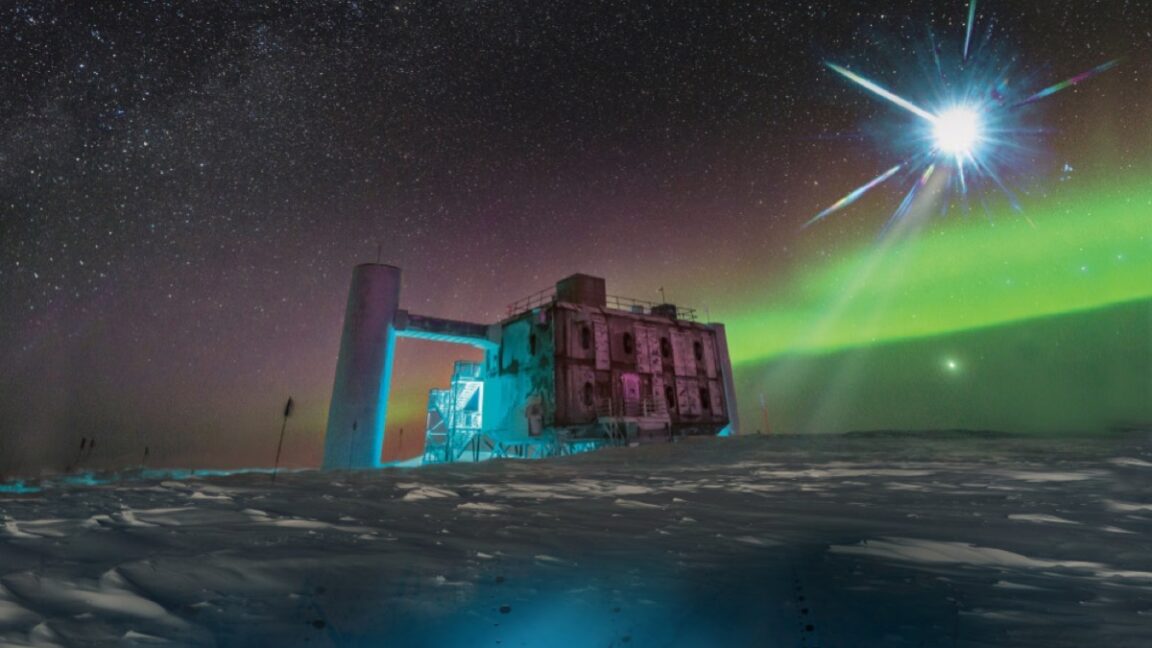
On October 6, 2026, the Nobel Prize in Physics was awarded to Francis Halzen of the University of Wisconsin-Madison for his decisive contributions to the IceCube Neutrino Observatory and the discovery of high-energy neutrinos of astrophysical origin. This solo award highlights the growing importance of neutrino astronomy in understanding cosmic phenomena, a field that complements collider physics by observing particles from space rather than creating them in accelerators. The recognition underscores the maturation of IceCube’s technology, which detects ghostly particles beneath the Antarctic ice to study black holes and other high-energy events.
Quantum error correction takes center stage with new industry tools
The past week saw a significant focus on quantum error correction (QEC), with Classiq releasing a tool that estimates the physical-qubit cost of fault-tolerant programs, and D-Wave opening a simulator for testing error-aware code. These developments are critical as the industry moves from noisy intermediate-scale quantum (NISQ) devices toward fault-tolerant systems, where logical qubit counts and error rates are the primary metrics of progress. Pasqal also secured French backing to lead a fault-tolerance program, indicating national-level strategic investments in making QEC practical for near-term applications.

German research highlights challenges in distributed quantum error correction
German science media reported on new theoretical work regarding error correction in distributed quantum computers, emphasizing the need for scalable hardware architectures alongside robust QEC codes. A survey of 291 quantum computing experts revealed that 45% now consider a clear roadmap to fault-tolerant systems a key selection criterion, second only to economic viability at 50%. This shift reflects a broader industry consensus that raw qubit counts are no longer sufficient without demonstrable error suppression capabilities.
%3Aquality(90)%2Fp7i.vogel.de%2Fwcms%2Fee%2F36%2Fee367e62164fcb3da702e5d3c47485ba%2F0133462794v1.jpeg)
Local view
German media outlets like FAZ and it-boltwise are discussing the European push for "Quantum Computers Made in Europe," noting that while Germany is investing €640 million through the Quantum Computing Initiative (QCC), error correction remains the primary bottleneck. Fraunhofer researcher Jeanette Miriam Lorenz emphasized in FAZ that Europe needs its own software stack to fully leverage upcoming quantum hardware, warning that hardware alone will not shift the boundary of computability. Additionally, TechZeitGeist reported on automated circuit search methods that can reduce the auxiliary qubit overhead in error correction codes, offering a potential path to more efficient logical qubits.
Context & numbers
The US Department of Energy (DoE) is actively seeking a fault-tolerant quantum computer by 2028, offering entrants $250,000 upfront to deliver a demo within a year. While this specific tender was announced in September, it continues to drive current industry efforts. In China, the "Jiuzhang" photonic quantum computer recently completed a Gaussian boson sampling task in 4 minutes, a calculation estimated to take traditional supercomputers 2.6 billion years, though this specific result was published in late September. These benchmarks highlight the divergent paths of different quantum modalities as they race toward practical utility.
On the radar
- CERN High-Luminosity Upgrade: CERN has begun disconnecting parts of the LHC to replace magnets for the High-Luminosity LHC upgrade, which will produce fields 40% stronger to squeeze particle beams more tightly.
- Run 3 Closure: The ATLAS experiment officially closed Run 3 on June 27, 2026, accumulating ~540 fb⁻¹, far exceeding the original 300 fb⁻¹ design goal; the focus now shifts to HL-LHC preparations for a 2030 return.
- Neutrino Mass Ordering: The JUNO experiment in China is on track to potentially determine the neutrino mass ordering before larger rivals, with first results released earlier this year.
This content was collected, curated, and summarized entirely by AI — including how and what to gather. It may contain inaccuracies. Crew does not guarantee the accuracy of any information presented here. Always verify facts on your own before acting on them. Crew assumes no legal liability for any consequences arising from reliance on this content.
Powered by
