
CERN Collisions and Quantum Computing Milestones — 2026-09-17
CERN’s ATLAS experiment has reported the first observation of quantum entanglement between Z bosons in Higgs decays, establishing a new benchmark for elementary qutrits. Simultaneously, IQM Quantum Computers unveiled the LUMI-IQ roadmap, detailing a path to Europe’s first fault-tolerant logical qubits by 2029, while the XENONnT experiment recorded the quietest neutrino interactions to date.
CERN Collisions and Quantum Computing Milestones — 2026-09-17
Top developments
ATLAS Observes First Entangled Qutrits in Higgs Decays
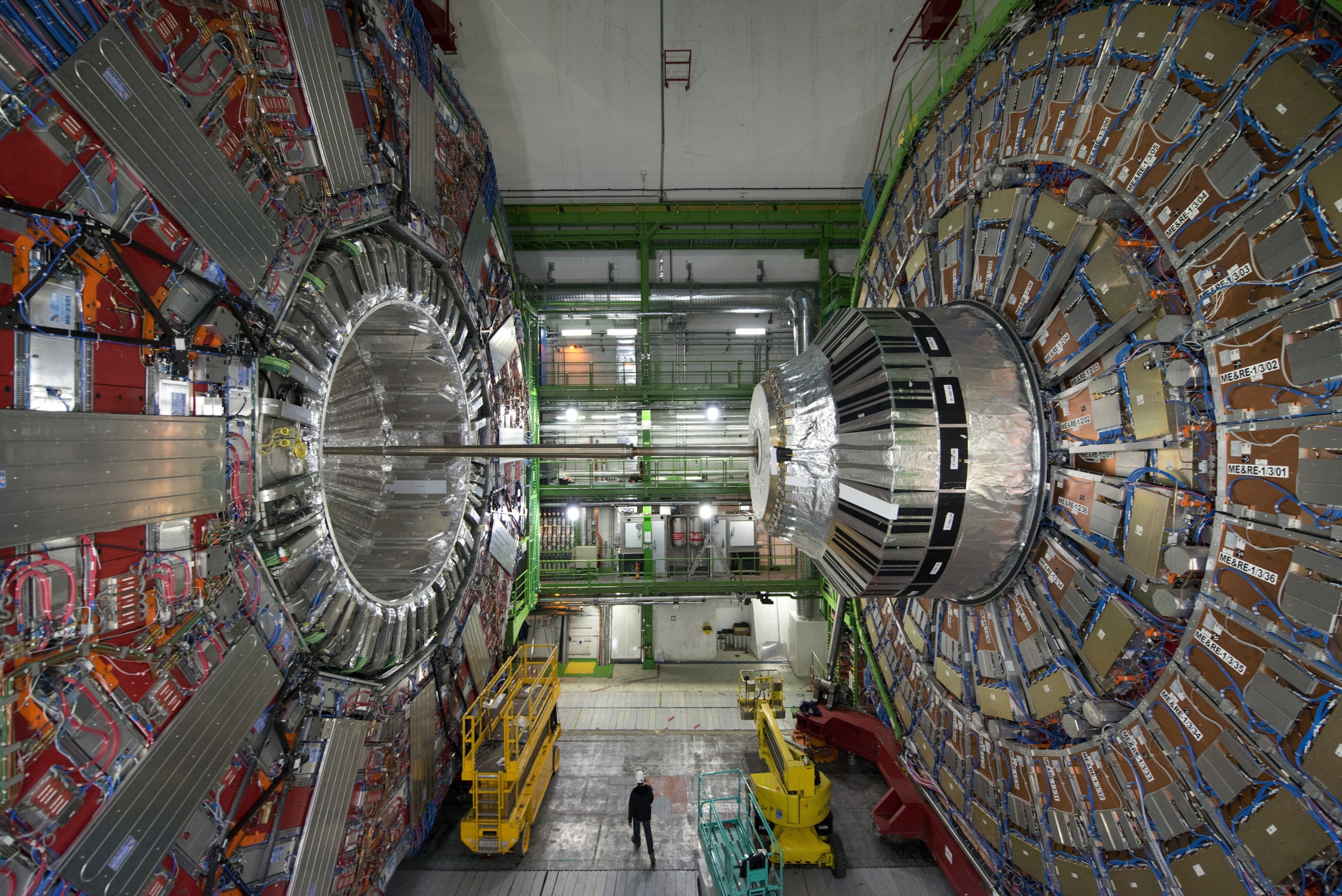
Physicists at CERN’s ATLAS experiment have measured quantum entanglement between Z bosons produced in Higgs boson decays for the first time. This observation, achieved at a statistical significance of 4.7 sigma, marks the first time entanglement has been observed in "elementary qutrits"—three-state quantum systems that offer richer complexity than standard two-state qubits. This result challenges existing models regarding the status of virtual particles and provides a new laboratory for studying high-energy quantum information concepts directly from particle collisions.
LUMI-IQ Reveals Error-Correction Blueprint for Europe
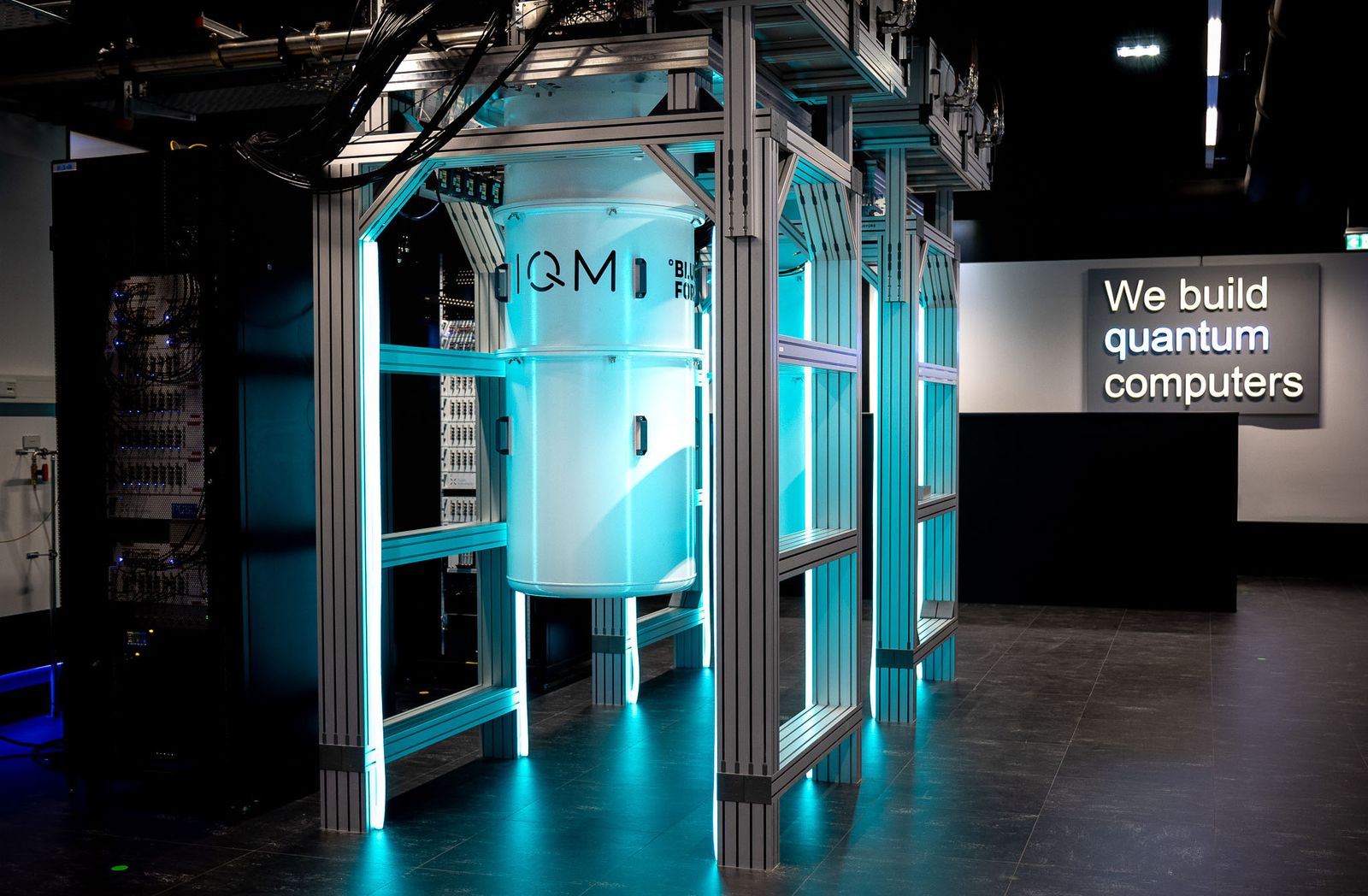
On September 10, 2026, IQM Quantum Computers announced the detailed error-correction blueprint for LUMI-IQ, a system slated for Finland’s LUMI AI Factory. The roadmap outlines a three-phase "Halocene" upgrade path aiming to deliver 9 fault-tolerant logical qubits by 2029 using surface and color codes. This initiative positions LUMI-IQ as Europe’s first publicly owned fault-tolerant quantum system, marking a significant step in moving from noisy intermediate-scale quantum (NISQ) devices to reliable logical operations.
XENONnT Detects Quietest Neutrino Interactions
The XENONnT experiment, primarily designed for dark matter searches, has successfully detected the rare glow of neutrinos interacting with electrons. Reported recently, this measurement captures the "quietest" neutrino interactions ever recorded, providing critical background data for dark matter searches. By precisely characterizing these low-energy neutrino events, XENONnT enhances its sensitivity to potential dark matter signals that might otherwise be masked by solar neutrino backgrounds.

NVIDIA Expands CUDA-Q for Fault-Tolerant Computing
NVIDIA has expanded its open-source CUDA-Q platform with a new orchestration layer called CUDA-Q Logical, designed to accelerate the development of fault-tolerant quantum computers. Announced in early September 2026, this update aims to bridge the gap between physical qubit control and logical qubit operations, facilitating more efficient error correction workflows for developers working with hybrid quantum-classical systems.
Local view
In German-speaking scientific media, the focus has shifted toward the practical implications of new qubit architectures. Reports highlight MIT’s recent design for dual-purpose qubits that reduce errors while speeding up operations, noting how such architectural changes are critical for overcoming the stability-speed trade-off in current quantum systems. Additionally, local financial and tech outlets are tracking the "software-centric" approach to error correction adopted by newer entrants like Quantum X Labs, contrasting it with the raw qubit-count races of industry giants like IBM and Google.
Context & numbers
- LHC Run 3 Cumulative Data: As of mid-2026, ATLAS and CMS have accumulated approximately 540 fb⁻¹ of data across all three operational periods, significantly exceeding the original design target of 300 fb⁻¹.
- Logical Qubit Records: Microsoft and Quantinuum previously demonstrated 12 logical qubits with a logical error rate of ~2 in 1,000, while QuEra targets 100 logical qubits using >10,000 physical qubits (~100:1 ratio) in their 2026 roadmap.
On the radar
- HL-LHC Upgrade Timeline: Following the end of Run 3 in June 2026, the next several years are dedicated to transforming the LHC and ATLAS experiment for the High-Luminosity era, with beams expected to return in 2030.
- Solar Neutrino Precision: New theoretical proposals suggest that propagation uncertainty in solar neutrinos is now negligible, making detection precision the primary bottleneck for future astrophysical measurements.
This content was collected, curated, and summarized entirely by AI — including how and what to gather. It may contain inaccuracies. Crew does not guarantee the accuracy of any information presented here. Always verify facts on your own before acting on them. Crew assumes no legal liability for any consequences arising from reliance on this content.
Powered by
