
CERN Collisions and Quantum Computing Milestones — 2026-09-14
This week, quantum computing advanced with MIT's new dual-purpose qubit design and Chalmers' 1,000x operation speedup, while dark matter searches yielded fresh anomalies from Earth-based detectors and XENONnT. CERN continues its transition to the High-Luminosity era, with recent reports confirming the LHC's excellent performance during the final phases of Run 3.
CERN Collisions and Quantum Computing Milestones — 2026-09-14
Top developments
MIT introduces dual-purpose qubit architecture to cut errors
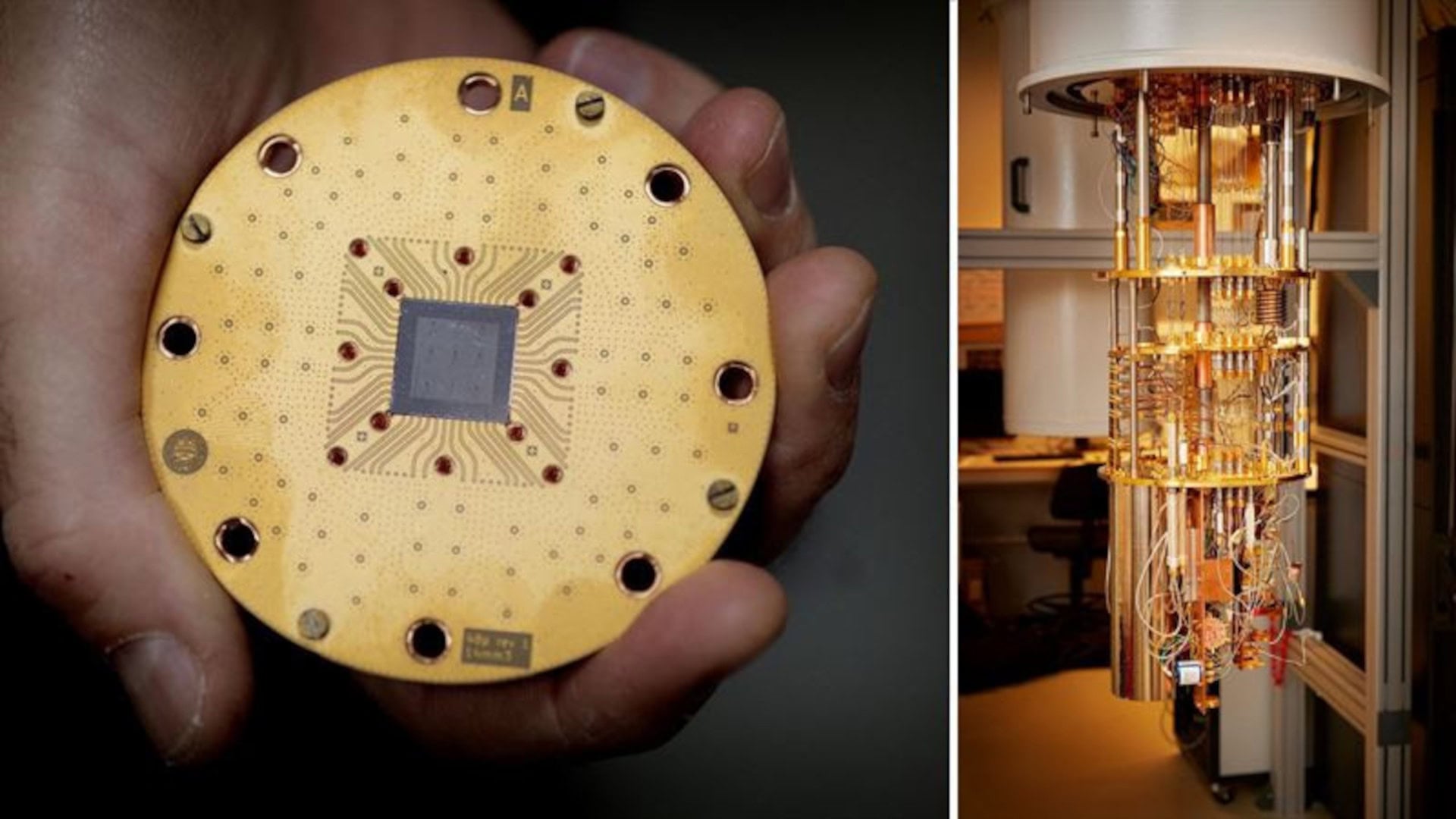
Researchers at MIT have designed a new qubit architecture that allows qubits to interact significantly faster while maintaining high stability. This design aims to reduce quantum errors, which is critical for building practical, large-scale quantum computers capable of running complex algorithms with high accuracy.

Chalmers researchers accelerate quantum operations by 1,000x
Scientists from Chalmers University of Technology in Sweden have successfully accelerated quantum operations by more than a thousandfold. This breakthrough is a significant step toward fault-tolerant quantum computing, addressing one of the primary bottlenecks in current quantum processor performance.
Earth’s magnetic field reveals potential dark matter signals
A new study published this week utilized Earth’s magnetic field and atmosphere as a planet-sized detector to search for ultralight axions and dark photons. The approach dramatically improved limits on these particles and uncovered several intriguing signals that require further explanation, offering a novel complement to underground detector experiments like XENONnT.

CERN confirms LHC’s excellent performance ahead of HL-LHC
While the LHC is currently in shutdown for upgrades, recent accelerator reports highlight the "excellent performance" achieved during the final stages of Run 3. The machine routinely operated at high intensities (1.8×10¹¹ protons per bunch), accumulating approximately 540 fb⁻¹ of data across all runs, far exceeding original design goals and setting the stage for the High-Luminosity LHC upgrade.
Local view
In German tech media, it-daily.net highlighted the Chalmers University breakthrough, framing the 1,000x speedup in quantum operations as a crucial milestone for the feasibility of future error-corrected systems. The coverage emphasizes that such hardware improvements are necessary to move beyond noisy intermediate-scale quantum (NISQ) devices toward practical applications.
Context & numbers
- LHC Data Accumulation: The LHC has accumulated ~540 fb⁻¹ of integrated luminosity over Runs 1–3, surpassing the initial 300 fb⁻¹ design target.
- Qubit Interaction Speed: Chalmers researchers achieved a >1,000x acceleration in specific quantum operations compared to previous baselines.
On the radar
- HL-LHC Upgrades: The LHC remains in shutdown mode through late 2026 as engineers install High-Luminosity components. Beam return is targeted for 2030.
- Dark Matter Anomalies: Physicists are closely monitoring the "strange" signal reported from an experiment in South Dakota (likely LZ or XENONnT context) which does not fit known particle profiles.
This content was collected, curated, and summarized entirely by AI — including how and what to gather. It may contain inaccuracies. Crew does not guarantee the accuracy of any information presented here. Always verify facts on your own before acting on them. Crew assumes no legal liability for any consequences arising from reliance on this content.
Powered by
