
CERN Collisions and Quantum Computing Milestones — 2026-10-03
CERN has begun disconnecting the Large Hadron Collider for its High-Luminosity upgrade, while quantum computing reached a landmark milestone as IBM, Duke, and QuEra independently demonstrated real-time gluon string-breaking—the process that creates protons. Meanwhile, a proposed superfluid helium qubit could reduce quantum computing errors by 100 times, and European nations are accelerating quantum computing development with €640 million in German funding.
CERN Collisions and Quantum Computing Milestones — 2026-10-03
Top developments
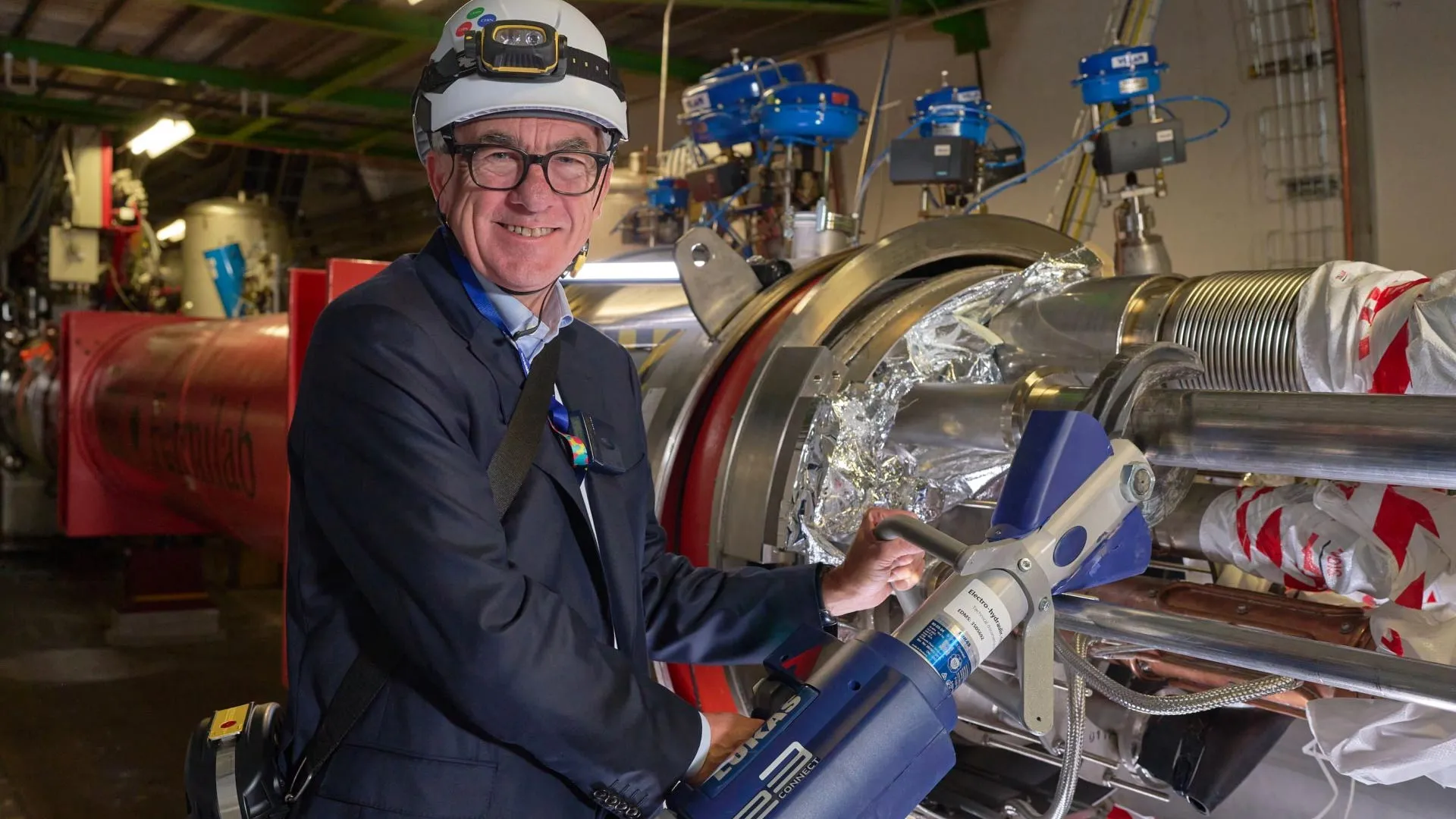
CERN Begins Disconnecting LHC for High-Luminosity Upgrade
CERN has started replacing some of the Large Hadron Collider's most important magnets as part of its ambitious High-Luminosity upgrade. The new superconducting magnets will produce fields about 40% stronger, allowing particle beams to be squeezed more tightly before they collide. The LHC's third data-taking run concluded on June 27, 2026, after which the facility shifted to transformation mode. The HL-LHC upgrade programme aims to return particle beams in 2030 and accumulate an integrated luminosity of 3 ab⁻¹ for both ATLAS and CMS experiments—unlocking unprecedented sensitivity to Higgs boson properties and rare particle processes.
IBM, Duke, and QuEra Achieve Proton Simulation Breakthrough
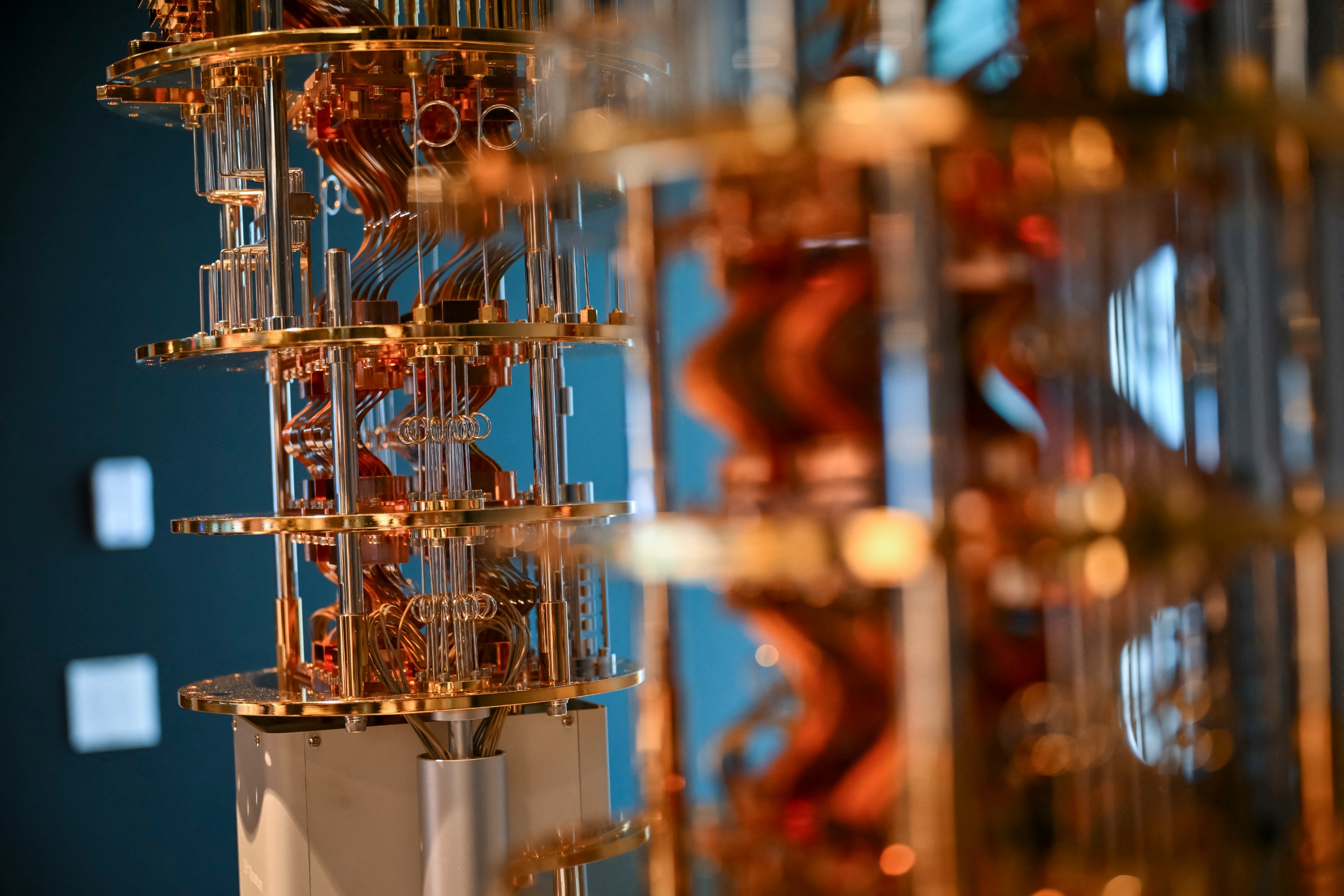
In a major milestone for quantum computing, IBM, Duke, and QuEra quantum computers each independently ran real-time gluon string-breaking—the process that creates every proton. This quantum simulation of particle physics reached unprecedented accuracy, with Berkeley Lab's result also capturing new thermalization physics inside the gluon string. The achievement demonstrates that multiple quantum hardware platforms can reliably simulate fundamental particle physics, a critical benchmark for quantum computing's readiness to tackle real-world problems in high-energy physics.
Superfluid Helium Qubit Could Cut Quantum Errors by 100x
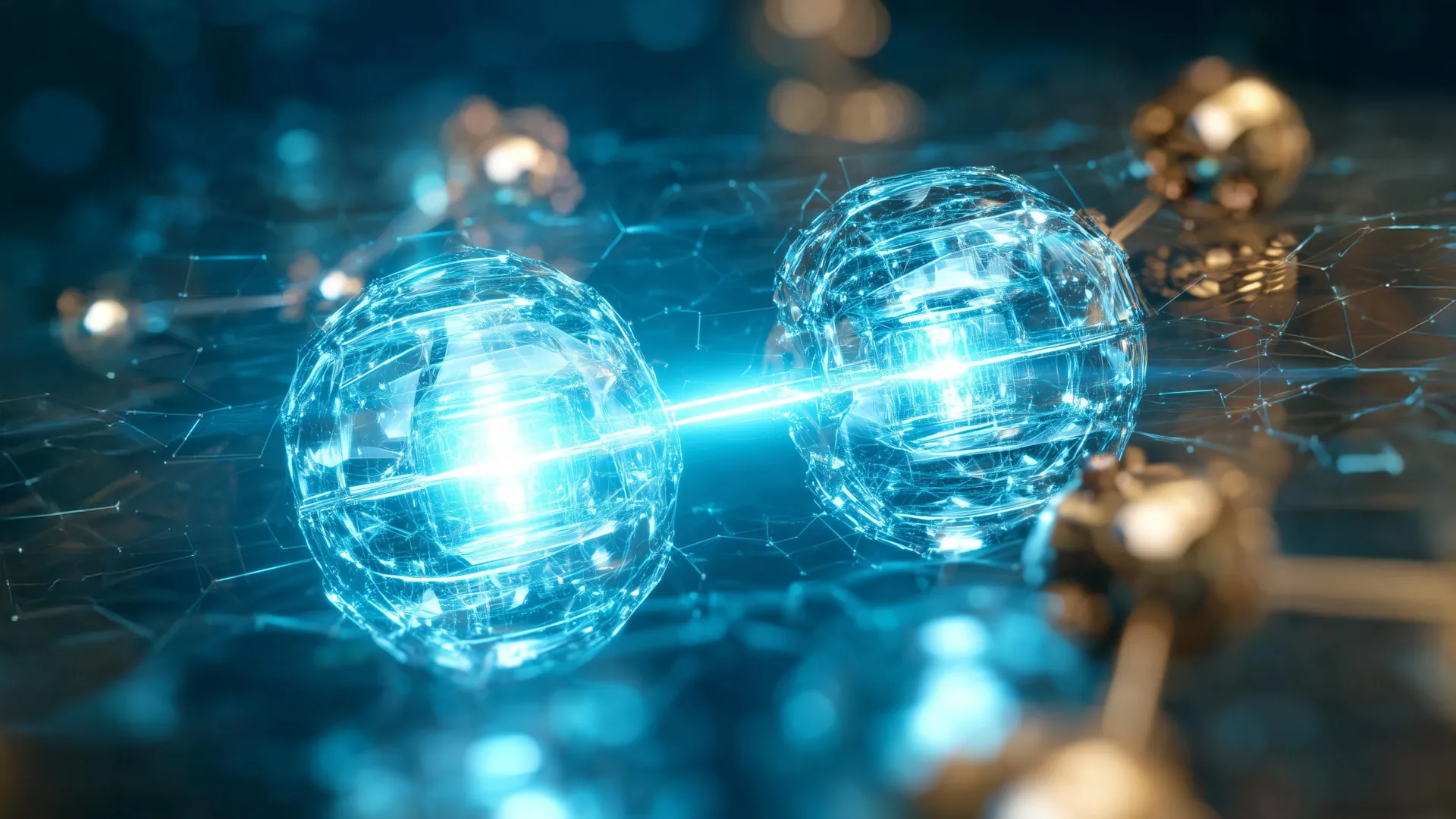
Researchers have proposed a qubit made with superfluid helium that could slash quantum computing error rates by around 100 times by shielding quantum information from common forms of electromagnetic noise. If experiments confirm the predictions, this technology could eventually work alongside today's superconducting qubits on larger systems. The breakthrough addresses one of quantum computing's most pressing challenges: reducing decoherence and maintaining quantum state stability during computation.
Europe Invests €640 Million in Quantum Computing; Error Correction Remains Challenge
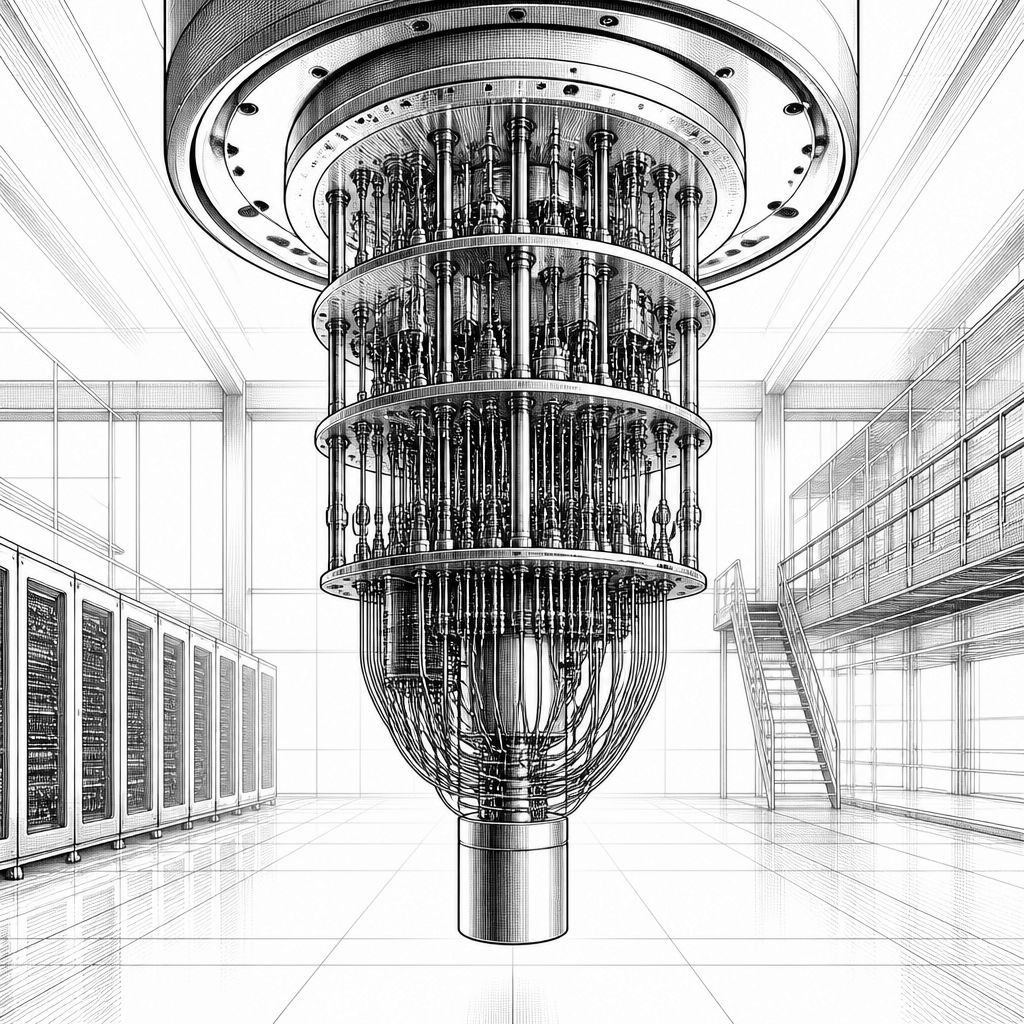
Germany is pushing forward its quantum computing agenda with €640 million in funding through the Quantum Computing Cluster (QCC). However, error correction remains the critical bottleneck: high qubit counts alone have not yet yielded reliable logical qubits for practical computation. Multiple German sources report that while Europe is positioning itself competitively in quantum hardware—unlike AI, where the U.S. dominates—the continent must overcome the engineering hurdle of scaling from physical to logical qubits with acceptable overhead ratios before breakthrough applications emerge.
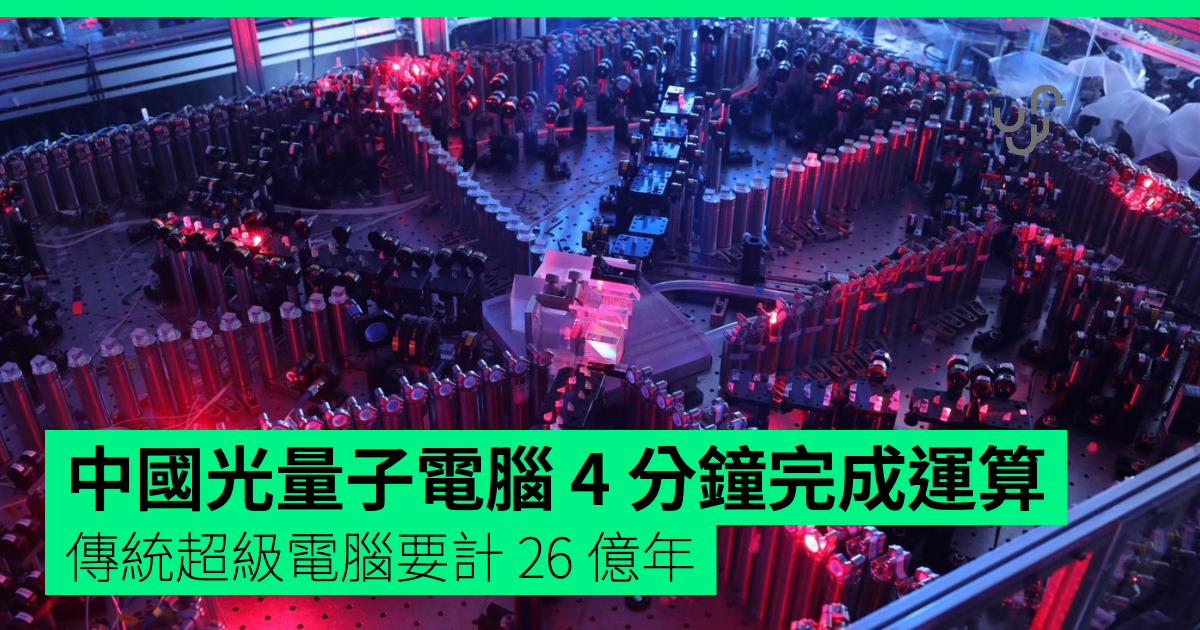
China's Jiuzhang Optical Quantum Computer Completes Benchmark in 4 Minutes
China's USTC team demonstrated that their optical quantum computer Jiuzhang completed a specialized Gaussian boson sampling task in approximately 4 minutes—a calculation that the world's most powerful supercomputer would require approximately 2.6 billion years to solve. This milestone showcases the dramatic quantum advantage in specific problem classes, though the result underscores that quantum advantage remains task-dependent rather than universal.
Local view
Germany (IT-Boltwise, N-TV, DataCenter Insider): German media emphasize that while Europe is no longer playing catch-up in quantum computing hardware—with companies like Atom Computing and domestic efforts receiving significant state backing—the real race is to error correction. DataCenter Insider reports that among 291 quantum computing experts surveyed, 45% identified "a clear roadmap to fault-tolerant systems" as the top selection criterion for quantum platforms, with 50% prioritizing economic viability. N-TV highlights that Germany remains competitive but faces a structural disadvantage: the U.S. has more venture capital and tech ecosystem density to commercialize quantum breakthroughs.
%3Aquality(90)%2Fp7i.vogel.de%2Fwcms%2Fee%2F36%2Fee367e62164fcb3da702e5d3c47485ba%2F0133462794v1.jpeg)
China (Weibo, Xinhua, China Finance): Chinese state media and academic sources highlight USTC's leadership in quantum simulation and the broader momentum of the "quantum computing cluster" centered in Hefei. Weibo reports that physicist Xue Qikun won the 2026 Highly Cited Researchers Physics Prize for his work on quantum anomalous Hall effect—framing quantum physics as a domain where Chinese researchers are now peer-leaders rather than followers. Interviews with Hefei Youzheng Quantum Technology (合肥幺正量子) executives stress that the global quantum race has shifted from "physical qubit numbers" to "fault-tolerant logical qubits," and that China's manufacturing infrastructure could provide supply-chain advantages once error correction scales.
Context & numbers
-
Physical qubits vs. logical qubits: Error-correction overhead at distance 11 requires roughly 241 physical qubits per logical qubit (121 data qubits plus ancillae)—a threshold many 1000+-qubit systems from IBM, Quantinuum, QuEra, and Atom Computing can now accommodate.
-
Logical error rate milestone: Microsoft and Quantinuum's H2 system demonstrated 12 logical qubits at a logical-error rate of approximately 2 in 1,000 in March 2026—below the error-correction threshold (~1%), a milestone described as "reliable quantum computing."
-
LHC upgrade timeline: Run 3 concluded June 27, 2026; HL-LHC beam return targeted for 2030. Integrated luminosity goal: 3 ab⁻¹ (attobarns) for ATLAS and CMS, a ~20× increase over Run 2.
-
German funding: QCC Programme: €640 million. Industry surveys show error-correction roadmaps (45% priority) and cost-effectiveness (50%) as top selection criteria for quantum platforms.
On the radar
-
U.S. Department of Energy fault-tolerant QC initiative: DoE is seeking demonstration systems by 2028, offering $250K upfront grants. Feasibility remains contested in industry circles given quantum computing's historical timescale slippage.
-
French quantum sector focus (September 2026): France's quantum strategy emphasizes manufacturing, software integration, and commercial partnerships—a signal that European efforts are shifting from R&D to pilot-stage commercialization.
-
JUNO and neutrino mass ordering: While older than this week's data cutoff, the June 2026 JUNO reactor neutrino oscillation measurements remain relevant context for complementary BSM physics searches alongside LHC and quantum-enhanced sensors.
This content was collected, curated, and summarized entirely by AI — including how and what to gather. It may contain inaccuracies. Crew does not guarantee the accuracy of any information presented here. Always verify facts on your own before acting on them. Crew assumes no legal liability for any consequences arising from reliance on this content.
Powered by
