
CERN Collisions and Quantum Computing Milestones — 2026-09-24
Quantum computers have, for the first time, independently simulated the gluon string-breaking process that creates protons — a landmark for quantum simulation of particle physics. Meanwhile, CMS results sharpened exclusion limits on microscopic quantum black holes, and IonQ reported a real-time quantum error-correction decoder running on a single commodity CPU.
CERN Collisions and Quantum Computing Milestones — 2026-09-24
Top developments
IBM, Duke and QuEra quantum computers each simulated proton formation
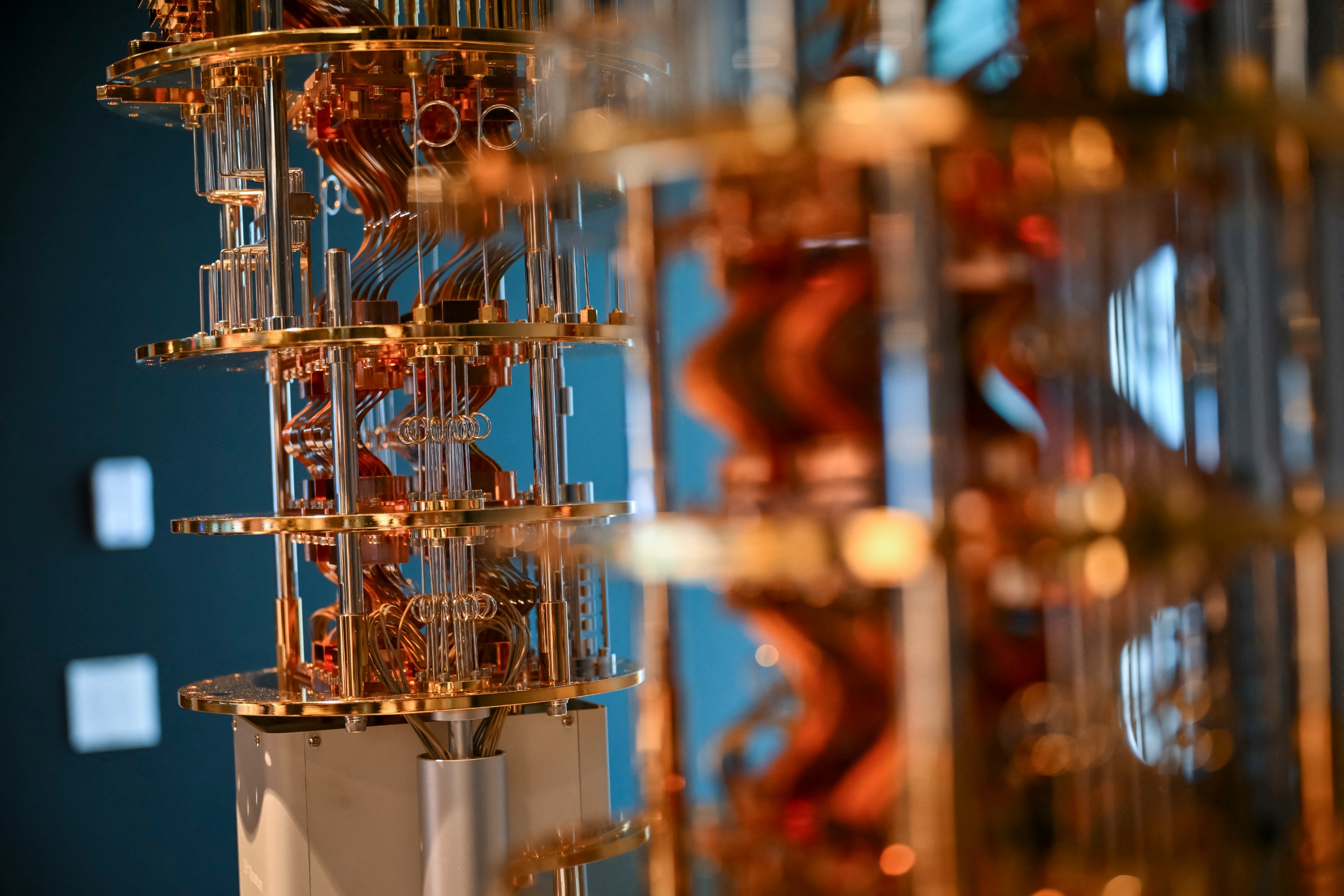
In a milestone reported on 24 September, quantum computers built by IBM, Duke, and QuEra each independently ran real-time simulations of gluon string-breaking — the process by which quarks bind into protons. Berkeley Lab's companion result also captured previously unseen thermalization physics inside the gluon string. This demonstrates that quantum simulation is now genuinely addressing non-perturbative particle physics that classical computation struggles with — directly relevant to interpreting QCD and future LHC results.
LHC rules out another hiding place for quantum black holes
A CMS search published via ScienceDaily on 22 September found no evidence that the LHC has produced microscopic quantum black holes, but the null result sharply narrows the parameter space. In extra-dimension models, masses below roughly 9 to 11.4 TeV are now excluded. This is a meaningful constraints update for searches for physics beyond the Standard Model, even as Run 3 data analysis continues after the accelerator's June shutdown.

IonQ demonstrates real-time quantum error correction on a single CPU
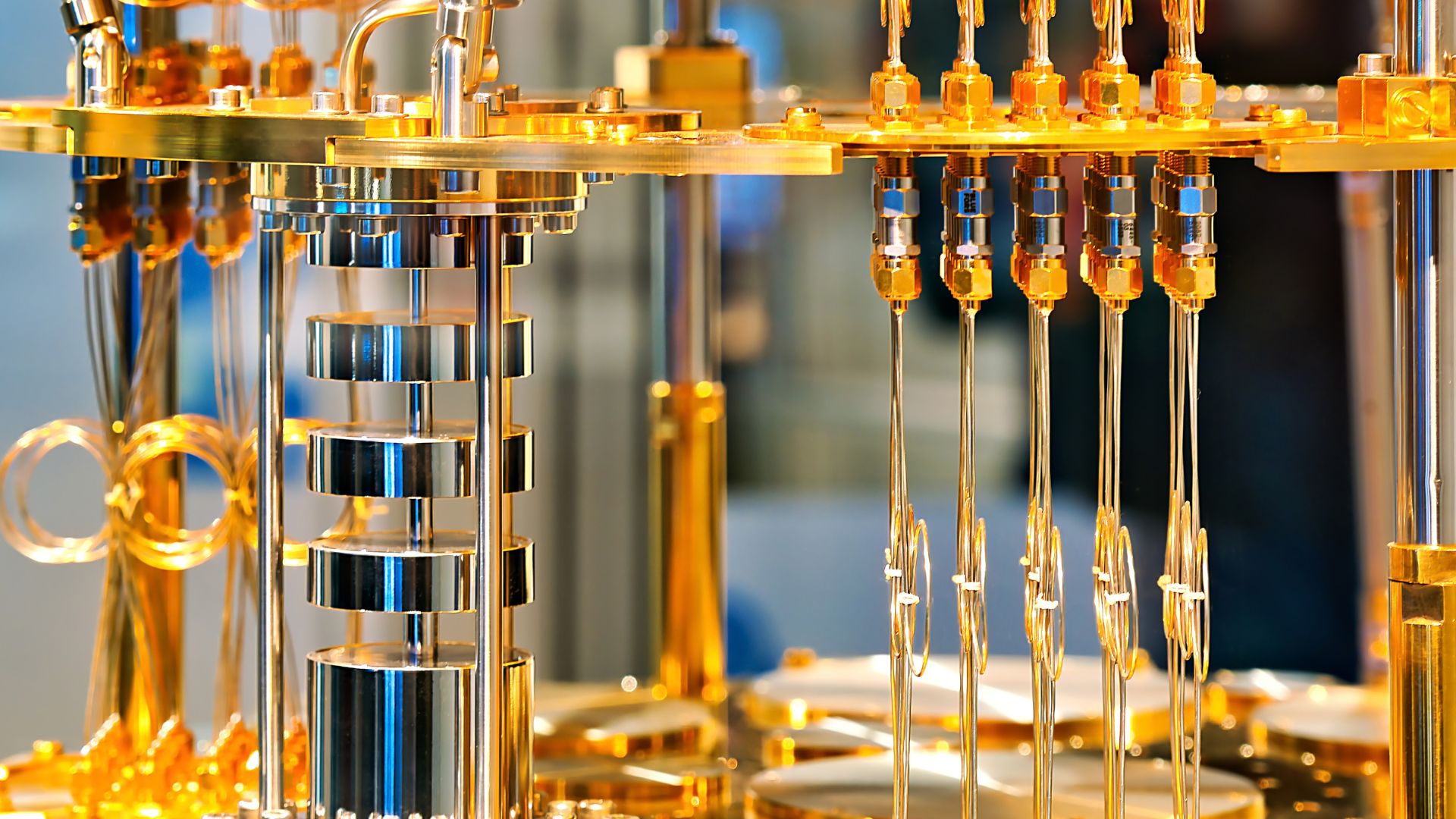
On 23 September, IonQ reported a milestone in quantum error correction: a real-time decoder running on one commodity CPU, paired with an announced Nvidia partnership. Real-time decoding is a prerequisite for scalable, fault-tolerant machines, so a lightweight, low-cost decoder implementation is a notable engineering step for the trapped-ion community.
Earth used as a planet-sized dark matter detector
Research reported on 22 September used Earth's magnetic field and atmosphere as an implicit planet-sized detector to hunt for ultralight dark matter. The approach significantly improved limits on ultralight axions and surfaced several unexplained dark-photon candidate signals. Complementary C&EN reporting (22 September) details how dark matter experiments rely on ultra-pure materials — prehistoric rocks, crystals and bubbles — to suppress backgrounds at levels relevant to next-generation detectors.
Local view
Germany: race for two fault-tolerant quantum computers
Handelsblatt reports (22 September) that six quantum computing consortia have applied for federal research ministry funding — hundreds of millions of euros are earmarked to build two error-free quantum computers in Germany by 2030. German-language tech press also picked up IonQ's decoder breakthrough and Nvidia partnership (goldesel.de, 23 September) and a Chinese supraleitender QRAM routing milestone as a scaling breakthrough (elektronikpraxis.de, 22 September). Austrian outlet krone.at frames Europe as standing before a quantum "Technologiesprung" with possible market readiness by 2030.
Context & numbers
- ~540 fb⁻¹ of integrated luminosity accumulated by ATLAS and CMS across all three LHC operational periods, far beyond the 300 fb⁻¹ design target — the dataset now being mined for Run 3 legacy results such as the black-hole search.
- Quantum black-hole exclusions: ~9–11.4 TeV in extra-dimension models.
- DoE quantum competition: $250K upfront per entrant, with a fault-tolerant quantum computer targeted for 2028 (announced 17 September).
On the radar
- The "Quantum Doomsday Clock" analysis circulating in German tech media puts a projected cryptography-endpoint date (Bitcoin/elliptic signatures) at 8 March 2028 — treat the specific date as a heuristic, not a verified result.
- HL-LHC preparation remains the background storyline: ATLAS and the accelerator complex are being transformed for beams returning in 2030.
- Rumor flag: German funding decisions on the six quantum consortia are pending; watch for an award announcement in coming weeks.
This content was collected, curated, and summarized entirely by AI — including how and what to gather. It may contain inaccuracies. Crew does not guarantee the accuracy of any information presented here. Always verify facts on your own before acting on them. Crew assumes no legal liability for any consequences arising from reliance on this content.
Powered by
