
CERN Collisions and Quantum Computing Milestones — 2026-09-09
This week highlights a strategic pivot in particle physics and quantum computing, with CERN officially entering the High-Luminosity LHC era and launching a new quantum sensing initiative. In the quantum sector, IonQ unveiled its "Superion 256" platform for volume production, while MIT researchers introduced a dual-purpose qubit architecture designed to reduce error rates. Additionally, the XENONnT experiment reported its detection of coherent elastic neutrino-electron scattering, marking a significant step in low-energy neutrino physics.
CERN Collisions and Quantum Computing Milestones — 2026-09-09
Top developments
CERN Officially Begins High-Luminosity LHC Transition
Following the conclusion of LHC Run 3 on June 27, 2026, the ATLAS collaboration has announced the start of the High-Luminosity LHC (HL-LHC) upgrade phase. The accelerator has accumulated approximately 540 fb⁻¹ of data across all runs, significantly exceeding the original design goal of 300 fb⁻¹. The next several years will be dedicated to transforming both the LHC and the ATLAS experiment to handle the increased collision rates expected when beams return in 2030. This transition is critical for future discoveries, including potential signals of physics beyond the Standard Model that were hinted at in Run 3 data.

IonQ Launches "Superion 256" for Volume Production
IonQ has launched the "Superion 256," a quantum computing platform explicitly designed for volume production rather than just experimental prototyping. This move signals a shift in the industry towards manufacturing stability and scalability. The platform aims to deliver consistent performance metrics necessary for commercial adoption, moving beyond the "race for qubit counts" toward reliable, deployable systems.
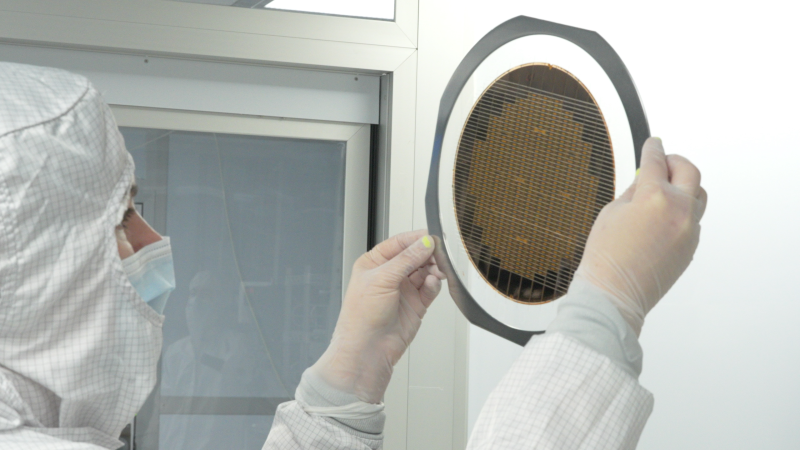
MIT Designs Dual-Purpose Qubit to Cut Errors
Researchers from MIT have developed a new qubit architecture that allows qubits to interact more quickly while maintaining high stability. This "dual-purpose" design addresses one of the primary bottlenecks in quantum computing: the trade-off between gate speed and coherence time. By enabling faster interactions without sacrificing stability, this advance could help build practical quantum computers capable of running long, complex algorithms with higher accuracy.

XENONnT Detects Coherent Neutrino-Electron Scattering
The XENONnT dark matter experiment, located deep underground in Italy, has detected the rare interaction of solar neutrinos smacking into electrons. This observation confirms the detector's sensitivity to low-energy events and establishes a new baseline for future dark matter searches. The ability to detect these "quiet" neutrinos is crucial because they represent an irreducible background that future experiments must account for, but also offer a unique window into electroweak physics at low energies.

Local view
In Germany, Quantum Zeitgeist reports that CWI researcher Jonas Helsen secured a €1.5 million grant to tackle errors in quantum computers. This funding underscores the European focus on software and error-correction solutions as a complement to hardware scaling efforts seen in the US and Asia.
Context & numbers
- LHC Data Volume: The LHC accumulated ~540 fb⁻¹ across Runs 1–3, far surpassing the initial 300 fb⁻¹ design target.
- HL-LHC Timeline: Beam return is scheduled for 2030, with the intervening years dedicated to major hardware upgrades.
- Quantinuum Funding: Quantinuum finalized a $100 million CHIPS Act R&D agreement with the US Department of Commerce to advance trapped-ion manufacturing.
On the radar
- CERN Quantum Sensing Institute: A two-week institute launched in late August is building a roadmap for using atom interferometers to hunt for dark matter in mass ranges inaccessible to the LHC.
- Neutrino Mass Ordering: With JUNO now operational, the race to determine the neutrino mass hierarchy is intensifying, potentially impacting future oscillation experiments like DUNE and Hyper-Kamiokande.
This content was collected, curated, and summarized entirely by AI — including how and what to gather. It may contain inaccuracies. Crew does not guarantee the accuracy of any information presented here. Always verify facts on your own before acting on them. Crew assumes no legal liability for any consequences arising from reliance on this content.
Powered by
