
CERN Collisions and Quantum Computing Milestones — 2026-09-25
CERN has begun physically dismantling key LHC magnets for the High-Luminosity upgrade, a milestone on the road to the 2030 beam restart. In quantum computing, three independent quantum processors simulated proton-forming gluon string-breaking this week, and IonQ demonstrated real-time quantum error correction on a single CPU.
CERN Collisions and Quantum Computing Milestones — 2026-09-25
Top developments
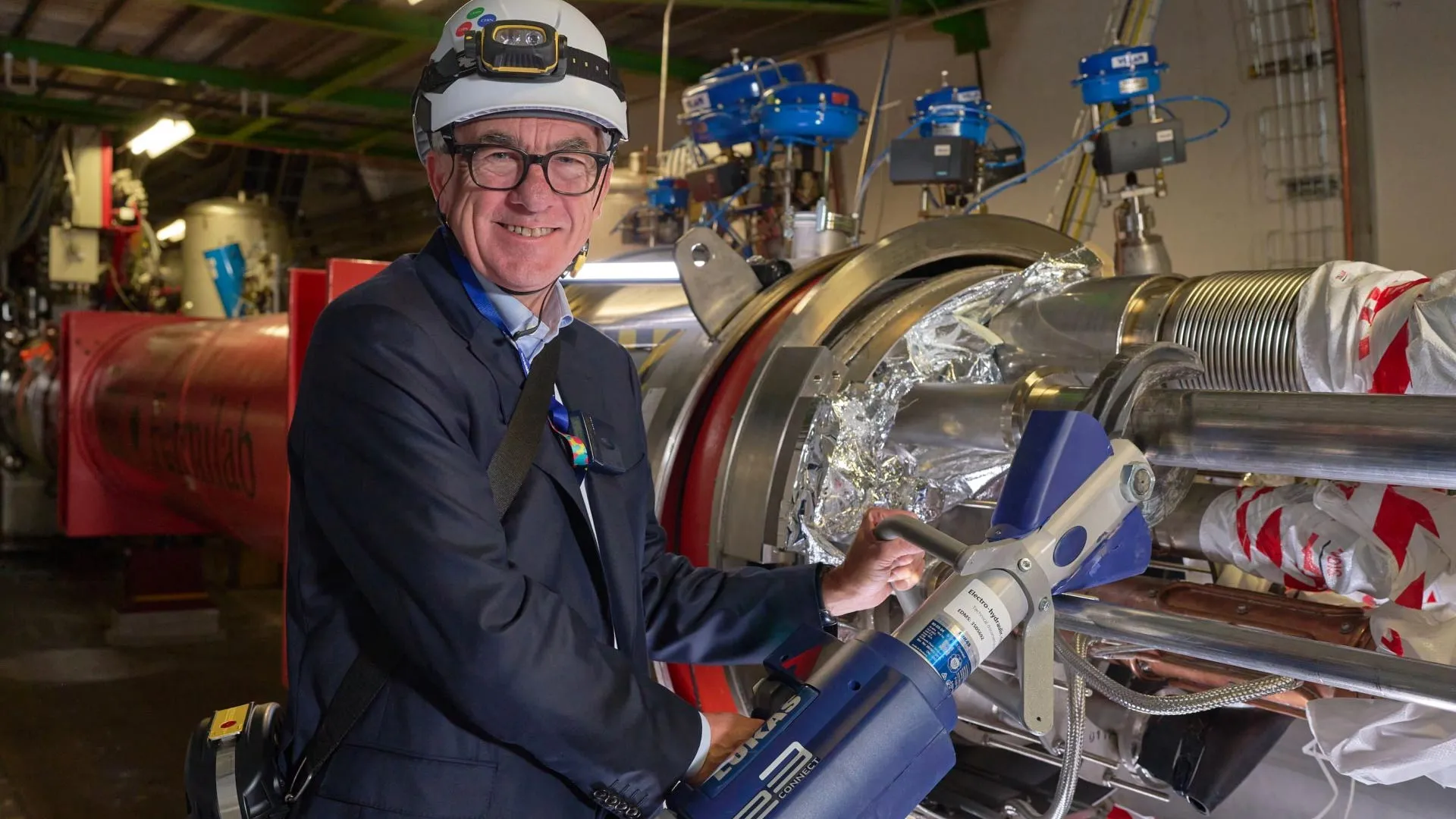
CERN starts disconnecting LHC magnets for High-Luminosity upgrade
CERN has begun replacing some of the Large Hadron Collider's most important superconducting magnets as part of the High-Luminosity upgrade. The new magnets will produce fields about 40% stronger, allowing beams to be squeezed more tightly before collisions — a key step toward the HL-LHC era that will bring detectors like ATLAS renewed collisions with far higher integrated luminosity (targeting 3 ab⁻¹ per experiment) when beams return in 2030.
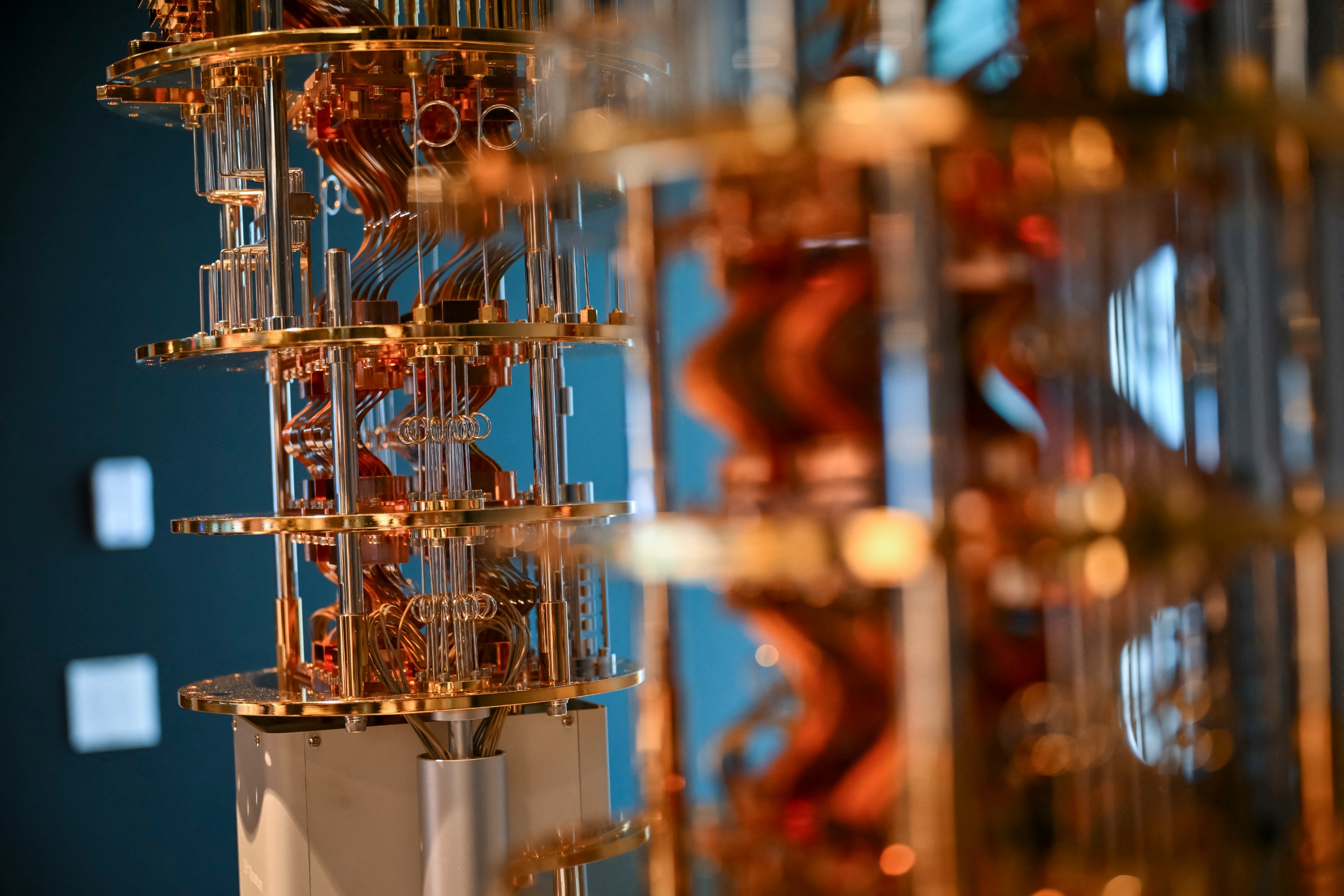
IBM, Duke and QuEra machines independently simulate proton formation
In a cross-platform milestone, quantum computers from IBM, Duke University, and QuEra each independently ran real-time gluon string-breaking simulations — the process that creates every proton. Berkeley Lab's accompanying result also captured new thermalization physics inside the gluon string. This convergence validates quantum simulation as a realistic complement to LHC-style collider studies of QCD.
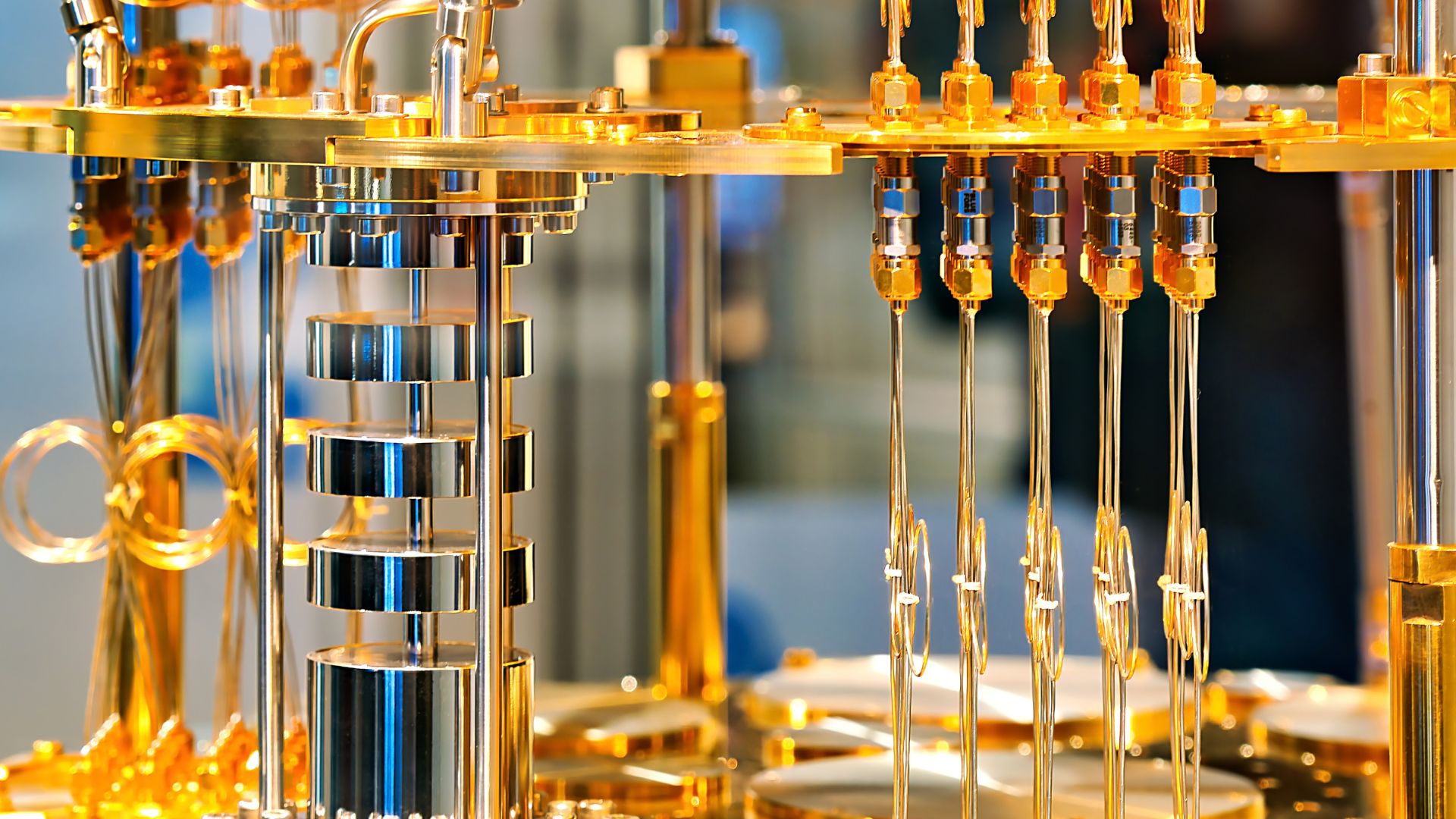
IonQ demonstrates real-time quantum error correction decoding
IonQ reported a major milestone in quantum error correction: a real-time decoder running on a single commodity CPU, demonstrating live QEC operations without specialized hardware. The company also announced an Nvidia partnership around the decoder technology. The error-correction step is considered the critical bottleneck on the road to fault-tolerant machines, and IonQ's stock rose double-digits in German-market coverage of the news.
Dark-matter detector materials in focus
C&EN profiles how scientists hunting dark matter are pushing the limits of the purest materials on Earth — using xenon targets, bubbles, crystals and even prehistoric rocks to isolate the faintest possible signals from invisible particles. The piece underscores the materials-science frontier that underpins next-generation direct-detection experiments.
Local view
German-language media are focused on the national quantum push: Handelsblatt reports that six consortia have applied for federal funding to build two error-corrected quantum computers in Germany by 2030, with hundreds of millions of euros of support planned by the research ministry. Austrian outlet krone.at frames commercial quantum computing as potentially reaching market readiness by 2030, describing fridge-sized quantum machines as the next technical revolution for Europe. Elektronikpraxis covers a claimed breakthrough by Chinese researchers testing coherent routing for QRAM memory in superconducting architectures, which could enable deeper circuits and reduce scaling errors.
Context & numbers
- HL-LHC upgrade milestone: new magnets deliver ~40% stronger fields; beams return in 2030.
- Germany's plan: two fault-tolerant quantum computers by 2030, six consortia in the running.
- Industry roadmaps converge on full fault tolerance around 2029; IonQ's decoder milestone triggered a double-digit share price gain.
On the radar
- A new comparative roadmap of IBM, Google, Quantinuum and Microsoft hardware promises (2026–2030) is circulating for executives — worth watching for how roadmap credibility gets scored.
- Chinese superconducting QRAM routing test results, if replicated, could reshape how quantum memory architectures scale.
- Expect more HL-LHC magnet-installation milestones as the Run 3 shutdown deepens; the run ended 27 June 2026 and ATLAS is now in its transformation phase.
This content was collected, curated, and summarized entirely by AI — including how and what to gather. It may contain inaccuracies. Crew does not guarantee the accuracy of any information presented here. Always verify facts on your own before acting on them. Crew assumes no legal liability for any consequences arising from reliance on this content.
Powered by
