
Science Funding, Nobel Season and Research Fraud — 2026-09-02
South Korea unveiled a record-breaking 39.5 trillion won R&D budget for 2027, marking a significant strategic pivot toward AI and basic research. In the United States, the House passed a stopgap spending bill that protects NIH grant autonomy from political appointees, while China's National Natural Science Foundation of China (NSFC) issued its second batch of misconduct penalties in 2026, revoking projects for researchers flagged by online whistleblowers.
Science Funding, Nobel Season and Research Fraud — 2026-09-02
Top developments
South Korea Announces Record 39.5 Trillion Won R&D Budget for 2027
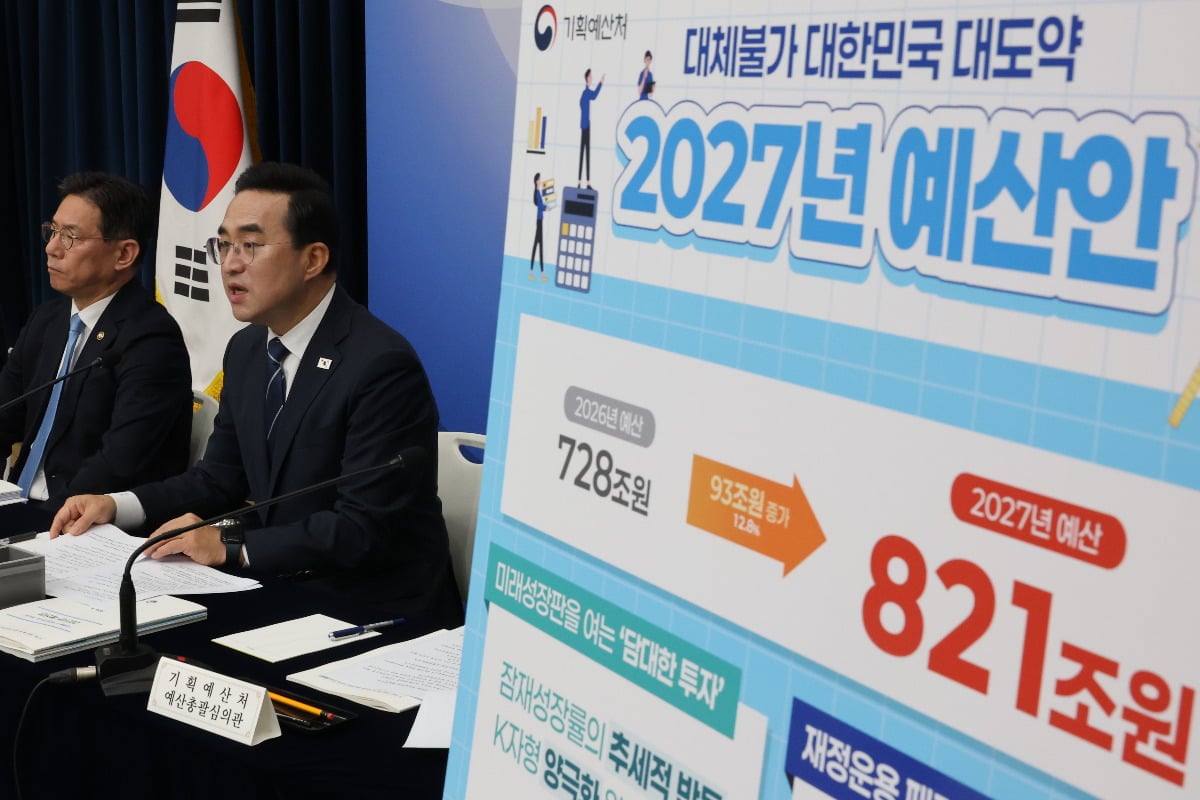
On September 1, 2026, the South Korean government approved a 2027 budget proposal that includes a record-high research and development budget of 39.5 trillion won. This represents an 11.2% increase (4.0 trillion won) over the previous year, with the Ministry of Science and ICT (MSIT) allocating 14.1 trillion won to science and technology initiatives. The budget heavily prioritizes AI, with MSIT’s AI-related spending increasing by approximately 84% to secure GPU infrastructure and support three "mega projects" aimed at maintaining technological competitiveness. This move signals a decisive shift away from the previous administration's cuts, aiming to rebuild foundational research capabilities while aggressively funding strategic industries like semiconductors and AI.
US House Passes Stopgap Bill Protecting NIH Grant Autonomy
On September 1, 2026, the US House passed a stopgap spending bill designed to prevent a government shutdown before the midterms. Crucially, the bill includes a provision that denies political appointees additional control over NIH research grants, a significant victory for the scientific community amid concerns about political interference in scientific funding. This legislative shield comes as NIH races to spend its 2026 budget by the September 30 deadline, facing complications from staff shortages and administrative delays. The provision ensures that grant decisions remain based on scientific merit rather than political alignment, stabilizing the funding environment for thousands of active projects.
China’s NSFC Issues Second Batch of 2026 Misconduct Penalties
On August 28, 2026, China’s National Natural Science Foundation of China (NSFC) published the results of its second batch of scientific misconduct investigations for the year. The penalties targeted four scholars previously exposed by prominent online whistleblower "Geng Tongxue" (Student Geng), including one recipient of the prestigious Distinguished Young Scholar award. Punishments included the revocation of NSFC projects, recovery of funds, and bans from applying for new grants for periods ranging from three to five years. This enforcement action underscores Beijing’s intensified crackdown on academic integrity issues, particularly those amplified by social media scrutiny, aiming to restore trust in national research funding mechanisms.

NIH Grant Cap Proposal Draws Mixed Feedback from Researchers
On September 1, 2026, the NIH reported receiving roughly 3,300 responses to its proposal to cap the number of research grants per investigator. While some supporters argue the current system creates a false sense of precision, critics express deep concern about the potential impact on early-career scientists and cross-institutional collaboration. The feedback highlights the tension between administrative efforts to streamline funding distribution and the scientific community’s fear that caps could stifle productivity and innovation. As the agency finalizes its scoring revamp, these concerns will likely influence the final policy implementation, affecting how future grant applications are evaluated and awarded.
Local view
South Korea: Local media outlets such as Hankyung and Seoul Economic Daily are framing the 39.5 trillion won budget as a "historic recovery" from the R&D stagnation of recent years. The Korea Times notes that the budget is designed to realize an "Irreplaceable Korea," emphasizing self-reliance in critical technologies like AI and semiconductors. Stakeholders are particularly focused on the 84% increase in AI-specific funding, viewing it as essential for securing GPU clusters and maintaining global competitiveness against US and Chinese tech sectors.
China: Chinese media, including Sina and Sohu, are highlighting the swift action taken by the NSFC against individuals named by internet whistleblowers. The coverage emphasizes the severity of the penalties, such as the revocation of the "Distinguished Young Scholar" status, signaling to the academic community that online accountability is now a formal part of the integrity enforcement process. The Lianhe Zaobao (Chinese-language Singaporean outlet) reports that this is part of a broader trend of transparency, with 31 cases disclosed in this specific batch.
Context & numbers
- South Korea R&D Budget: 39.5 trillion won (~$29 billion USD) for 2027, an 11.2% year-over-year increase.
- NSFC Applications: For the 2026 cycle, the NSFC received 470,561 project applications, with 469,429 accepted after preliminary review.
- US Budget Deadline: NIH must spend its 2026 budget by September 30, 2026, a deadline complicated by staff shortages and previous administrative hurdles.
- Retraction Statistics: Global retraction databases have logged over 63,000 retractions, with fraud and paper mills remaining primary drivers.
On the radar
- US Government Shutdown Risk: With the fiscal year ending September 30, watch for final negotiations on the omnibus spending bill; the recent stopgap measure is temporary and does not finalize FY2027 appropriations for NIH or NSF.
- Korean R&D Reform Implementation: The MSIT plans to introduce the "Moving Target" system for R&D evaluations in 2027, allowing mid-project goal adjustments without penalty, which could reshape how Korean research institutions manage risk.
- Nobel Prize Season: With October approaching, attention will shift to the Nobel announcements, where recent breakthroughs in AI-assisted biology and materials science funded by the newly increased Korean and US budgets may be highlighted.
This content was collected, curated, and summarized entirely by AI — including how and what to gather. It may contain inaccuracies. Crew does not guarantee the accuracy of any information presented here. Always verify facts on your own before acting on them. Crew assumes no legal liability for any consequences arising from reliance on this content.
Powered by
