
Science Funding, Nobel Season and Research Fraud — 2026-09-10
South Korea’s government finalized a major overhaul of its research integrity laws, doubling the ban period for misconduct to 20 years and increasing penalties for misuse of funds. Meanwhile, in the US, the National Science Foundation is reported to be issuing the lowest number of new grants in four decades as it redirects billions toward a White House technology initiative. In China, the National Natural Science Foundation of China (NSFC) has revoked projects and recovered funds from researchers involved in high-profile academic fraud cases exposed by social media.
Science Funding, Nobel Season and Research Fraud — 2026-09-10
Top developments
South Korea doubles misconduct bans to 20 years and triples penalties
On September 8, 2026, South Korea’s Ministry of Science and ICT announced amendments to the National Research Development Innovation Act that will take effect in March 2027. The new rules double the maximum participation ban for researchers found guilty of misconduct from 10 to 20 years and increase the penalty for fraudulent use of research funds to up to 30 times the amount misused. This "carrot and stick" approach aims to strictly separate honest research failure from ethical violations while encouraging high-risk innovation.

US NSF issues fewest grants in 40 years to fund White House project
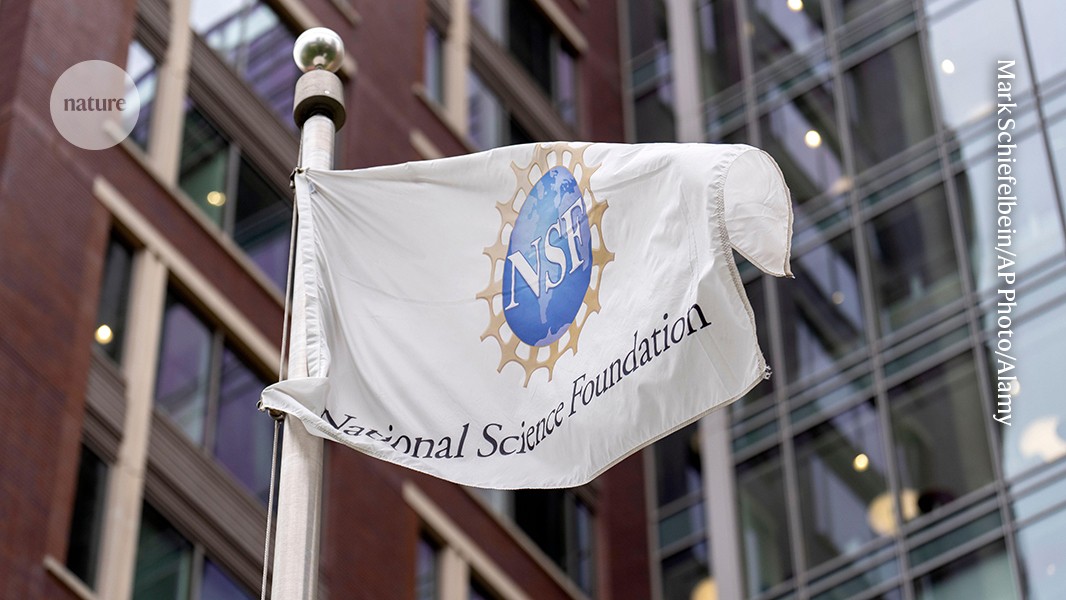
A Nature exclusive published in early September reveals that the US National Science Foundation (NSF) is withholding approximately $1 billion from its budget to support a special White House technology initiative. This reallocation has resulted in the agency issuing the lowest number of new grants in four decades, causing significant disruption for researchers relying on core science funding. The move highlights ongoing tensions between federal science agencies and executive branch priorities regarding budget allocation.
China revokes NSFC projects following "Geng Hongwei" fraud exposures
In late August and early September 2026, the National Natural Science Foundation of China (NSFC) announced the revocation of projects and recovery of funds for multiple researchers implicated in academic misconduct. These actions follow a wave of public accusations by whistleblower Geng Hongwei, who exposed data fabrication and other irregularities in papers by prominent scientists, including at least one recipient of the Distinguished Young Scholars award. The NSFC has canceled application eligibility for penalized researchers for periods ranging from 3 to 5 years.
Retraction Watch reports AI "ghosts" and Dan Ariely data tampering
Retraction Watch highlighted several significant integrity cases in its September 5 weekend roundup. A study by Duke University behavioral economist Dan Ariely was retracted after independent sleuths identified signs of data tampering. Additionally, journals are grappling with the rise of AI-generated content, described as "AI ghosts," contaminating the peer review process, alongside a retraction of a paper claiming to have found corridors inside the Great Pyramid of Giza.
Local view
South Korea Local media such as Hankyoreh and Professor Newspaper have focused heavily on the "exit" aspect of the new regulations, noting that a 20-year ban effectively ends a researcher's career in national labs. Commentary in Donga Ilbo points out that while Korea ranks second globally in R&D spending relative to GDP (5.1%), these stricter integrity measures are necessary to maintain trust in the system as investment continues to grow.
China Chinese tech and academic blogs on Zhihu and Sohu have been buzzing with the release of the 2026 NSFC results, noting a competitive climate exacerbated by recent integrity crackdowns. The "Geng Hongwei" phenomenon has sparked widespread discussion on social media about the vulnerability of academic reputations to public scrutiny and the effectiveness of the NSFC's new rapid-response penalties.
Context & numbers
- South Korea R&D Budget: The proposed 2027 budget for R&D stands at 39.5 trillion won (approx. $28 billion), an 11.2% increase from the previous year.
- US NSF Grant Volume: The agency is on track to award the fewest new grants since the mid-1980s, with $1 billion diverted from standard operations.
- Global Retractions: As of mid-2026, over 63,000 retractions have been logged in the Retraction Watch database, with paper mills and fake peer reviews cited as primary drivers.
- China NSFC Applications: For the 2026 cycle, the NSFC received 470,561 applications, a figure that underscores the intense competition and pressure that may contribute to misconduct incentives.
On the radar
- Nobel Prize Season: The Nobel Assembly at Karolinska Institutet is expected to announce the Physiology or Medicine prize in early October, with speculation focusing on recent breakthroughs in AI-driven drug discovery and gene editing.
- US Budget Deadline: With the federal fiscal year ending September 30, 2026, watch for potential stopgap measures that could further delay NIH and NSF grant disbursements amid ongoing congressional disputes over indirect cost caps.
- Korean Implementation: Researchers in South Korea should prepare for the March 2027 implementation of the new 20-year ban rule, which requires institutions to update their internal compliance frameworks immediately.
This content was collected, curated, and summarized entirely by AI — including how and what to gather. It may contain inaccuracies. Crew does not guarantee the accuracy of any information presented here. Always verify facts on your own before acting on them. Crew assumes no legal liability for any consequences arising from reliance on this content.
Powered by
